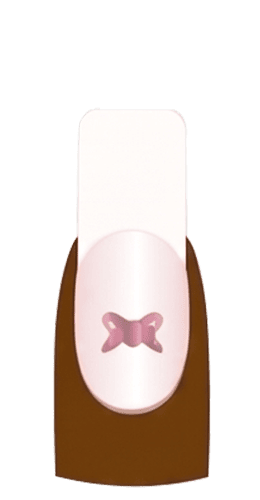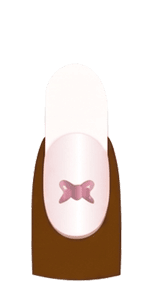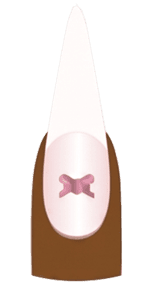
Press-On Nail Basics
Can Press-On Nails Damage Natural Nails? Causes, Signs & How to Prevent It
Press-on nails are one of the easiest ways to get a polished manicure at home, but many people worry about what happens underneath the set. If you have ever removed press-ons and noticed white patches, peeling, thin nails, or soreness, you may wonder: can press-on nails damage natural nails?
The honest answer is yes, they can — but usually not because of the press-on nail itself. If you are still learning what press-on nails are and how they attach to natural nails, it helps to understand the basics before looking at damage risks.
Most press-on nail damage happens when nails are over-buffed before application, too much glue is used, the press-ons do not fit correctly, moisture gets trapped underneath, or the nails are pulled off instead of removed gently.
When used correctly, press-ons can be a low-damage manicure option for many people. The key is knowing what causes damage, what warning signs to look for, and when your natural nails need a break. If you are new to press-ons, start with our complete guide to press-on nails before deciding which type of set is right for you.
1. Quick Answer: Do Press-On Nails Damage Your Nails?
Press-on nails do not usually damage natural nails by themselves. The biggest causes of damage are improper prep, too much glue, poor fit, trapped moisture, wearing a set too long, and forced removal.
In other words, press-ons are not automatically bad for your nails. The risk depends on how you apply them, how long you wear them, and how gently you remove them. For a broader look at ingredients, hygiene, infection risk, and safe wear habits, read our guide on whether press-on nails are safe.
| Situation | Damage Risk |
|---|---|
| Light prep, correct size, gentle removal | Low |
| Adhesive tabs for short wear | Low |
| Thin, even layer of glue | Low to medium |
| Over-buffing the natural nail | Medium |
| Too much nail glue | Medium |
| Wearing lifted press-ons too long | Medium to high |
| Pulling or peeling them off | High |
| Applying over weak, painful, or infected nails | High |
The most common damage is surface damage to the nail plate, which may appear as white marks, peeling layers, rough texture, or nails that feel thinner than usual.
More serious warning signs include pain, swelling, redness, pus, green discoloration, or a nail that starts lifting from the nail bed. If you notice these symptoms, stop wearing press-ons and avoid covering the problem with a new set.
2. What Actually Gets Damaged: Nail Plate, Nail Bed, or Nail Matrix?
To understand press-on nail damage, it helps to know which part of the nail is affected.
2.1. Nail Plate
The nail plate is the hard, visible part of your natural nail. This is where most press-on damage happens.
When press-ons are removed too aggressively, glue can pull away tiny surface layers from the nail plate. This can make your nails look white, chalky, dry, flaky, or rough after removal.
Common nail plate damage includes:
- White patches
- Peeling
- Thin or bendy nails
- Rough texture
- Surface scratches
- Flaking after removal
This type of damage is usually caused by over-buffing, strong glue, or pulling the press-ons off before the adhesive has softened.
2.2. Nail Bed
The nail bed is the skin underneath the nail plate. If a press-on is pulled off forcefully, the natural nail may lift slightly from the nail bed. This can feel sore, tender, or sensitive.
Nail bed irritation is more likely when the press-on is too small, too long, poorly fitted, or removed with force.
2.3. Nail Matrix
The nail matrix is the area near the base of the nail where new nail cells are made. Normal press-on use is less likely to affect the matrix, but repeated trauma, strong pressure, or injury near the cuticle area can affect how the nail grows.
For most people, press-on damage is temporary surface damage. But if you repeatedly damage the nail plate or ignore irritation, your natural nails may become weaker over time.
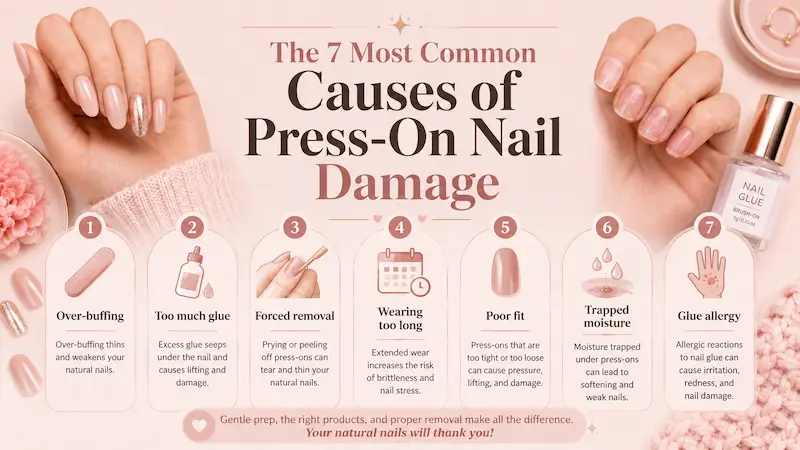
3. The 7 Most Common Causes of Press-On Nail Damage
Press-on nail damage usually has a clear cause. Understanding the cause makes it easier to prevent the same problem next time.
3.1. Over-Buffing the Natural Nail
A little buffing can help press-ons adhere better, but too much buffing can thin and weaken the natural nail.
Your nail plate is made of layers. When you buff too aggressively, you remove some of those surface layers. This can make the nail feel soft, flexible, sensitive, or more likely to peel after removal.
You do not need to make your nails rough or scratchy for press-ons to stay on. A gentle buff is enough.
A good rule: buff only until the shine is reduced, not until the nail feels thin.
If your nails are already peeling, sore, or weak, skip heavy buffing and consider adhesive tabs instead of glue.
3.2. Using Too Much Nail Glue
More glue does not always mean a longer-lasting manicure. In many cases, too much glue makes press-ons harder to remove and increases the risk of surface damage.
A thick layer of glue can bond strongly to the nail plate. If you rush removal, the glue may pull away small layers of your natural nail with it. This can leave the nail looking white, dry, rough, or flaky.
Too much glue can also spill onto the cuticle or surrounding skin, which may cause irritation for some people.
For safer application, use a thin, even layer of glue. The goal is full contact between the press-on and the natural nail, not a thick pool of glue underneath.
3.3. Pulling, Peeling, or Popping Them Off
This is one of the biggest causes of press-on nail damage.
If a press-on feels loose, it can be tempting to pop it off. But even if part of the nail is lifting, some glue may still be attached to your natural nail. Pulling it off can remove the top layers of your nail plate.
This can cause:
- White marks
- Peeling
- Splitting
- Rough texture
- Thin or sore nails
- Tenderness after removal
Press-ons should never be forced off. They should be softened and loosened first. If the nail does not slide off easily, it is not ready. If your set does not slide off easily, follow our guide on how to remove press-on nails without damage before trying again.
A safer rule is simple: soak, loosen, and gently lift — never rip.
3.4. Wearing Press-Ons Too Long or Back-to-Back
Press-on nails are temporary. Even a strong set should not be treated like a permanent nail enhancement. If you are not sure when to remove a set, our guide on how long press-on nails last explains the usual wear time for glue and adhesive tabs.
When press-ons are worn too long, the adhesive can begin to break down. Small gaps may form between the press-on and the natural nail. Once that happens, water, soap, sweat, lotion, or dirt can get trapped underneath.
That trapped moisture can create a better environment for irritation, odor, discoloration, or possible infection.
Wearing press-ons back-to-back without breaks can also make your natural nails feel weaker over time, especially if you use glue each time and remove each set aggressively.
A good habit is to check your natural nails after every removal. If they look healthy and feel comfortable, you can usually apply another set carefully. If they look dry, flaky, sore, or irritated, give them time to recover.
If you want longer wear without overusing glue, use our tips to make press-on nails last longer safely.
3.5. Poor Fit or Nails That Are Too Small
A press-on nail should fit your natural nail comfortably from sidewall to sidewall. It should not need to be forced down. If your press-ons feel tight or lift at the edges, use our press-on nail sizing guide to choose a better fit.
If the press-on is too small, it can squeeze the natural nail and create pressure. If it is too curved for your nail shape, it may press against the nail plate uncomfortably. If it is too wide and touches the skin, it may lift faster or irritate the cuticle area.
Poor fit can lead to:
- Pressure on the natural nail
- Faster lifting
- Uneven glue contact
- Soreness
- Higher chance of snagging
- More force needed during removal
Length also matters. Very long press-ons create more leverage. If they catch on hair, clothing, bags, or hard surfaces, the force can pull on your natural nail underneath.
For the lowest damage risk, choose a size that covers your natural nail without pressing into the skin. If you are between two sizes, choose the slightly larger nail and gently file the sides for a custom fit.
3.6. Gaps That Trap Moisture
One hidden cause of press-on nail problems is poor adhesion.
If the press-on does not sit flat against the natural nail, tiny air pockets may form underneath. These gaps can trap moisture when you wash your hands, shower, swim, or apply lotion. If you keep seeing gaps near the cuticle or sidewalls, learn why press-on nails lift and how to prevent it.
A small amount of lifting may not seem serious at first, but once water gets under the nail, the area becomes harder to dry properly. This can lead to discoloration, odor, irritation, or a higher risk of nail infection.
Remove a press-on if:
- It is lifting near the cuticle.
- Water feels trapped underneath.
- The nail smells unusual.
- You notice green, yellow, or dark discoloration.
- The nail feels painful or warm.
- The skin around the nail becomes swollen or red.
Do not try to “fix” a lifted press-on by adding more glue over the gap. This can seal in moisture. It is safer to remove the nail, clean and dry the area, and only reapply if the natural nail looks healthy. If a nail comes off cleanly, follow our guide on how to fix a press-on nail that falls off instead of sealing moisture under old glue.
3.7. Glue Allergy or Skin Irritation
Some nail problems are not caused by the press-on nail itself, but by sensitivity to nail glue or adhesive ingredients.
Nail glue can irritate the skin around the nail, especially if it touches the cuticle, sidewalls, or broken skin. Some people may also develop an allergic reaction to ingredients used in nail adhesives.
Possible signs of glue irritation or allergy include:
- Itching
- Burning
- Redness
- Swelling
- Rash around the nails
- Blisters
- Skin peeling
- Tender cuticles
If this happens, remove the press-ons gently and stop using that glue. Do not apply another set over irritated skin. If the reaction is painful, spreading, or not improving, ask a dermatologist or medical professional for advice.
4. Signs Your Natural Nails Are Damaged After Press-Ons
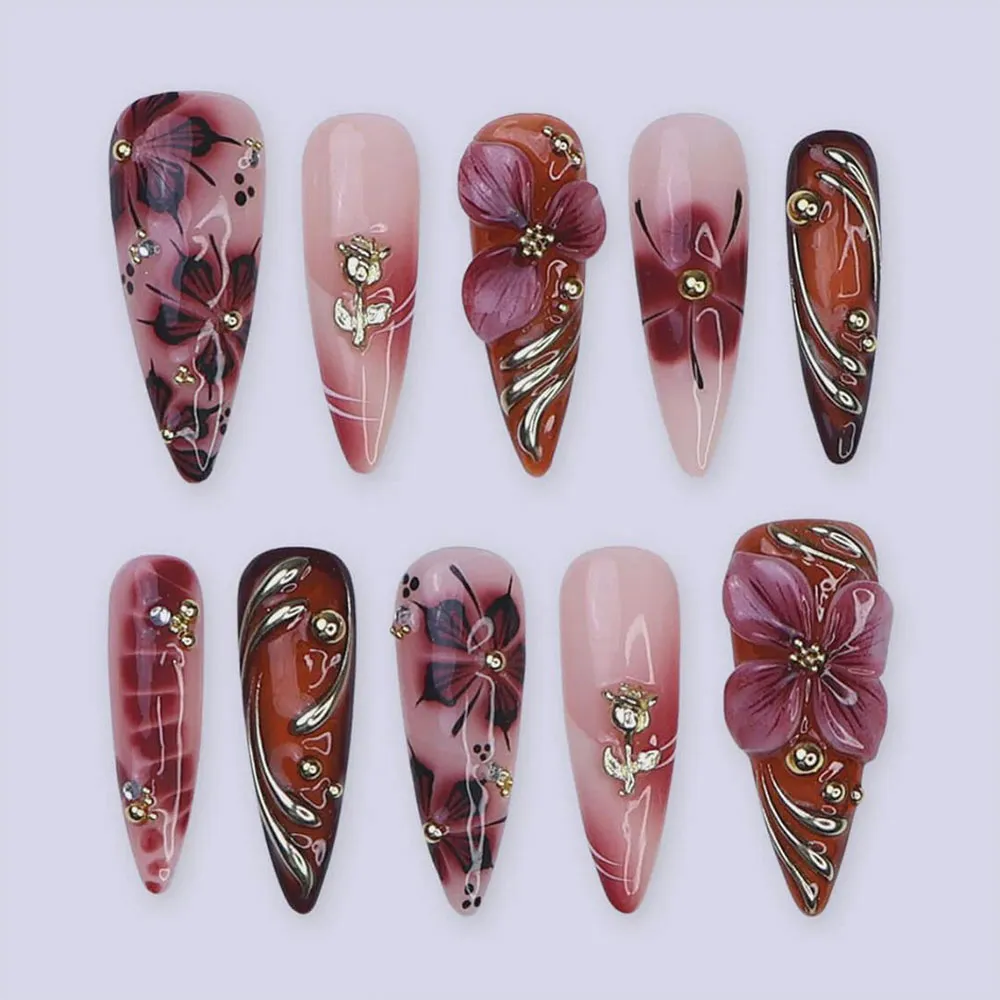
Not every change after removal means serious damage. Sometimes nails look dry simply because glue, remover, or washing has temporarily dehydrated the surface. But some signs mean your nails need a break.
| Sign | What It May Mean | What To Do |
|---|---|---|
| White patches or chalky marks | Surface dryness or keratin damage | Moisturize and avoid buffing |
| Peeling or flaking | Nail plate layers are weakened | Take a break from glue |
| Thin, bendy nails | Over-buffing or repeated removal stress | Keep nails short and gentle |
| Rough texture | Surface layers were disturbed | Use cuticle oil and avoid picking |
| Soreness after removal | Nail plate or nail bed irritation | Stop press-ons temporarily |
| Redness or swelling | Possible irritation or infection | Do not reapply; seek advice if it worsens |
| Pus or throbbing pain | Possible infection | Get medical help |
| Green or dark discoloration | Moisture trapped under a lifted nail | Remove product and monitor closely |
| Itchy rash or blisters | Possible glue allergy | Stop using that adhesive |
Mild white patches, dryness, and peeling usually happen on the nail plate. They can improve as the nail grows out, but you should avoid making them worse with more buffing, picking, or harsh removal.
Pain, swelling, pus, heat, strong redness, or unusual discoloration should be treated more seriously. Do not cover those signs with another set of press-ons.
5. Are Glue-On Press-Ons More Damaging Than Adhesive Tabs?
Glue-on press-ons are not automatically damaging, but they usually carry a higher damage risk than adhesive tabs because the bond is stronger.
Nail glue helps press-ons last longer, but it also requires more careful removal. If you pull off a glued press-on too early, the glue may take surface layers of your natural nail with it.
Adhesive tabs are usually gentler because they create a softer, less permanent bond. They are easier to remove and often better for short-term wear, reusable nails, events, photoshoots, or nails that already feel slightly weak. Adhesive tabs are also helpful if you want to reuse press-on nails after short-term wear.
A simple rule:
- Use adhesive tabs for short wear or weaker nails.
- Use nail glue for longer wear, but only with gentle prep and careful removal.
- Avoid using glue on nails that are painful, peeling, infected, or severely thin.
Choosing the right nail glue can help improve hold without using too much product.
6. Can Press-Ons Make Weak or Thin Nails Worse?
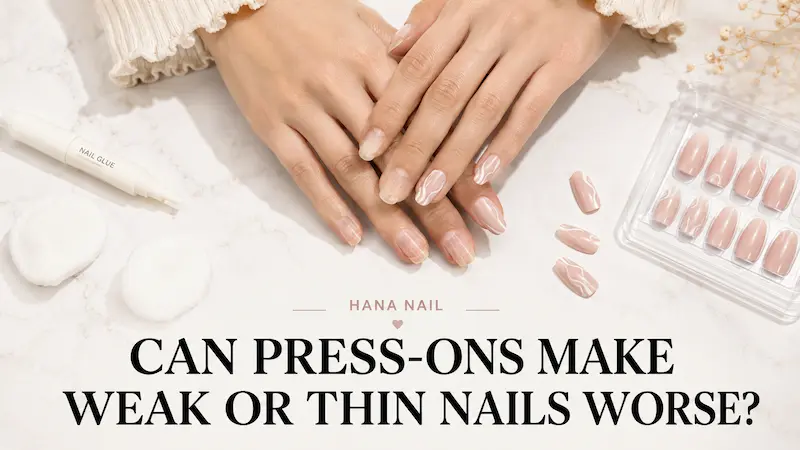
Yes. If your natural nails are already weak, thin, peeling, painful, or damaged, press-ons can make the problem worse — especially if you use nail glue.
Press-ons need a healthy surface to attach to. If the nail plate is already peeling or splitting, glue may bond to damaged layers and pull them up during removal. This can make the nail look thinner, rougher, or more uneven afterward.
Be extra careful if your nails are weak after:
- Acrylic nails
- Gel manicures
- Gel-X extensions
- Frequent acetone use
- Nail biting or picking
- Previous press-on removal damage
- Over-filing or over-buffing
- A recent nail injury
A good rule is: if your natural nail hurts before application, do not cover it with a press-on.
If the nail is painful, cracked, lifting, infected, or extremely thin, it is better to wait until it improves.
7. How to Prevent Press-On Nail Damage
You do not need aggressive filing, thick glue, or forceful pressure to get a good press-on manicure. The safest approach is gentle prep, correct fit, and patient removal.
To reduce damage:
- Start with clean, dry nails.
- Avoid heavy buffing.
- Choose the correct nail size.
- Use a thin, even layer of glue.
- Keep glue away from the cuticle and skin.
- Do not force a press-on that feels too small.
- Remove lifted nails early.
- Do not add glue over trapped moisture.
- Never pull, peel, or pop the nails off.
- Moisturize after removal.
- Take a break if your nails feel thin, sore, or peeling.
For the full application process, follow our step-by-step guide on how to apply press-on nails correctly.
8. What to Do If Your Nails Are Already Damaged
If your nails look damaged after press-ons, do not panic. Many cases are mild surface damage and improve as the nail grows out. The most important thing is to avoid repeating the same cause of damage.
| Problem | What To Do |
|---|---|
| White or chalky nails | Apply cuticle oil, avoid buffing, and let the surface grow out |
| Peeling or flaking | Pause glue-on press-ons and keep nails trimmed short |
| Thin or bendy nails | Avoid new glue sets until the nail feels stronger |
| Rough texture | Do not pick or file aggressively; moisturize regularly |
| Pain or tenderness | Stop using press-ons on that nail until it improves |
| Green, yellow, or dark discoloration | Remove product, keep the nail dry, and monitor closely |
| Redness, swelling, pus, or warmth | Seek medical advice |
| Rash, itching, or blisters | Stop using that adhesive and consult a dermatologist if needed |
Recovery time depends on the level of damage. Mild dryness may improve in a few days. Peeling or thin nails may need several weeks. More serious symptoms, such as pain, swelling, pus, or unusual discoloration, should not be covered with another artificial nail.
During recovery, keep nails short, moisturize often, avoid aggressive buffing, and give weak areas time to grow out.
9. Are Press-Ons More Damaging Than Acrylics or Gel?
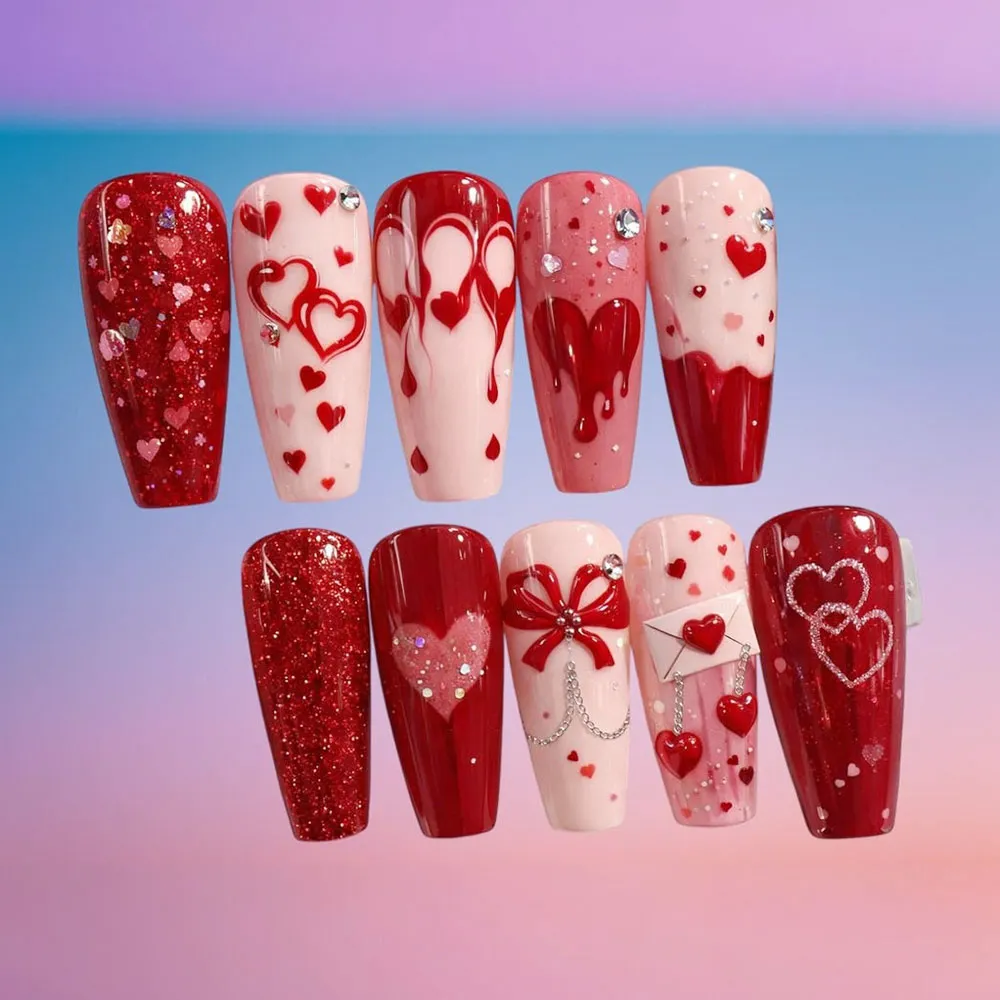
Press-ons can be less damaging than acrylics or gel extensions because they usually do not require heavy filing, sculpting, or curing under a lamp. However, they are not damage-free.
The main risk with press-ons comes from glue, poor fit, trapped moisture, wear time, and forced removal. Acrylics and gel manicures often carry different risks, such as heavy filing, product buildup, acetone exposure, or improper salon removal.
So, are press-ons safer? They can be — if you apply and remove them correctly. For a full breakdown of filing, removal, cost, and nail damage risk, compare press-on nails vs acrylic nails.
10. Final Takeaway: Do Press-On Nails Ruin Your Nails?
Press-on nails do not usually ruin natural nails by themselves. Most damage happens because of how they are applied, worn, or removed.
The biggest causes of press-on nail damage are over-buffing, too much glue, poor fit, trapped moisture, wearing lifted nails too long, pulling them off, and applying them over weak or painful nails.
If your nails are healthy, you prep gently, choose the right size, use a thin layer of glue, and remove press-ons slowly, they can be a low-damage manicure option for many people.
But if your nails are thin, peeling, sore, discolored, or irritated, take a break before applying another set.
The safest rule is simple:
Press-ons should protect your style, not punish your natural nails.
11. FAQs About Press-On Nail Damage
Do press-on nails damage your natural nails?
Press-on nails can damage natural nails, but they usually do not cause damage by themselves. Most damage comes from over-buffing, using too much glue, wearing lifted nails too long, or pulling the press-ons off instead of removing them gently.
When press-ons are applied lightly, fitted correctly, and removed without force, the damage risk is usually low.
Why are my nails white after removing press-ons?
White patches after removing press-ons are often a sign of surface dryness or mild keratin damage on the nail plate. This can happen when glue is pulled off too quickly, the nail was over-buffed, or the surface became dehydrated.
Do not buff the white spots away aggressively. Keep your nails short, apply cuticle oil, moisturize regularly, and give your nails time to grow out.
Is nail glue bad for your nails?
Nail glue is not automatically bad for your nails, but it can cause problems if too much is used or if the press-ons are removed forcefully. A strong glue bond can pull away surface layers of the natural nail during removal.
To reduce damage, use a thin, even layer of glue and never peel or pop the nails off.
Are adhesive tabs better than glue for weak nails?
Adhesive tabs are usually gentler than nail glue because they create a softer bond and are easier to remove. They are a better option for short-term wear, reusable press-ons, events, or nails that already feel slightly weak.
However, adhesive tabs do not usually last as long as glue. If your nails are painful, infected, cracked, or lifting, avoid both tabs and glue until the nail improves.
Can I put press-ons on damaged nails?
You should not apply press-ons over nails that are painful, cracked, infected, lifting, or severely thin. Covering damaged nails can trap moisture, create pressure, and make it harder to monitor the problem.
If the damage is only mild dryness and there is no pain, adhesive tabs may be a gentler short-term option. Still, it is usually better to let the nail recover first.
What should I do if my nails hurt after press-ons?
If your nails hurt after press-ons, stop wearing them temporarily. Pain may mean the nail plate, nail bed, or surrounding skin has been irritated or injured.
Remove any remaining product gently, keep the area clean and dry, and avoid applying another set until the pain is gone. If the pain continues, gets worse, or comes with swelling, redness, pus, or discoloration, ask a medical professional for advice.
Can press-on nails cause nail fungus or infection?
Press-on nails may increase the risk of infection if they lift and trap moisture underneath. This is more likely when a set is worn too long, applied with gaps, or glued over an already unhealthy nail.
To reduce the risk, remove lifted nails early, keep your nails dry, avoid sealing moisture under glue, and do not apply press-ons over irritated or infected nails.
Sources & Editorial References
- American Academy of Dermatology Association: artificial nails can hide or worsen existing nail damage, and artificial nail routines may contribute to brittle, damaged nails when not handled carefully.
- DermNet: press-on and pre-glued artificial nails use acrylic glues; methacrylate-based glues may cause allergic contact dermatitis, and ethyl 2-cyanoacrylate may be associated with onycholysis.
- Cleveland Clinic: key press-on nail risks include infection, allergic reaction, and damage such as brittle nails or breakage; warning signs can include swelling, redness, tenderness, and discoloration.
- Healthline: strong nail glue often requires careful adhesive softening/removal, and forced removal can increase the risk of natural nail damage.