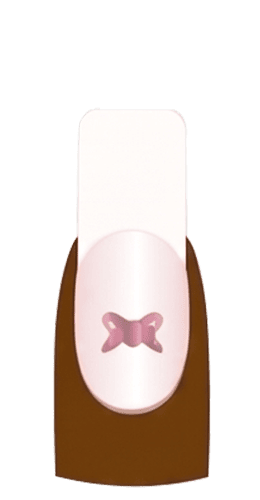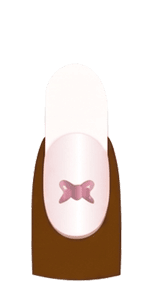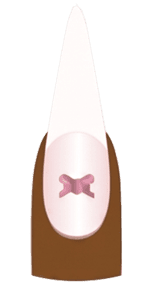
Troubleshooting & Daily Wear
Why Are My Press-On Nails Lifting? Fit, Curve, Glue & Prep Fixes
Press-on nails usually lift when the nail is not sitting flush against your natural nail or when the adhesive bond starts to weaken. This can happen at the cuticle, along the sidewalls, near the tip, or through a small center gap under the press-on.
The most common causes are poor fit, a press-on nail that is too curved for your nail bed, oil or moisture left on the nail, invisible cuticle residue, uneven glue coverage, air bubbles, water exposure too soon after application, or too much stress from long nails and daily tasks.
A tiny, clean lift may sometimes be resealed. A large gap, trapped moisture, pain, redness, swelling, odor, or green/yellow/brown discoloration means it is safer to remove the press-on and reapply later. If you are still learning the basics, start with Hana Nail’s complete beginner’s guide to press-on nails and our step-by-step guide on how to apply press-on nails.
1. What Does “Lifting” Mean With Press-On Nails?
Lifting means part of the press-on nail has started separating from your natural nail, even if the nail has not completely fallen off yet. A lifted nail may still look attached, but the seal is no longer secure.
- The cuticle edge feels raised.
- Hair gets caught under the nail.
- The side of the nail feels loose.
- The tip clicks or moves when you press it.
- You can see a gap between the press-on and your natural nail.
- Water seems to get under the nail after washing your hands or showering.
Lifting is different from a nail falling off. When a nail falls off, the entire adhesive bond has failed. When a nail lifts, part of the bond is still holding, but one edge or area has opened. That small gap can catch on hair, snag on clothing, or let moisture sit underneath the press-on.
If your issue is not a lifted edge but the whole nail popping off, use our guide on why press-on nails keep falling off instead. That article focuses on complete bond failure, while this article focuses on partial lifting, curve mismatch, and edge gaps.
2. Are Your Press-On Nails Too Curved for Your Nail Beds?
This is the most important fit issue to check if your press-ons keep lifting even when your prep and glue routine seem correct. Some press-on nails have a deeper C-curve, while some natural nails are flatter, wider, or less arched. If the press-on is too curved for your nail bed, it may not sit flush.
From above, the nail may look like the right size. But from the side, you may see a hollow center gap or feel the nail rocking during dry fitting. Adding more glue can fill the space temporarily, but it does not remove the tension that makes the nail want to spring back up.
Your press-ons may be too curved if:
- The nail rocks during dry fitting.
- You see a center gap before adding glue.
- The sidewalls do not sit evenly.
- The nail feels tight, pinchy, or uncomfortable.
- You have to press very hard to flatten the press-on.
- The cuticle edge lifts a few hours or days after application.
To fix a curve mismatch, do not force the nail down with extra glue. Choose a flatter press-on shape, size up slightly and file the sidewalls, or use a custom sizing option if your nails are naturally flat or wide. For more help matching width, length, and curve, see our guide on how to size press-on nails correctly.
3. 9 Other Reasons Your Press-On Nails Are Lifting
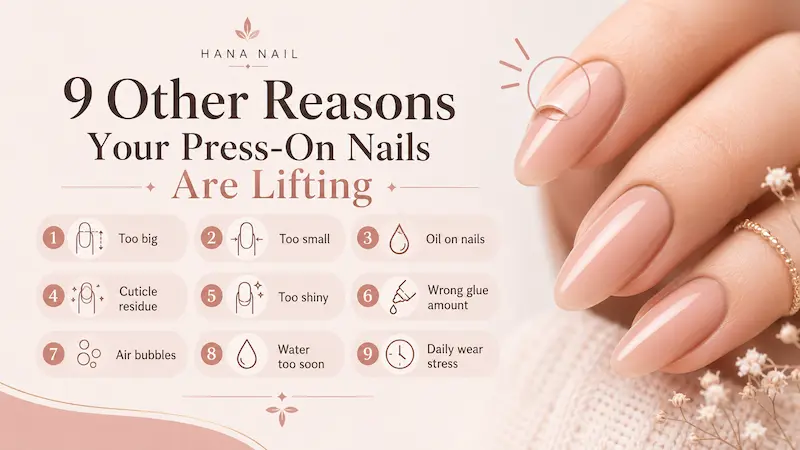
3.1. The Press-On Is Too Big and Sitting on Your Skin
A press-on nail should sit on your natural nail plate, not on your skin. If the press-on is too large, the sides may overlap your cuticle or sidewalls. Glue does not bond well to skin because skin produces oil and moves more than the nail plate, so the edges can lift quickly.
Choose one size smaller or gently file the sides before applying. A good fit should cover the natural nail from sidewall to sidewall without touching the surrounding skin.
3.2. The Press-On Is Too Small and Pulling at the Sidewalls
A press-on that is too small can leave the side edges exposed or create pressure where the nail is being forced to fit. This can cause pinching, side lifting, or a narrow look that does not fully cover the natural nail.
If you are between sizes, size up and file down. A slightly larger press-on can be customized; a too-small nail usually cannot be made to cover properly.
3.3. Oil, Lotion, Sunscreen, or Cuticle Oil Was Left on the Nail
Press-on glue and adhesive tabs need a clean, dry nail surface. Even a thin layer of hand cream, sunscreen, cuticle oil, or body lotion can create enough slip to weaken the bond.
Before applying, wash and dry your hands, lightly buff away shine, remove dust, and wipe each nail with alcohol. Do not apply cuticle oil until after the nails are fully secured.
3.4. Invisible Cuticle Was Left on the Nail Plate
Cuticle residue is a common reason press-ons lift at the base. The cuticle is not only the visible skin around your nail; a thin layer of dead tissue can sit on the nail plate. If glue bonds to that residue instead of the nail, the base can separate as the residue lifts.
Gently push back the cuticle area and remove surface residue from the nail plate. Avoid cutting live skin or scraping aggressively. If you are worried about nail damage from prep, read our guide on whether press-on nails can damage natural nails.
3.5. Your Natural Nails Were Too Smooth or Shiny
A glossy nail surface can make it harder for glue to grip. You only need a light buff to remove shine and create a matte surface. Do not over-buff: thinning the nail can make future applications less comfortable and may increase sensitivity.
3.6. You Used Too Much or Too Little Glue
Too little glue can leave dry spots and empty gaps under the press-on. Too much glue can flood the cuticle or sidewalls, spill onto the skin, and create an uneven bond. The goal is full contact, not a puddle.
Use a thin layer on the natural nail plus a small amount inside the press-on. If glue leaks around the sides, the nail may be too large or you may be using too much product. For glue choices and wear-time differences, see Hana Nail’s guide to the best nail glue for press-on nails.
3.7. Air Bubbles Were Trapped During Application
Air bubbles create weak spots under the press-on. They often happen when the nail is placed flat all at once, shifted too much after touching the glue, or not pressed firmly enough.
Place the press-on near the cuticle area first, angle it slightly downward, then press toward the tip. Hold steady pressure and avoid lifting or repositioning the nail repeatedly.
3.8. Your Nails Got Wet Too Soon After Application
Water does not always ruin press-ons, but it can weaken a fresh or already-lifted bond. If your nails lift after showering, the issue is usually an existing gap, uneven glue coverage, or water exposure before the adhesive fully set.
Apply press-ons after showering rather than right before, and avoid soaking your hands soon after application. For a deeper daily-wear answer, see our guide to showering with press-on nails.
3.9. Your Nail Length or Daily Habits Create Too Much Leverage
Long coffin, stiletto, almond, or sculpted press-ons create more leverage at the tip. Typing, opening cans, washing hair, cleaning, and carrying bags can pull against the adhesive and cause lifting at the free edge, sides, or cuticle.
For everyday wear, short or medium lengths are usually easier to keep sealed. If you wear longer sets often, our guide on typing with long press-on nails can help you reduce pressure on the tips.
4. Where Are Your Press-Ons Lifting? A Quick Diagnosis Chart
Use this chart to identify the most likely cause based on where the lifting starts.
| Where the nail is lifting | Most likely cause | What to do |
| Cuticle area | Cuticle residue, glue too close to skin, air bubble, or curve mismatch | Re-prep the nail, avoid flooding the cuticle, and apply from base to tip |
| Sidewalls | Size too big, size too small, side overlap, or wrong curve | Re-size the nail, file the sides, or choose a better curve |
| Tip or free edge | Daily stress, water exposure, or not enough glue near the tip | Use shorter nails, apply even glue coverage, and avoid using nails as tools |
| Center gap | Press-on is too curved or natural nail is too flat | Choose flatter press-ons or size up and file the sides |
| One nail only | That nail was oily, poorly fitted, or exposed to more stress | Remove, re-prep, and reapply that single nail |
| Multiple nails after 1-3 days | Prep issue, glue issue, water exposure, or wrong sizing | Review your full application routine |
The key is to diagnose the pattern. If only one nail lifts, it may be a one-time prep or fit issue. If most nails lift quickly, your application routine, glue coverage, or press-on curve likely needs adjustment.
5. Can You Fix a Press-On Nail That Is Lifting?
Sometimes, yes — but not always. A small, clean lift can sometimes be resealed. A large lift, wet gap, painful nail, or discolored nail should not be glued down again.
5.1. When a Small Lift Can Be Re-Sealed
You may be able to reseal a lifted press-on if the lift is tiny, the nail still feels secure, the area is clean and dry, and there is no pain, redness, swelling, odor, or discoloration.
To reseal it, dry the nail completely, add a tiny amount of nail glue under the lifted edge, press firmly for 20-30 seconds, wipe away extra glue, and avoid water while the bond sets. Use only a small amount of glue; flooding a lifted nail can trap moisture or debris.
5.2. Do Not Re-Glue a Lifted Press-On If You Notice These Signs
- Pain or pressure
- Redness or swelling
- Green, yellow, brown, or dark discoloration
- Odor
- Water trapped under the nail
- A large gap that keeps reopening
- A press-on that was clearly the wrong size or curve
In these cases, remove the press-on gently and let the natural nail recover before reapplying. If symptoms continue or worsen, contact a dermatologist or healthcare professional. For safe removal steps, follow our guide on how to remove press-on nails without damage.
6. How to Stop Press-On Nails From Lifting Next Time
The best prevention routine is not about using more glue. It is about getting a flush fit, sealing the edges, and avoiding tension under the nail.
- Dry fit every nail before adding glue.
- Check that the press-on does not rock or leave a center gap.
- Make sure the sidewalls sit on the nail plate, not the skin.
- Size up and file down if you are between sizes.
- Remove oil and dust before applying.
- Use enough glue to cover the nail without flooding the cuticle.
- Press from the cuticle area toward the tip.
- Avoid soaking your hands right after application.
For a complete wear-time routine, use our full long-wear checklist for press-on nails. If your nails are not just lifting but repeatedly popping off, compare this with our guide on how to prevent press-ons from popping off.
7. Are Lifting Press-On Nails Bad for Your Natural Nails?
A tiny lift is not always a serious problem, especially if you catch it early. The risk comes from ignoring the lift, forcing the nail down repeatedly, or allowing moisture and debris to sit underneath the press-on.
Lifting can become a problem when the nail snags and pulls on your natural nail, water gets trapped under the press-on, you keep adding glue over an old gap, you rip the nail off instead of soaking it, or you continue wearing the nail after pain or discoloration appears.
Press-ons are safest when they are applied to clean, healthy nails, worn for an appropriate amount of time, and removed gently. If a nail is lifting badly, removing and reapplying is usually safer than trying to force it to stay on.
8. FAQ About Press-On Nails Lifting
Why are my press-on nails lifting at the cuticle?
Press-on nails usually lift at the cuticle because of cuticle residue, oil, glue flooding the skin, air bubbles near the base, or a press-on that does not sit flush against your natural nail. If the base edge is raised, hair and water can easily get underneath.
Why are my press-on nails lifting at the sides?
Side lifting is usually caused by incorrect sizing or curve mismatch. The press-on may be too big and sitting on your skin, too small and pulling at the sidewalls, or too curved for your natural nail bed.
How do I know if my press-on nails are too curved?
Your press-ons may be too curved if they rock during dry fitting, leave a hollow center gap, feel tight at the sides, or lift near the cuticle shortly after application. A better fit should sit flush without needing heavy pressure.
Can I glue down a lifting press-on nail?
You can glue down a lifting press-on only if the lift is very small, clean, dry, painless, and free from discoloration. If the gap is large, wet, painful, smelly, or discolored, remove the nail instead of re-gluing it.
Why do my press-ons lift after showering?
Press-ons may lift after showering if the glue bond was not fully set, if water entered a small gap, or if the nails were not sealed properly before water exposure. Avoid soaking your hands soon after applying press-ons and make sure each nail sits flush before gluing.
Should I remove a press-on nail if it is lifting?
Yes, remove it if the lift is large, the nail moves, hair keeps catching, water has gotten underneath, or you notice pain, redness, swelling, tenderness, odor, or discoloration. A badly lifted nail is safer to remove than to keep forcing down with glue.
Final Thoughts
Press-on nails usually lift because the nail is not fully sealed to your natural nail. Sometimes the issue is prep, oil, glue, water exposure, or daily stress. But if your press-ons keep lifting even when you apply them carefully, the hidden problem may be fit — especially if the press-on nails are too curved for your natural nail beds.
Always dry fit first. Look for rocking, gaps, pinching, or sidewall mismatch before you add glue. A press-on that fits well should feel comfortable, sit flush, and need only steady pressure to bond.
If a nail lifts slightly and the area is clean and dry, you may be able to reseal it. If the gap is large, wet, painful, or discolored, remove it safely and start fresh.
Sources and Editorial References
- Cleveland Clinic — Potential risks of press-on nails, including infection, allergic reactions, nail damage, and trapped moisture.
- American Academy of Dermatology — Artificial nail care guidance and the protective role of cuticles.
- Business Insider — Expert-backed tips on press-on nail fit, buffing, glue use, and avoiding water after application.