Troubleshooting & Daily Wear
Can You Swim With Press-On Nails? Pool, Ocean & Aftercare Tips
Yes, you can swim with press-on nails, but they are water-resistant rather than fully waterproof. The press-on nail tips can usually handle water, but the adhesive bond underneath can weaken from long soaking, chlorine, saltwater, hot tubs, or lifted edges.
A short swim is usually fine when your press-ons are applied correctly, especially if you use nail glue instead of adhesive tabs. The bigger risk happens when water gets under the nail edges and becomes trapped between the press-on and your natural nail.
New to press-ons? Start with our complete beginner’s guide to press-on nails before planning your pool or beach manicure.
1. Can You Swim With Press-On Nails? Quick Answer
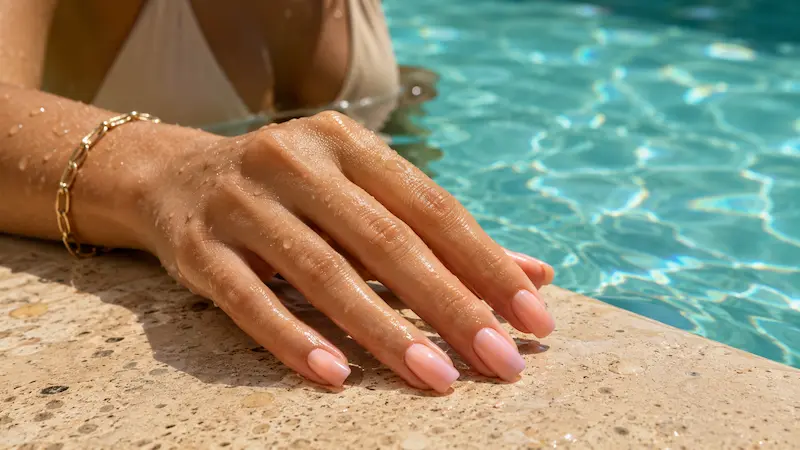
Yes, you can swim with press-on nails, especially for short periods. For the best hold, apply them with nail glue, make sure your natural nails are clean and dry before application, and avoid swimming immediately after putting them on.
Swimming becomes riskier if your press-ons are already lifting, if you are using adhesive tabs, or if you plan to stay in the water for a long time. After swimming, rinse your hands, dry your nails carefully, and check the edges for lifting.
If a press-on feels loose, painful, or looks like water is trapped underneath, do not ignore it.
2. What Happens to Press-On Nails in Water?
Press-on nails are designed to sit on top of your natural nails. Most press-on tips are made from durable plastic or gel-like materials, so they do not dissolve or break down just because you go swimming.
The real weak point is the adhesive bond.
When your hands are underwater, water can slowly work its way around the edges of the press-on nail. This is most likely to happen near the cuticle area, sidewalls, or free edge. Once water gets into those small gaps, the adhesive can soften or lose grip.
That is why one person may swim with press-ons and have no issue, while another person may lose a nail after a pool day. The difference usually comes down to sizing, adhesive type, nail prep, swim time, and whether the nails were already lifting before getting wet.
A snug fit matters. If the press-on is too wide, too curved, or not flush against your natural nail, water has more room to get underneath. For a better fit, follow our guide on how to size press-on nails correctly.
3. Pool, Ocean, Lake, or Hot Tub: Which Is Riskiest?
Not all water exposure is the same. A quick dip in a pool is different from sitting in a hot tub for 30 minutes or spending all day in the ocean.
| Water type | Risk level | Why it matters | Best advice |
|---|---|---|---|
| Pool / chlorinated water | Medium to high | Chlorine, soaking, and repeated swimming can weaken the adhesive | Keep swims short and dry nails well afterward |
| Ocean / saltwater | Medium | Saltwater can leave residue and affect the adhesive bond | Rinse with fresh water after swimming |
| Lake / freshwater | Medium | Prolonged soaking and water quality can be unpredictable | Avoid swimming if any nail is lifting |
| Hot tub / jacuzzi | Highest | Heat, soaking, and water jets can push water under the nail | Avoid long hot tub sessions with press-ons |
Hot tubs are usually the riskiest option for press-on nails. Heat can soften adhesive, and water jets can push moisture under the edges. If you want your manicure to last, a short swim is much safer than a long soak in hot water.
Showering is usually a different type of water exposure because it is shorter and less immersive. For shower-specific care, read our guide on whether you can shower with press-on nails.
It is also important not to assume that pool water is completely “clean” just because it contains chlorine. The CDC notes that chlorine and bromine do not kill germs instantly, and some germs can survive longer even in properly treated water. This is one reason you should avoid swimming with press-ons that are already lifting or trapping moisture.
4. Nail Glue vs Adhesive Tabs: Which Is Better for Swimming?
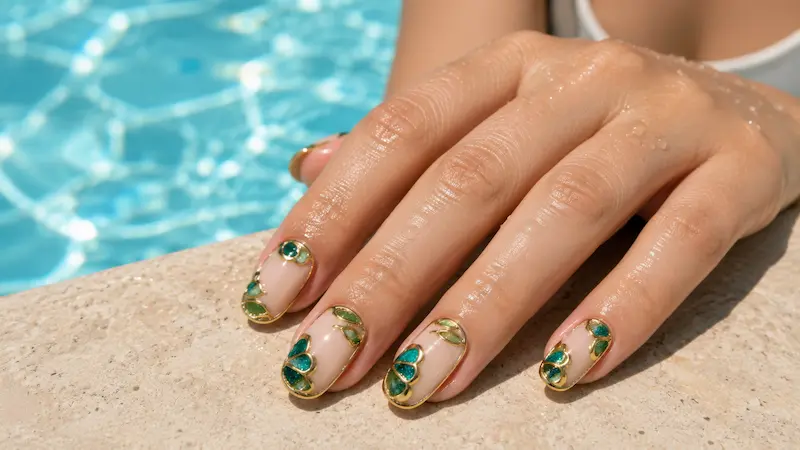
Nail glue is usually better than adhesive tabs if you plan to swim.
Glue creates a stronger bond between the press-on nail and your natural nail, making it the better choice for vacations, pool parties, beach days, or any time you want your nails to stay on for several days.
Adhesive tabs are better for short-term wear. They are convenient, gentle, and easy to remove, but they can lose grip faster when soaked, especially if you are swimming for a long time or using lotion, sunscreen, or oil around your hands.
That does not mean adhesive tabs are bad. They are great for one-day wear, photo shoots, events, or when you want to reuse your press-ons. But for swimming, glue is usually the safer choice.
One thing to avoid: do not keep adding glue under a nail that is wet, dirty, or already lifting. If water has gotten underneath the press-on, remove the nail safely, clean and dry both surfaces, then reapply it with fresh glue.
For a deeper comparison, read our guide to the best nail glue for press-on nails.
5. How Long Should You Wait Before Swimming After Applying Press-On Nails?
Try not to swim right after applying press-on nails. The adhesive needs time to set, and early water exposure can weaken the bond before it has fully secured.
For best results, apply your press-ons the night before a beach day, vacation, or pool party. This gives the glue more time to settle and reduces the chance of early lifting.
At minimum, keep your hands away from water for the first few hours after application when possible. Before swimming, check every nail. If one nail already feels loose, do not assume water will be fine. Swimming can make a small lift turn into a missing nail.
For the full prep process, see our step-by-step guide on how to apply press-on nails correctly.
6. How to Protect Press-On Nails Before Swimming
The best way to swim with press-on nails is to prepare them before they touch water.
Start with completely clean, dry nails. Any oil, lotion, sunscreen, or moisture left on the natural nail can make the adhesive weaker. If you are applying nails before a pool or beach day, avoid using hand cream or cuticle oil right before application.
Choose the right size for each nail. A press-on should cover your natural nail from sidewall to sidewall without pressing into the skin. If the nail is too big, file the sides slightly. If it is too small, it may leave exposed edges where water can get underneath.
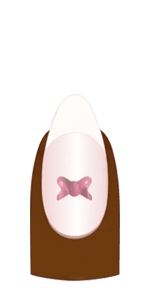
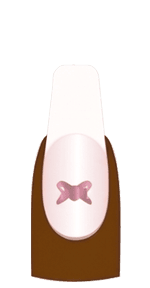
For swimming days, use nail glue instead of adhesive tabs. Choose short or medium-length nails if you plan to be active in the water. Long coffin, stiletto, or extra-long nails can catch on towels, swimwear, pool edges, beach bags, or hair.
It also helps to pack a small repair kit with nail glue, an alcohol pad, a mini file, and one or two spare nails. This is especially useful if you are traveling or wearing press-ons for a vacation.
7. What to Do While Swimming With Press-On Nails
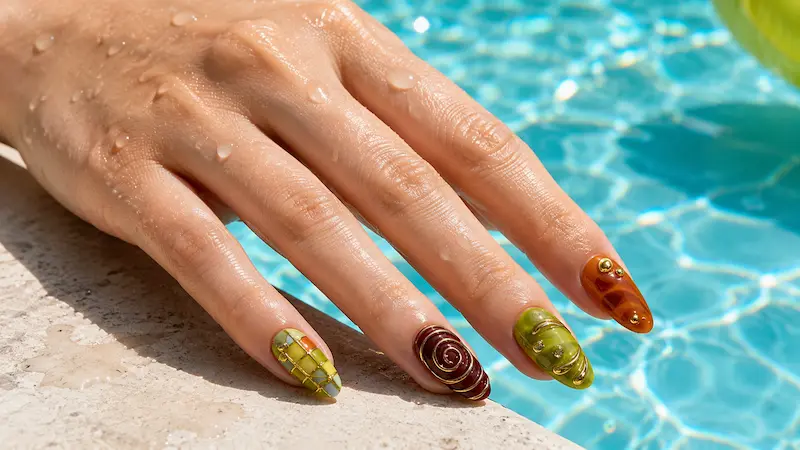
Once you are in the water, treat your press-ons gently. They may look strong, but they are still attached with adhesive.
Avoid using your nails as tools. Do not use them to grab the pool edge, open cans, adjust tight swim goggles, scrape sand, or pull at wet swimwear. These small actions can put pressure on the adhesive and cause lifting.
Try not to keep your hands underwater the entire time. Occasional swimming is usually easier on press-ons than long, continuous soaking. If you are lounging at the pool, keep your hands out of the water when you can.
Be extra careful at the beach. Sand, sunscreen, saltwater, and towels can all affect your manicure. Sand can get under lifted edges, while sunscreen and oils can make the nail area slippery.
If a press-on starts to lift while you are swimming, do not pull it off in the water. Get out, dry your hands, and check the nail properly.
8. What to Do After Swimming
After swimming, rinse your hands with fresh water, especially after swimming in the ocean or a chlorinated pool. This helps remove salt, chlorine, sunscreen, and sand from around the nails.
Then pat your hands dry with a clean towel. Pay attention to the cuticle area, sidewalls, and underside of the free edge. A cotton swab or tissue can help absorb water around the edges without pulling at the nail.
Once your nails are dry, check each press-on. Look for:
- a lifted cuticle edge;
- cloudy-looking moisture under the nail;
- a sidewall that no longer sits flat;
- a nail that clicks, moves, or feels loose;
- discomfort, redness, or swelling around the nail.
If everything feels secure, leave the nails alone. If a nail is only slightly lifted but still clean and dry, you may be able to press it down gently. If the gap is large or water is trapped underneath, removal and reapplication is safer.
For more detail, read our guide on why press-on nails lift.
Avoid applying cuticle oil directly around the edges immediately after swimming if your main goal is maximum hold. Oil is great for nail care, but it can also loosen adhesive if it gets under the press-on.
9. What If a Press-On Nail Falls Off in the Pool or Ocean?
If a press-on nail falls off while swimming, do not panic. The main rule is simple: do not glue it back on while your natural nail is still wet.
First, dry your hands completely. If you still have the press-on, rinse it with clean water and let it dry. Remove any old glue residue from the back of the press-on and from your natural nail. A small file or buffer can help smooth the surface.
Then clean the natural nail with an alcohol pad and wait until it is fully dry. Apply fresh glue and press the nail back on only when both surfaces are clean and dry.
If the nail fell off in a public pool, lake, or ocean and you cannot clean it properly, it may be better to use a spare nail instead of reusing that same one right away. Reapplying a dirty or wet nail can trap moisture or debris underneath.
If your natural nail looks damaged, painful, split, or irritated, skip reapplication until the nail feels normal again.
For a complete repair process, follow our guide on how to fix a press-on nail that falls off. If you want to wear the same set again, see our guide on how to reuse press-on nails safely.
10. Can Swimming Damage Your Natural Nails Under Press-Ons?
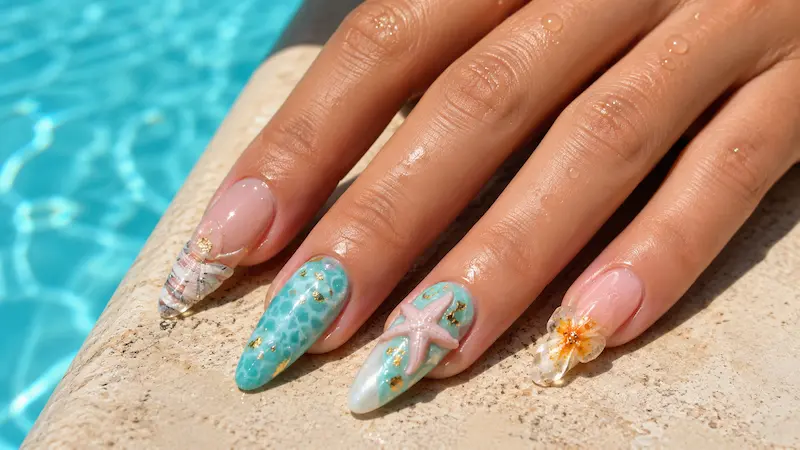
A short swim with well-applied press-ons is unlikely to damage your natural nails by itself. The bigger concern is what happens when a press-on lifts and moisture gets trapped underneath.
When there is a gap between an artificial nail and the natural nail, that space can become warm and moist. Mayo Clinic notes that this kind of gap can create an environment where a nail infection may flourish, and possible infection signs include redness, swelling, and pus.
This does not mean press-ons are unsafe for swimming. It means you should not ignore lifting, trapped water, pain, or unusual changes in the nail.
Remove the press-on and let your natural nail breathe if you notice pain, redness, swelling, pus, unusual discoloration, a bad smell, or a nail that is separating from the nail bed.
This article is for general nail-care education and is not a substitute for medical advice. If you notice pain, swelling, pus, discoloration, or a nail separating from the nail bed, remove the press-on and seek professional care.
For a broader safety discussion, read are press-on nails safe? and can press-on nails damage natural nails?.
11. When You Should Not Swim With Press-On Nails
There are times when swimming with press-ons is not worth the risk.
Avoid swimming with press-on nails if one or more nails are already lifting. Water can get under the lifted area and make the problem worse.
Do not swim if your natural nail is cracked, bleeding, painful, swollen, or irritated. Press-ons should not be used to hide a nail problem that needs care.
You should also avoid swimming right after applying your nails. Freshly applied press-ons need time to bond properly.
Hot tubs are another situation to be careful with. Long exposure to warm water can soften the adhesive and increase lifting. A quick dip may be okay for some people, but a long soak is much more likely to shorten your wear time.
12. Can You Swim Every Day With Press-On Nails?
You can swim every day with press-on nails, but they probably will not last as long as they would with normal wear.
Daily swimming creates repeated water exposure, pressure, and drying cycles. Over time, this can weaken the adhesive bond, especially around the cuticle area and sidewalls. If you swim laps, take water fitness classes, or spend hours in the pool each week, short or medium-length press-ons with nail glue will usually be more practical than long nails or adhesive tabs.
Check your nails after every swim. If the edges start lifting repeatedly, press-ons may be better for short events, vacations, or occasional pool days rather than long-term daily swim wear.
For general long-wear tips, read our guide on how to make press-on nails last longer.
13. How Long Will Press-On Nails Last If You Swim?
Swimming can shorten the wear time of press-on nails, but the exact result depends on your application, adhesive, nail shape, and how often you swim.
With strong nail glue and good prep, your press-ons may still last through occasional short swims. With adhesive tabs, long soaking, or repeated pool days, they may lift much sooner.
A single short swim may not make much difference. A full vacation with daily pool time, beach days, sunscreen, sand, and hot tubs can reduce your manicure’s lifespan.
Think of swimming as extra stress on the manicure. Your press-ons can handle some water, but they will last longer when you limit soaking and protect the adhesive bond.
For a full breakdown of wear time, see how long press-on nails last.
14. Best Press-On Nail Lengths and Styles for Swimming
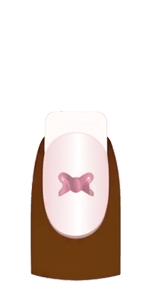
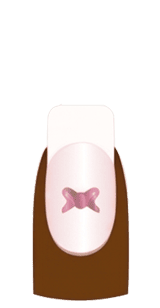
The best press-on nails for swimming are usually short to medium length. Short square, squoval, round, and oval shapes are easier to wear in the water because they are less likely to catch on towels, hair, swimwear, or pool edges.
Very long press-ons can still look beautiful for vacation photos, but they are not the most practical choice for active swimming. If you plan to surf, dive, play beach volleyball, or swim with kids, shorter nails are much easier to manage.
For beach trips and pool days, summer designs, ocean-inspired nails, glossy finishes, soft florals, and bright vacation colors all work well. The key is choosing a design you love in a length you can actually wear comfortably around water.
For more practical water-friendly styles, browse our short press-on nail ideas and vacation press-on nails.
Final Verdict: Is Swimming With Press-On Nails Worth the Risk?
Yes, you can swim with press-on nails. For most people, a short swim is fine when the nails are applied correctly and secured with nail glue.
The safest approach is to apply your press-ons before your swim day, choose the correct size, keep the length practical, avoid long soaking, and dry your nails carefully afterward.
The main thing to watch for is lifting. If water gets under the press-on, remove, clean, dry, and reapply the nail properly instead of trapping moisture underneath.
Press-ons can be a great choice for vacations, pool parties, beach photos, and summer events. Just treat them like a manicure that can handle water — not one that is completely waterproof in every situation.
FAQs About Swimming With Press-On Nails
Can you swim with press-on nails?
Yes, you can swim with press-on nails, especially for short periods. Use nail glue, apply the nails correctly, and dry them carefully after swimming.
Can you swim in a pool with press-on nails?
Yes, you can swim in a pool with press-on nails. Chlorine and long soaking may weaken the adhesive over time, so keep swims shorter and check for lifting afterward.
Can you swim in the ocean with press-on nails?
Yes, but rinse your hands with fresh water afterward. Saltwater, sand, and sunscreen can affect the adhesive and may make lifting more likely.
Are press-on nails waterproof?
The press-on nail itself is usually water-resistant, but the adhesive bond is not completely waterproof. Water can still get under the edges if the nail is not sealed well.
Is nail glue or adhesive tabs better for swimming?
Nail glue is better for swimming because it creates a stronger bond. Adhesive tabs are better for temporary wear and easy removal, but they are more likely to loosen with long water exposure.
How long should I wait to swim after applying press-on nails?
For best results, apply press-ons the night before swimming. At minimum, avoid water for the first few hours when possible so the adhesive has more time to set.
Can hot tubs make press-on nails fall off?
Yes, hot tubs can make press-on nails lift or fall off faster. Heat, soaking, and water jets can weaken the adhesive and push water under the edges.
What should I do if a press-on nail falls off while swimming?
Dry your hands first. Clean the natural nail and the press-on, remove old glue, and reapply only when both surfaces are fully dry. Do not glue a wet nail back on.
Can swimming cause infection under press-on nails?
Swimming itself does not automatically cause infection, but a lifted press-on can trap moisture underneath. If you notice pain, redness, swelling, pus, or unusual discoloration, remove the nail and seek professional advice.
Sources and Editorial References
- CDC — Healthy Swimming
- CDC — Home Pool and Hot Tub Water Treatment and Testing
- Mayo Clinic News Network — Women’s Wellness: Wearing Artificial Nails