Application & Nail Care
How to Remove Press-On Nails Without Damage: Safe At-Home Guide
Press-on nails are easy to apply, fun to wear, and much more flexible than salon manicures. But when it is time to take them off, removal matters just as much as application.
The safest way to remove press-on nails is to soak, soften, and gently lift—never pull, bite, or force them off. If you remove them too aggressively, you may peel away the top layers of your natural nails, leaving them weak, thin, or sore.
In this guide, you’ll learn how to remove press-on nails at home using warm water, oil, glue remover, or acetone, depending on how your nails were applied. If you are new to press-ons, you may also want to start with our complete guide to press-on nails before choosing your next set.
1. Quick Answer: The Safest Way to Remove Press-On Nails
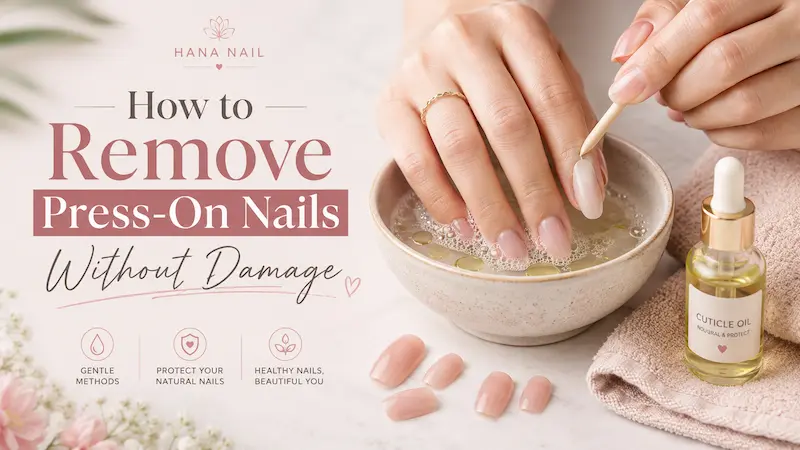
The safest way to remove press-on nails is to soak your fingertips in warm soapy water mixed with cuticle oil or olive oil for 10–15 minutes. Once the adhesive softens, gently lift each press-on from the side using a wooden cuticle stick. If a nail does not lift easily, soak it for another 5–10 minutes.
Do not pull, pry, bite, or force the nails off. For stubborn nail glue, use a press-on nail glue remover or acetone only when gentle soaking is not enough.
2. Before You Start: What Type of Adhesive Did You Use?
The best removal method depends on whether you used adhesive tabs, a light layer of nail glue, or a strong glue bond.
| Adhesive Type | How It Usually Feels | Best Removal Method | Can You Reuse the Press-Ons? |
|---|---|---|---|
| Adhesive tabs | Nails lift more easily | Warm water, soap, and oil | Usually yes |
| Light nail glue | Firm hold but softens with soaking | Warm water and oil, repeated if needed | Sometimes |
| Strong nail glue | Nails do not lift after soaking | Glue remover or acetone | Less likely |
| Unknown adhesive | You are not sure what was used | Start with the gentle soak method | Depends |
If you want to protect your natural nails, always start with the gentlest method first. You can move to stronger removal options only if the press-ons are still firmly attached.
For your next manicure, choosing the right adhesive can make both wear time and removal easier. See our guide to the best nail glue for press-on nails if you want a stronger hold without making removal unnecessarily harsh.
3. What You Need to Remove Press-On Nails Safely
Before removing your press-ons, prepare everything first so you do not rush the process.
You will need:
- A small bowl of warm water
- Gentle hand soap or dish soap
- Cuticle oil, olive oil, coconut oil, or baby oil
- A wooden cuticle stick or orangewood stick
- Cotton pads
- A soft nail buffer
- Hand cream
- Optional: acetone-free glue remover
- Optional: acetone for stubborn glue
Avoid sharp metal tools if you are removing press-ons at home. They can scrape or lift the surface of your natural nails if used too aggressively.
4. Method 1: Remove Press-On Nails With Warm Water, Soap, and Oil
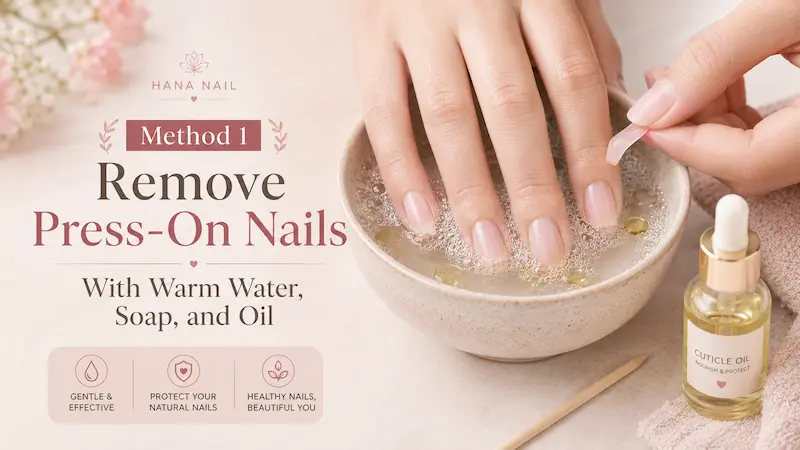
This is the best method to try first, especially if you used adhesive tabs or want to reuse your press-on nails.
Step-by-Step Instructions
- Fill a small bowl with warm water.
The water should feel comfortably warm, not hot. - Add a few drops of gentle soap.
Soap helps loosen oil, dirt, and adhesive around the nail edges. - Add cuticle oil or olive oil.
Oil helps soften the adhesive and makes it easier for the press-ons to slide off. - Soak your nails for 10–15 minutes.
Keep your fingertips fully submerged. - Check whether the press-ons are lifting.
Look for small gaps around the sidewalls or cuticle area. - Gently lift from the sides.
Use a wooden cuticle stick and apply light pressure only. - If the nail resists, soak again.
Do not force it. Soak for another 5–10 minutes and try again. - Remove leftover glue gently.
Use oil and a soft buffer only where needed. - Finish with cuticle oil and hand cream.
This helps restore moisture after removal.
This method takes a little patience, but it is the safest choice for most people. It also gives you the best chance of keeping the press-on nails intact for reuse.
5. Method 2: How to Remove Press-On Nails Without Acetone
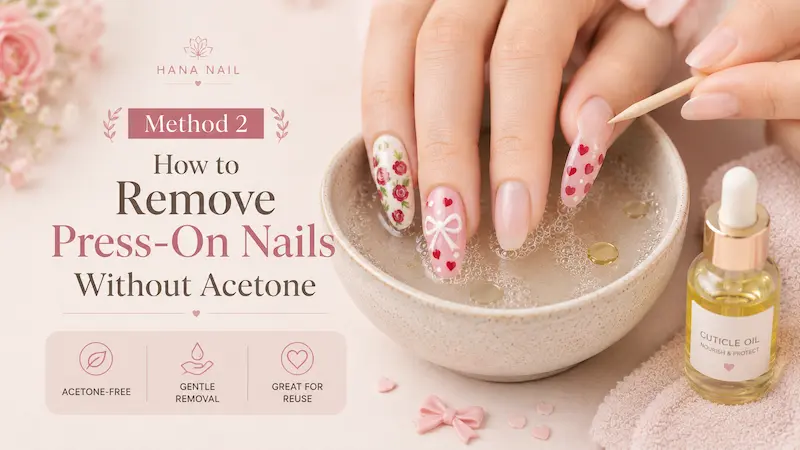
If you want to avoid acetone, use an oil-assisted soak. This method works well for adhesive tabs and light nail glue.
Start by soaking your nails in warm water, soap, and oil for 15 minutes. After soaking, apply extra cuticle oil around the edges of each press-on nail. Massage the oil into the sidewalls and cuticle area so it can slip underneath the adhesive.
Then, use a wooden cuticle stick to gently test the edges. If the nail starts to lift, keep working slowly from side to side. If it does not lift, stop and soak again.
Acetone-free removal is gentler, but it can take longer. If you used a thick layer of nail glue, warm water and oil may not remove everything in one round. The key is to repeat the process instead of forcing the nail off.
Best For
- Adhesive tabs
- Short-term press-on wear
- Reusable press-on nails
- Sensitive or dry nails
- People who want to avoid acetone
Not Ideal For
- Very strong nail glue
- Thick glue buildup
- Press-ons that have been worn for a long time
- Nails that hurt when lifted
If you want easier removal next time, proper application also matters. Our step-by-step guide on how to apply press-on nails explains how to prep and apply them without using more adhesive than necessary.
6. Method 3: Remove Press-On Nails With Nail Glue Remover
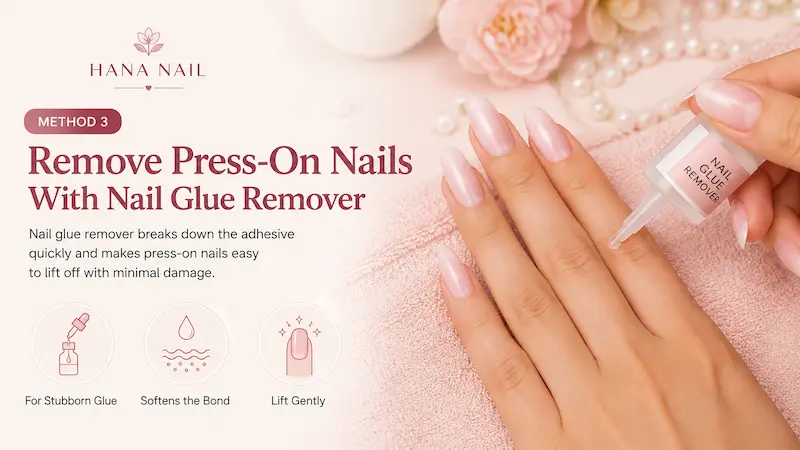
A nail glue remover is useful when warm water and oil are not enough, but you do not want to soak your entire nail in acetone.
Most glue removers are applied around the cuticle area and sidewalls. They are designed to soften the bond between the press-on nail and your natural nail.
How to Use Nail Glue Remover
- Wash and dry your hands.
- Apply the remover around the base and sides of the press-on nail.
- Let it sit according to the product instructions.
- Use a wooden cuticle stick to gently lift the edges.
- Add more remover if the nail still feels stuck.
- Repeat until the press-on slides off without resistance.
- Wash your hands and apply cuticle oil.
Do not use a glue remover as an excuse to force the nails off. If the press-on does not move, it needs more time.
This method is helpful for stubborn glue, but it may affect whether the press-ons can be reused. Always check the condition of the press-on nail after removal.
7. Method 4: Use Acetone for Stubborn Press-On Nails
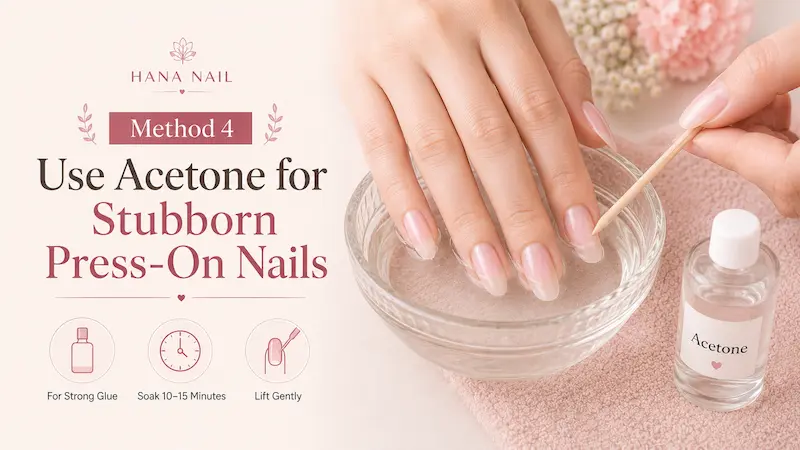
Acetone should not be your first choice if you want to reuse your press-ons. However, it can be useful when nail glue is very strong and the nails will not come off with warm water, oil, or glue remover.
Acetone breaks down nail glue more aggressively, but it can also dry out your skin and natural nails. It may also damage, soften, or dissolve some press-on nails.
How to Remove Press-On Nails With Acetone
- Pour acetone into a glass or ceramic bowl.
Do not use a plastic bowl because acetone can damage some plastics. - Apply cuticle oil around your skin.
This helps reduce dryness. - Soak your nails for 10–15 minutes.
Check one nail gently after soaking. - Use a wooden cuticle stick to lift the edge.
If it does not lift easily, continue soaking. - Remove softened glue carefully.
Do not scrape your natural nail aggressively. - Wash your hands thoroughly.
Acetone can leave your skin dry. - Apply cuticle oil and hand cream.
Rehydrate your nails and skin after removal.
Use acetone only when needed. If your natural nails already feel dry, thin, or sensitive, try a gentler method first.
8. What Not to Do When Taking Off Press-On Nails
Most press-on nail damage happens when removal is rushed. Even if the nails look loose, they may still be attached to the top layer of your natural nail.
Avoid these mistakes:
- Do not rip press-ons off.
- Do not bite them off.
- Do not slide sharp tools under the nail.
- Do not use boiling water.
- Do not pull from the tip if the base is still attached.
- Do not over-buff your natural nails.
- Do not ignore pain, redness, swelling, or irritation.
If a press-on nail hurts when you try to lift it, stop. Pain usually means the adhesive bond is still too strong or your natural nail is being pulled.
For a deeper look at why improper removal can weaken or peel the nail surface, read our guide: Can Press-On Nails Damage Natural Nails?
9. Press-On Nails Not Coming Off? Try This Troubleshooting Guide
Sometimes one or two nails stay stuck even when the others come off easily. This usually happens because more glue was used on those nails.
| Problem | Likely Reason | What to Do |
|---|---|---|
| Nail will not lift after 15 minutes | Too much glue | Soak for another 5–10 minutes |
| Nail hurts when lifting | Adhesive is still too strong | Stop and continue soaking |
| Glue residue remains | Glue softened but did not fully dissolve | Use oil, remover, or gentle buffing |
| One nail is stuck harder than the rest | More glue was applied to that nail | Treat that nail individually |
| Skin feels dry after removal | Water, soap, or acetone dried the skin | Apply cuticle oil and hand cream |
| Press-on bends during removal | You are lifting too quickly | Slow down and soften the adhesive more |
The rule is simple: if the nail does not move easily, it is not ready to come off.
10. How to Remove Glue Residue Without Damaging Your Natural Nails
After removing press-ons, you may still see small patches of glue on your natural nails. Do not scrape them off aggressively.
Start with cuticle oil. Massage the oil into your nails and let it sit for a few minutes. This can soften leftover adhesive and make it easier to remove.
If glue remains, use a soft buffer and lightly buff only the glue spots. Avoid buffing the entire nail plate too much. Over-buffing can make your natural nails feel thin, weak, or sensitive.
For heavier glue residue, use a small amount of glue remover or acetone on a cotton pad. Press it onto the glue for a short time, then wipe gently.
Your natural nails do not need to look perfectly polished immediately after removal. It is better to leave a tiny bit of residue than to damage the nail surface by scraping too hard.
11. Aftercare: What to Do After Removing Press-On Nails
After removal, your nails may feel dry even if they are not damaged. This is normal, especially if you used soap, remover, or acetone.
Follow this simple aftercare routine:
- Wash your hands gently.
- Pat your nails dry.
- Apply cuticle oil around each nail.
- Massage hand cream into your fingers.
- Avoid heavy buffing for the rest of the day.
- Give your nails a short break if they feel weak or sore.
If your nails look healthy, you can apply a new set later. But if your nails feel thin, painful, peeling, or sensitive, wait before applying another set.
A short break of 1–3 days can help your nails recover, especially if you frequently wear press-ons. If you are concerned about safety, lifting, irritation, or nail thinning, our guide on whether press-on nails are safe explains what to watch for before your next manicure.
12. Can You Reuse Press-On Nails After Removing Them?
Yes, you can reuse press-on nails if they are removed gently and kept in good condition.
The best method for reusable press-ons is warm water, soap, and oil. This softens the adhesive without damaging the press-on shape or design. Adhesive tabs are usually easier to remove cleanly, making reuse more likely.
If you use acetone, reuse becomes less likely. Acetone can damage the finish, weaken the design, or soften the press-on nail material.
To reuse your press-ons, remove any leftover adhesive gently, let them dry fully, and store them in a clean box. For a full cleaning and storage routine, read our guide on how to reuse press-on nails.
13. When Should You Remove Press-On Nails?
You should remove press-on nails when they start lifting, feel uncomfortable, or trap moisture underneath. Do not keep wearing them just because they still look good from the top.
Remove your press-ons if:
- A nail is lifting from the base or sides.
- Hair keeps catching under the nail.
- Water may be trapped underneath.
- The nail feels painful or tight.
- Your skin looks red, swollen, itchy, or irritated.
- The press-on is cracked or loose.
- The set has been worn longer than recommended.
Keeping loose press-ons on for too long can increase the chance of snagging, moisture buildup, or damage during accidental lifting.
For normal wear time expectations, see How Long Do Press-On Nails Last?. If you want your next set to stay secure without making removal harder, read How to Make Press-On Nails Last Longer.
14. FAQ About Removing Press-On Nails
What is the best way to remove press-on nails?
The best way to remove press-on nails is to soak them in warm soapy water with cuticle oil or olive oil for 10–15 minutes, then gently lift them with a wooden cuticle stick. If they do not lift easily, soak longer instead of pulling.
How do you remove press-on nails without acetone?
To remove press-on nails without acetone, soak your fingertips in warm water, soap, and oil. After 10–15 minutes, gently loosen the edges with a wooden cuticle stick. Repeat the soak if the nails are still firmly attached.
How long should you soak press-on nails before removing them?
Most press-on nails need 10–15 minutes of soaking. If they were applied with strong nail glue, you may need to soak for 20–30 minutes in total, checking gently between rounds.
Can I remove press-on nails with oil?
Yes. Cuticle oil, olive oil, coconut oil, or baby oil can help soften the adhesive around press-on nails. Oil works best when combined with warm water and gentle soap.
What should I do if my press-on nails won’t come off?
If your press-on nails will not come off, do not force them. Soak them longer, add more oil around the edges, and gently test again. For stubborn nail glue, use a nail glue remover or acetone.
Does acetone remove press-on nails?
Yes, acetone can help remove press-on nails applied with strong glue. However, acetone can dry out your skin and natural nails, and it may damage the press-ons, making them harder to reuse.
Can I reuse press-on nails after removing them?
You can reuse press-on nails if they are removed gently and not damaged. Warm water, soap, and oil are better for reuse than acetone. Always clean and dry the press-ons before storing them.
How do I remove nail glue residue from natural nails?
Apply cuticle oil to soften the glue, then gently buff only the areas with residue. For stubborn glue, use a small amount of glue remover or acetone. Avoid scraping or over-buffing the nail plate.
Is it bad to pull off press-on nails?
Yes. Pulling off press-on nails can peel away layers of your natural nails and leave them thin, weak, or painful. Always soften the adhesive first and remove the nails slowly.
Final Takeaway
Removing press-on nails without damage is all about patience. Start with warm water, soap, and oil. Let the adhesive soften, then gently lift the nails from the sides. If a nail does not come off easily, soak it longer instead of forcing it.
Use glue remover or acetone only when needed, especially for strong nail glue. After removal, moisturize your nails with cuticle oil and hand cream.
The gentler your removal process, the healthier your natural nails will stay—and the better your next press-on set will look.
Sources and Editorial References
This article was written and reviewed using Hana Nail’s editorial standards for practical, beginner-friendly press-on nail care. Removal recommendations are based on common at-home nail care practices, product-use guidance, and dermatology-informed safety principles.
References reviewed during editorial preparation include:
- American Academy of Dermatology Association: guidance on reducing artificial nail damage and protecting natural nails.
- Healthline: press-on nail removal methods and safety considerations.
- Allure: expert-backed tips for removing press-on nails without forcing or peeling.
- InStyle: press-on nail removal methods using warm water, oil, and acetone.
- L’Oréal Paris: general beauty guidance on removing press-on nails with warm water or acetone.
- KISS USA: product-use guidance for nail glue remover.
This content is for general nail care education only. If you notice persistent pain, swelling, redness, pus, nail separation, or signs of infection, stop using press-ons and consult a licensed nail professional or healthcare provider.