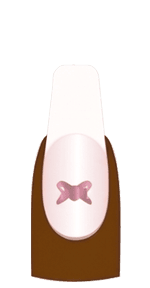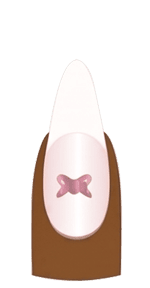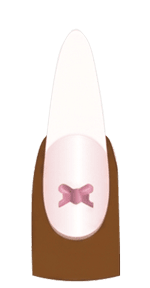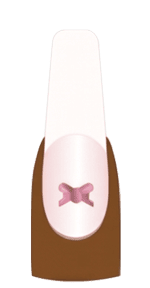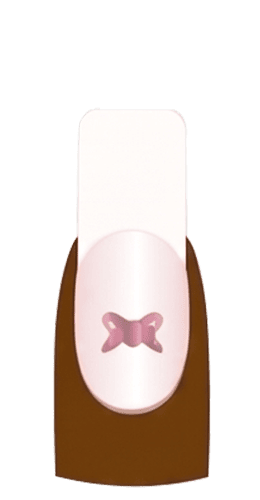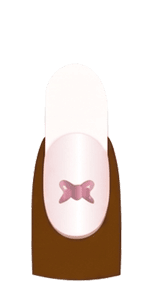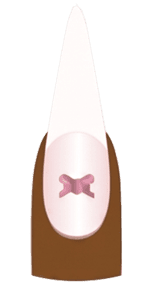
Press-On Nail Basics
Press-On Nails 101: The Complete Guide to Choosing, Applying and Wearing Press-On Nails
Press-on nails offer a convenient way to create a polished, salon-inspired manicure at home. Available in different sizes, lengths, shapes, finishes, and hand-painted designs, they allow you to change your look for everyday wear, special events, travel, or whenever you want something new.
Although the application may look simple, the finished result depends on more than attaching an artificial nail with glue. Correct sizing, compatible curvature, careful nail preparation, suitable adhesive, and gentle removal all affect how natural the manicure looks, how comfortable it feels, and how long it stays in place.
This beginner-friendly guide explains what press-on nails are, how they work, and how to choose, apply, wear, care for, and remove them safely. If this is your first set, our guide to the best press-on nails for beginners can help you start with a practical length, shape, and adhesive. You will also learn what affects their price and wear time, which styles suit different occasions, and how to decide whether press-on nails are the right choice for your routine.
1. What Are Press-On Nails?
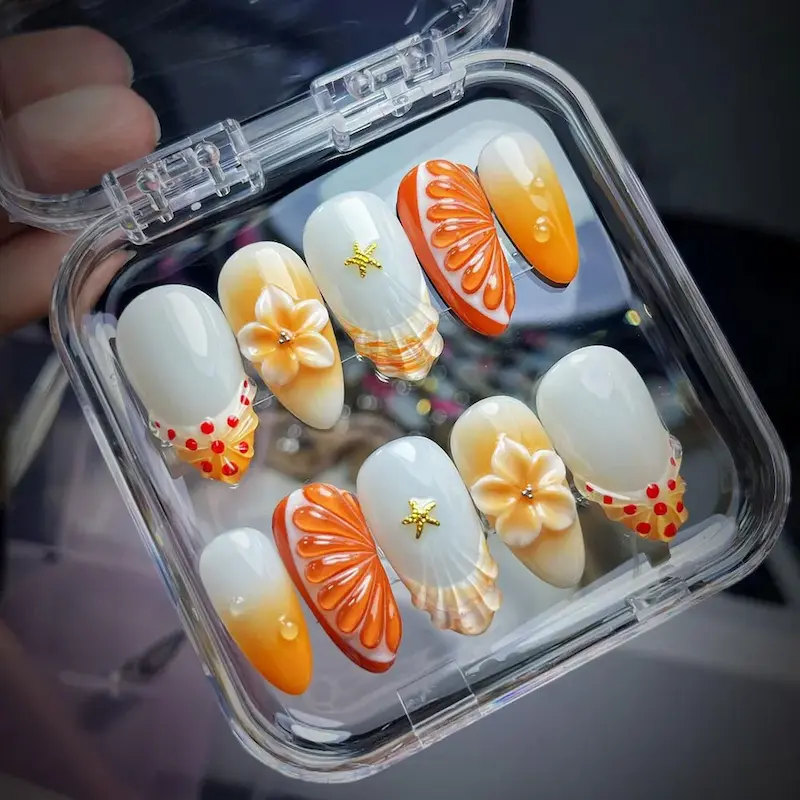
Press-on nails are pre-shaped artificial nails that cover the entire surface of your natural nails. They are applied using nail glue or adhesive tabs and are available in a wide range of sizes, shapes, lengths, colors, and designs. Unlike acrylic or gel extensions, press-on nails are already shaped and decorated before application, allowing you to create a finished manicure at home in a relatively short amount of time. For a more focused explanation of their construction, materials, kit contents, and terminology, read our complete guide to what press-on nails are.
Each press-on nail acts as a full-cover nail tip. Instead of building an extension directly on the natural nail, you select a tip that matches the width and curve of each nail, apply the chosen adhesive, and press it securely into place. A proper fit helps the manicure look more natural, feel more comfortable, and remain attached for longer.
1.1. What Comes in a Press-On Nail Kit?
The exact contents vary by brand, but a typical press-on nail kit may include:
- A set of press-on nails in multiple sizes
- Nail glue, adhesive tabs, or both
- A nail file or mini buffer
- A cuticle stick
- An alcohol preparation pad
- Application and removal instructions
Having several nail sizes in one set allows you to find a closer match for each finger. Because corresponding fingers are not always identical in width, it is worth learning how to size press-on nails correctly before selecting your final set. However, people with particularly wide, narrow, flat, or curved nail beds may achieve a better fit with a sizing kit or a custom-sized press-on nail set.
1.2. How Do Press-On Nails Stay in Place?
Press-on nails are usually attached in one of two ways: nail glue or adhesive tabs. Nail glue generally creates a stronger bond and is often chosen when the wearer wants the manicure to last longer. Adhesive tabs provide a more temporary hold, making them useful for short events, frequent style changes, or situations where easier removal and reuse are priorities.
Neither option is automatically better for everyone. The right adhesive depends on how long you plan to wear the nails, your daily activities, the condition of your natural nails, and whether you want to reuse the set. Regardless of the method, cleaning the nail surface and selecting the correct size are essential for a secure application.
1.3. Types of Press-On Nails
Press-on nails can be grouped into several broad categories based on how they are produced and customized:
Mass-produced press-on nails are manufactured in larger quantities and usually come in standardized sizes and ready-made designs. They are widely available and are often a practical option for beginners or occasional wear.
Handmade press-on nails are individually painted or decorated by a nail artist. They may feature more detailed artwork, layered finishes, charms, crystals, or three-dimensional elements that are difficult to reproduce through mass production. If craftsmanship, hand-painted details, and reusable artwork matter to you, compare the qualities that distinguish the best handmade press-on nails from basic mass-produced sets.
Custom press-on nails are created according to the customer’s measurements, preferred shape, length, colors, or design details. Because the sizing is personalized, custom sets may provide a closer fit for people who have difficulty using standard-size nail kits.
1.4. Are Press-On Nails the Same as Fake Nails?
Press-on nails are a type of fake nail, but the term “fake nails” is broader. It may also refer to acrylic extensions, gel extensions, dip powder enhancements, or other artificial nail systems. What makes press-on nails different is that the complete nail is prepared in advance and attached as a removable full-cover tip rather than being sculpted or built directly on the natural nail.
This ready-to-wear format is what makes press-on nails especially convenient. Depending on the adhesive and how the set is handled, they can be worn temporarily, kept on for a longer period, removed at home, and in some cases reused for another manicure.
2. How Do Press-On Nails Work?
Press-on nails work by attaching a pre-shaped, full-cover artificial nail to the natural nail plate with nail glue, adhesive tabs, or another compatible adhesive system. Once attached, the press-on temporarily changes the length, shape, color, and design of the natural nail without requiring an extension to be sculpted directly on the finger.
The application itself is simple, but a secure and natural-looking result depends on three elements working together: a press-on that fits the nail bed, a clean and dry bonding surface, and an adhesive suited to the intended wear time.
When the press-on is positioned and pressed into place, the adhesive fills the small space between the artificial nail and the natural nail. Even contact across the nail plate helps reduce gaps and movement. Poor fit, oil, moisture, uneven adhesive, or insufficient pressure can weaken the bond and lead to lifting or early detachment.
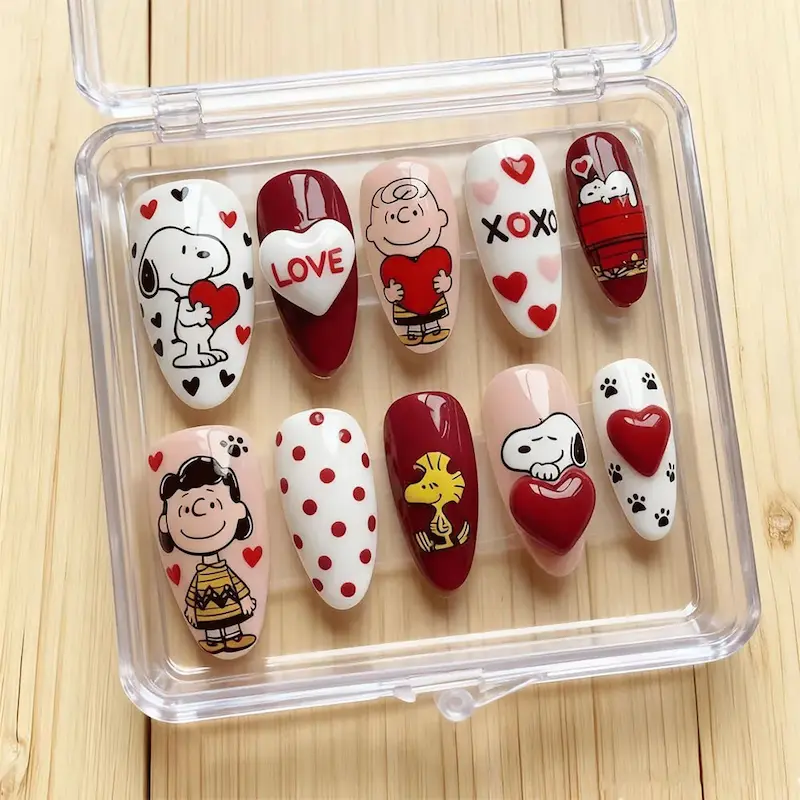
2.1. Nail Glue vs. Adhesive Tabs
Most press-on nails are applied with either liquid nail glue or double-sided adhesive tabs. Both methods hold the artificial nail against the natural nail, but they differ in bond strength, wear time, removal, and reuse potential.
| Factor | Nail Glue | Adhesive Tabs |
|---|---|---|
| Bond strength | Stronger | Lighter and more temporary |
| Best for | Several days of wear and normal daily use | Events, photoshoots, and short-term wear |
| Application | Requires controlled glue placement | Peel, position, and press |
| Removal | Usually requires more time and care | Generally easier and faster |
| Reuse potential | Possible, but glue residue may need removal | Often easier for preserving the set |
| Water exposure | Usually more resistant | Generally less resistant |
The best adhesive depends on whether you prioritize longer wear, simple removal, or reuse. Our detailed comparison of nail glue vs. adhesive tabs for press-on nails explains the trade-offs by wear time and use case.
Nail glue is usually the better option when stronger adhesion is the priority. Adhesive formulas still differ in consistency, drying time, application style, and removal requirements, so compare the best nail glue for press-on nails before choosing one for multi-day wear. Adhesive tabs are more suitable when easy removal, temporary wear, or reuse matters more. Neither method is automatically best for everyone.
2.2. How Is the Adhesive Bond Formed?
An adhesive needs direct contact with clean, dry surfaces. Natural oil, hand cream, cuticle oil, filing dust, water, old glue, or polish residue can create a barrier that prevents the glue or tab from gripping the nail plate evenly.
During application, the press-on is aligned close to—but not on—the cuticle and pressed evenly across the nail. Firm pressure helps the adhesive contact both surfaces and reduces air pockets. The recommended pressure and setting time vary by product, so the instructions supplied with the adhesive should take priority.
A stronger adhesive cannot fully compensate for a poor fit. If the press-on is too narrow, too wide, too flat, or too curved, tension or gaps may develop and weaken the attachment.
2.3. How Long Does the Application Take?
A press-on manicure is usually faster than acrylic or gel extensions because the shape, color, and artwork have already been completed. Most of the application time is spent selecting the correct sizes, preparing the natural nails, and positioning each press-on carefully.
Once you are familiar with the process, a simple set may take about 10 to 20 minutes to apply. First-time users may need longer, particularly when filing sizes, comparing curvature, or learning to control liquid glue. Accuracy is more important than speed.
2.4. Can Press-On Nails Be Reused?
Some press-on nails can be reused if they remain structurally sound and are removed, cleaned, and stored carefully. Reusability depends on the quality of the artificial nail, the adhesive, the design, and the removal method.
Adhesive tabs often make reuse easier because they usually leave less hardened residue. Nail glue may provide longer wear, but the remaining glue must be removed without thinning, bending, or damaging the underside of the press-on.
Do not reuse nails that are cracked, warped, heavily damaged, discolored, or difficult to clean. Allow reusable nails to dry completely before placing them in a clean storage box.
Reuse depends heavily on the adhesive and removal method. Follow a dedicated process for reusing press-on nails safely instead of scraping or thinning the underside of the set.
2.5. Why Fit and Preparation Matter
Press-on nails stay attached through a combination of correct fit, clean surfaces, even adhesive coverage, and steady application pressure. Adhesive is only one part of the system.
When the press-on matches the width and curve of the nail bed, the adhesive can make more consistent contact across the surface. If gaps or tension are present, the nail may begin lifting around the cuticle, sidewalls, or free edge even if it initially appears secure.
2.6. Key Takeaway
Press-on nails work by creating a temporary adhesive bond between a full-cover artificial nail and a prepared natural nail plate. A successful result depends on choosing the right fit, keeping the bonding surfaces clean and dry, using the appropriate adhesive, and applying firm, even pressure.
3. Are Press-On Nails Worth It?
For many people, press-on nails are worth it because they offer a fast, flexible, and relatively affordable way to create a polished manicure at home. They are especially useful for special events, travel, frequent style changes, and anyone who wants detailed nail art without committing to the same look for several weeks.
However, their value depends on what you expect from the manicure. Press-ons may be an excellent choice if you prioritize convenience, design variety, at-home application, and lower commitment. They may be less suitable if you need several weeks of continuous wear, regularly perform heavy manual work, or frequently expose your hands to water and strong cleaning products.
The best way to decide is to compare the advantages and limitations with your lifestyle, budget, desired wear time, and willingness to prepare, apply, and remove the nails correctly. For a deeper cost, convenience, durability, and lifestyle assessment, see our full answer to whether press-on nails are worth it.
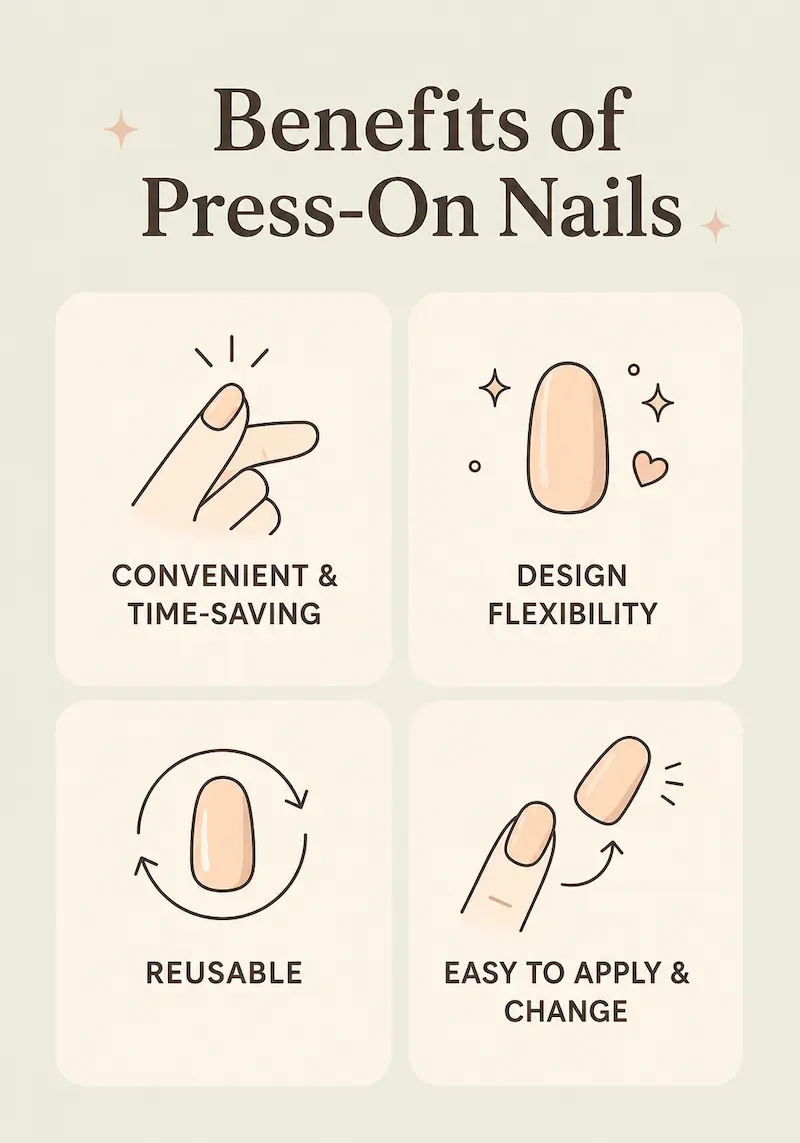
3.1. Benefits and Drawbacks of Press-On Nails
| Factor | Benefits | Possible Drawbacks |
|---|---|---|
| Time | Faster than many salon extension services because the shape and design are already completed | First-time users may need extra time for sizing, preparation, and application |
| Cost | Available across several price ranges and may reduce salon service and maintenance costs | Glue, tabs, remover, shipping, and replacement nails can add to the total |
| Design variety | Easy to change colors, shapes, lengths, and artwork for different outfits or events | Highly detailed designs may require more care and may be harder to resize |
| Application | Can usually be applied at home without sculpting tools or a curing lamp | The final result depends heavily on fit, preparation, and adhesive technique |
| Removal | Can often be removed at home using the method recommended for the adhesive | Peeling or forcing them off can damage the natural nail surface |
| Commitment | Suitable for one event, several days, or frequent style changes | Not ideal for people who want uninterrupted wear for several weeks |
| Reuse | Some durable sets can be worn again when removed and stored carefully | Reuse may be limited by glue residue, damaged artwork, cracking, or warping |
| Convenience | Useful for travel, last-minute events, and busy schedules | Individual nails may occasionally need to be reapplied or replaced |
3.2. Who Are Press-On Nails Best For?
Press-on nails are often a good fit for:
- Beginners who want an accessible at-home manicure
- Busy people with limited time for salon appointments
- Anyone who enjoys changing nail designs frequently
- People preparing for weddings, parties, vacations, holidays, or
photoshoots - Travelers who want a portable manicure option
- Customers who appreciate handmade or customized artwork
- People who prefer removable nails over a longer-term enhancement
- Anyone who wants greater control over manicure costs and timing
3.3. Who May Prefer Another Nail Option?
Another manicure method may be more suitable if you:
- Need several weeks of continuous wear with professional maintenance
- Perform frequent heavy manual work
- Regularly immerse your hands in water
- Prefer professional application and removal
- Want a very rigid structure or extreme length
- Cannot find a comfortable fit among standard press-on sizes
- Do not want to carry out nail preparation or occasional repairs at home
- Have damaged, painful, irritated, or possibly infected nails that should be assessed before applying artificial products
3.4. Are Press-On Nails Worth the Money?
Press-on nails are usually worth the money when the set fits well, matches your lifestyle, and provides a design you will actually wear. Their value may improve further when the nails are durable enough to be reused.
A cheaper set that feels uncomfortable, requires excessive filing, or falls off quickly may offer less value than a carefully made set with better sizing, durable nail tips, clear instructions, and useful application accessories. Price alone is therefore not the best measure of quality or value. Shoppers considering detailed artwork, specialty finishes, or premium presentation can also review what genuinely separates luxury press-on nails from standard sets.
Before purchasing, consider the fit, materials, design quality, included tools, adhesive options, replacement policy, shipping cost, and reuse potential.
3.5. The Verdict
Press-on nails are worth trying if you want a convenient, customizable manicure that can be applied and removed at home. They offer particularly good value for short-term wear, special occasions, frequent style changes, and people who want to avoid the time and recurring cost of regular salon appointments.
They are not automatically the best option for everyone. The experience depends on choosing the correct fit, using an adhesive suited to the intended wear time, and selecting a length and design that work with your daily routine. When those factors are handled well, press-on nails can be a practical and attractive alternative to traditional salon enhancements.
4. Press-On Nails vs. Acrylic and Gel Nails
Press-on nails, acrylic nails, and gel extensions can all add length, shape, color, and design to a manicure, but they are applied and maintained in different ways. Press-on nails are pre-made full-cover nails attached with glue or adhesive tabs. Acrylic nails are sculpted from liquid monomer and polymer powder, while gel extensions are created or attached with gel products that cure under a UV or LED lamp.
Press-on nails usually offer the fastest application, the lowest commitment, and the easiest design changes at home. Acrylic nails are generally chosen for maximum hardness and dramatic length, while gel extensions are often preferred for a lighter, more flexible salon enhancement with a glossy finish.
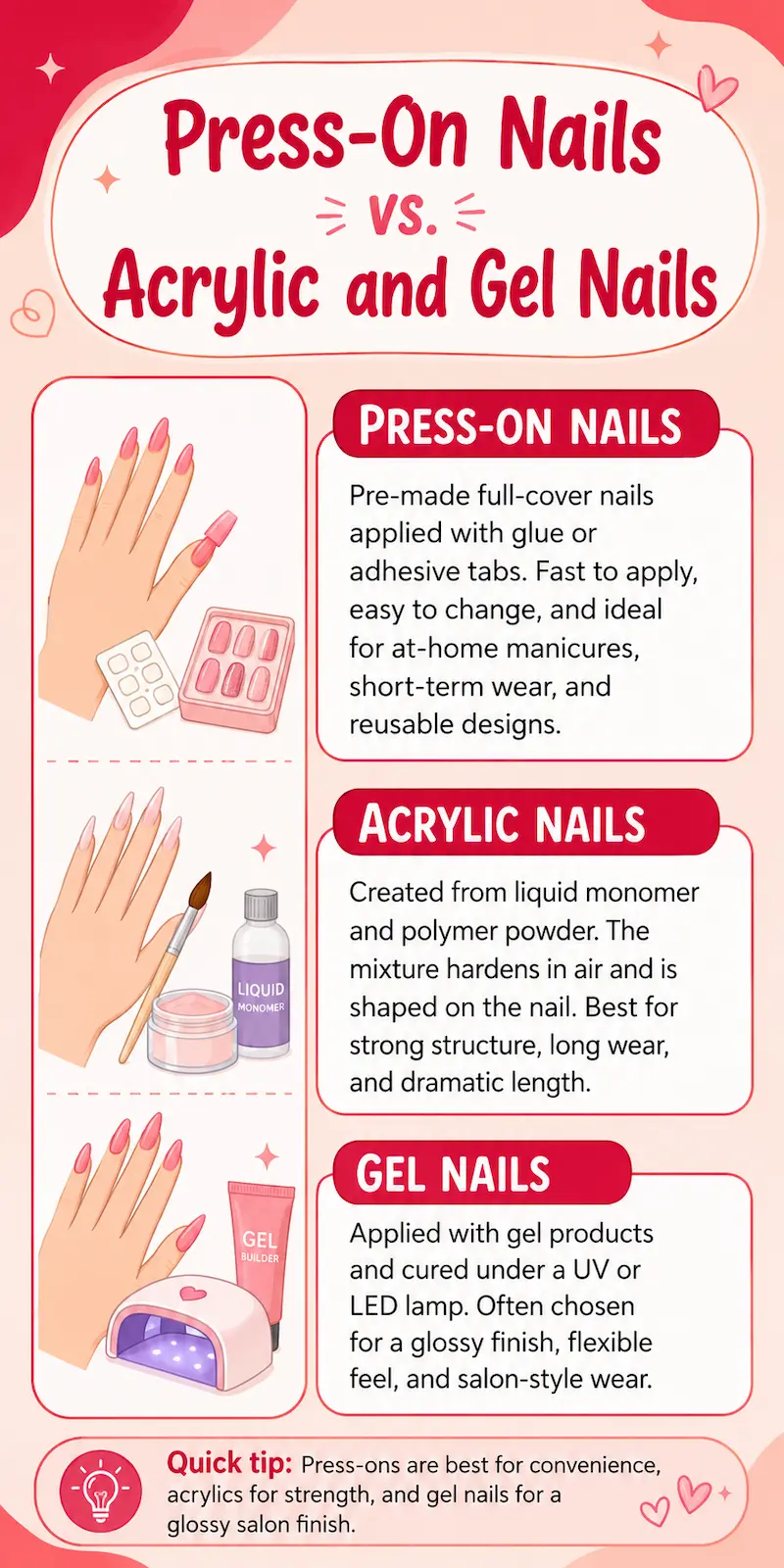
4.1. Quick Comparison: Press-On Nails vs. Acrylic vs. Gel
| Factor | Press-On Nails | Acrylic Nails | Gel Extensions |
|---|---|---|---|
| Application | Pre-made nails attached with glue or tabs | Liquid-and-powder product sculpted over the nail or a tip | Gel is sculpted or used to attach a full-cover tip, then cured |
| Typical setting | Usually at home | Usually at a salon | Usually at a salon |
| Application time | Generally the fastest | Usually the longest | Longer than press-ons but often shorter than complex acrylic work |
| Equipment | Basic prep tools and adhesive | Acrylic liquid, powder, brushes, and files | Gel products, files, and UV/LED lamp |
| Strength and feel | Depends on nail quality, fit, and adhesive | Hard and rigid | Durable, flexible, and lighter-feeling |
| Maintenance | Reapply or replace individual nails as needed | Regular fills are usually required | Fills or maintenance may be required |
| Removal | Usually removed by loosening the adhesive | Commonly filed and soaked | Depends on the gel system; may involve filing and soaking |
| Reuse | Some sets can be reused | Not reusable as a removable set | Not usually reusable as a complete set |
| Design changes | Easy to change frequently | Usually requires a fill, redesign, or removal | Usually requires professional redesign or removal |
| Commitment | Low | High | Medium to high |
| Best suited for | Convenience, events, travel, and frequent style changes | Strong structure, long wear, and dramatic length | Flexible, glossy, professionally fitted extensions |
4.2. Press-On Nails vs. Acrylic Nails
The main difference is that press-on nails arrive already shaped and decorated, while acrylic nails are built directly on the natural nail or over a tip. Press-ons only need to be sized, prepared, and attached. Acrylic application requires the liquid-and-powder mixture to be sculpted before it hardens.
Acrylic is generally harder and more rigid, making it suitable for significant length, strong structure, and continuous wear supported by salon fills. However, the application, reshaping, maintenance, and removal usually require more time and professional skill.
Press-on nails provide a lower-commitment alternative. They are faster to apply, easier to switch, and usually simpler to remove at home. If one nail becomes loose or damaged, it may be possible to replace only that nail rather than scheduling a full maintenance appointment.
4.2.1. Choose Press-On Nails Over Acrylic If You Want:
- Faster at-home application
- Frequent design changes
- Lower commitment
- No regular salon fills
- A manicure for a specific event or trip
- The possibility of reusing the set
4.2.2. Choose Acrylic Nails Over Press-Ons If You Want:
- Greater hardness and rigidity
- Very long or highly sculpted shapes
- Continuous wear with professional fills
- A structure built directly for your natural nails
- Ongoing salon maintenance
For a closer comparison of strength, wear time, removal, maintenance, cost, and natural-nail impact, read press-on nails vs. acrylic nails.
4.3. Press-On Nails vs. Gel Extensions
The term “gel nails” can refer to gel polish, builder gel, hard gel, or soft-gel extensions. When comparing gel nails with press-ons, gel extensions are the closest equivalent because both can cover the natural nail and add length.
Gel extensions are applied with gel products that must be cured under a UV or LED lamp. Depending on the system, the gel may be sculpted over a form or used to attach a soft-gel tip. The result is usually more integrated with the natural nail and often feels lighter and more flexible than acrylic.
Press-on nails do not require a curing lamp because the nail structure and artwork are already finished. They are attached with a separate adhesive, making application faster and the manicure easier to change or remove.
4.3.1. Gel Polish Is Not the Same as Gel Extensions
Gel polish mainly adds color and a durable glossy coating to the natural nail. It does not normally add meaningful length unless it is combined with another enhancement system. A press-on nail covers the entire nail and can immediately change its length and shape.
Choose gel polish if you want long-lasting color on your existing natural nails. Choose press-ons if you want instant length, a different shape, removable artwork, or a faster at-home transformation.
4.3.2. Choose Press-On Nails Over Gel Extensions If You Want:
- No UV or LED lamp
- Faster application
- Easier at-home removal
- Frequent design changes
- Lower commitment
- Reusable nail art
4.3.3. Choose Gel Extensions Over Press-Ons If You Want:
- A professionally fitted extension
- A flexible and lightweight feel
- A smooth, glossy salon finish
- Continuous wear with maintenance
- Structure adjusted directly to the natural nail
Our full guide to press-on nails vs. gel nails also explains the difference between gel polish, builder gel, Gel-X-style tips, and removable press-ons.
4.4. Which Option Lasts the Longest?
Acrylic and gel extensions are generally designed for more continuous wear than press-on nails. As the natural nail grows, they can often be filled or rebalanced instead of being removed as a complete set. Press-on nails rely on a temporary adhesive bond and are usually chosen when convenience and removability matter more than maximum longevity.
No manicure has a guaranteed wear time. Application quality, maintenance, nail growth, water exposure, product condition, and daily activities all influence how long it performs.
4.5. Which Option Is Better for Natural Nails?
No artificial nail system is completely risk-free. Damage is often associated with aggressive preparation, repeated filing, picking, peeling, or forced removal rather than the appearance of the manicure itself.
Press-on nails generally require less structural alteration of the natural nail than sculpted acrylic or gel extensions. This can make them a lower-commitment option when they are applied to healthy nails and removed by properly loosening the adhesive. However, peeling off glued press-ons can still damage the surface of the natural nail.
Acrylic and gel services can also be worn safely by many people when they are applied and removed carefully. The best choice depends on nail condition, professional technique, maintenance, and removal—not simply the product category.
4.6. Which Manicure Is Right for You?
| Your Priority | Best Match |
|---|---|
| Fast at-home application | Press-on nails |
| Frequent design changes | Press-on nails |
| A manicure for one event or trip | Press-on nails |
| Reusable nail designs | Press-on nails |
| Maximum hardness and dramatic length | Acrylic nails |
| Continuous wear with salon fills | Acrylic or gel extensions |
| A flexible, glossy salon extension | Gel extensions |
| Long-lasting color without additional length | Gel polish |
| No curing lamp | Press-on nails or acrylic |
| Minimal salon commitment | Press-on nails |
4.7. Key Takeaway
Press-on nails are usually the best choice for speed, convenience, removable designs, and at-home flexibility. Acrylic nails are better suited to people who prioritize maximum hardness, dramatic length, and regular salon maintenance. Gel extensions provide a lighter, more flexible salon option with a smooth, glossy finish.
There is no single best manicure for everyone. Choose according to your intended wear time, lifestyle, budget, natural nail condition, preferred design, and willingness to manage maintenance and removal.
5. How to Choose the Best Press-On Nails for You
The best press-on nails are not simply the most detailed, expensive, or popular set. They should fit the width and curve of your natural nails, feel comfortable during daily activities, match your intended wear time, and offer a design you genuinely want to wear.
A beautiful set may still be a poor choice if it is too narrow, too curved, too long for your routine, or difficult to maintain. Begin with fit and comfort, then narrow your options by length, shape, adhesive, design, occasion, and budget.
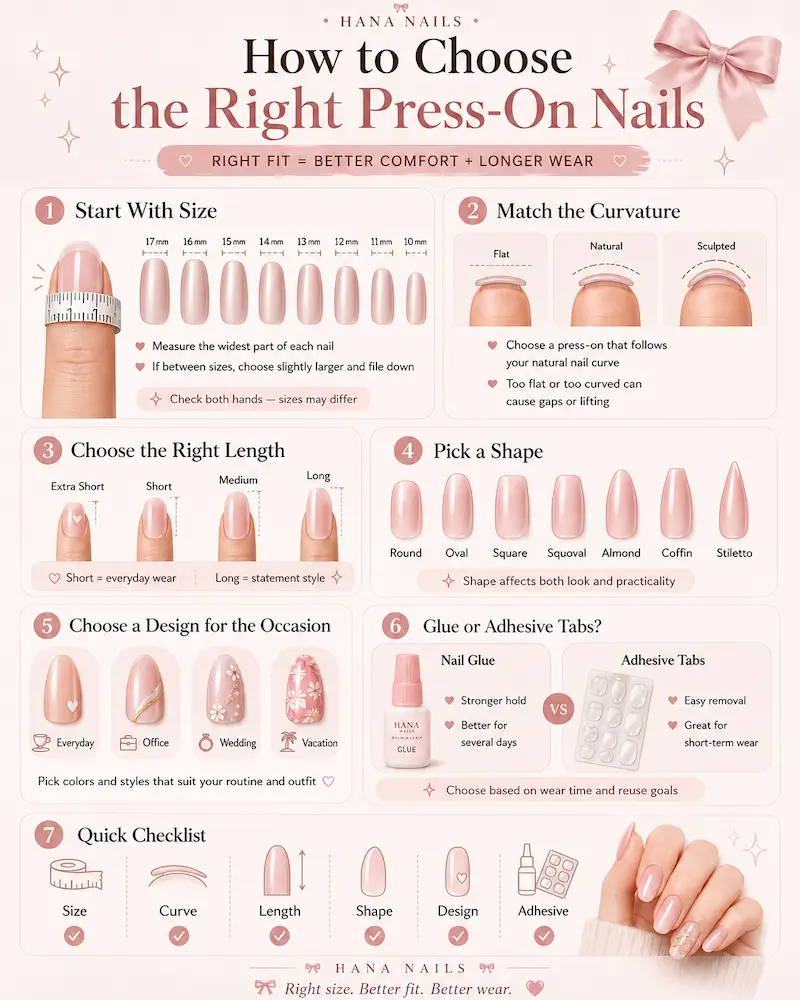
5.1. Start With the Correct Nail Size
Each press-on nail should cover the natural nail from sidewall to sidewall without overlapping the surrounding skin or squeezing the nail plate. A correct fit helps the manicure look more natural, feel more comfortable, and stay attached more securely.
Measure the widest part of all ten natural nails in millimeters and compare the results with the brand’s size chart. Measure both hands separately because corresponding nails may not be exactly the same width.
If you fall between sizes, choose the slightly larger press-on and file the sides gently. A larger nail can usually be adjusted, while a nail that is too small cannot be widened and may cause pressure or lifting. Before making larger adjustments, check whether you can safely cut, file, or reshape press-on nails without damaging the structure or design.
5.2. Match the Nail Curvature
Width alone does not guarantee a good fit. The underside of the press-on should also follow the natural curve of the nail bed with minimal empty space between the two surfaces.
A tip that is too flat may leave a gap through the center, while one that is too curved may squeeze the nail or lift along the sidewalls. People with very flat, curved, wide, narrow, or uneven nail beds may benefit from a sizing kit or custom-sized set.
5.3. Choose a Length That Fits Your Routine
The right length should suit both the look you want and the way you use your hands. Longer nails create a more noticeable silhouette, but they also experience greater leverage when they hit or catch on objects.
| Lifestyle or Need | Suggested Length |
|---|---|
| Frequent typing | Extra short or short |
| Childcare, cooking, healthcare, or manual work | Extra short or short |
| Everyday wear | Short or medium |
| Office events or travel | Short or medium |
| Weddings and formal occasions | Medium or long |
| Photoshoots, parties, or statement styling | Long or extra long |
| First-time press-on user | Short or medium |
If you are unsure, start with short or medium nails. They provide enough length to change the appearance of the manicure while remaining easier to manage during daily tasks. For practical examples across round, square, almond, and extra-short options, explore these short press-on nail ideas.
5.4. Pick a Shape That Balances Style and Comfort
| Shape | Best Suited For |
|---|---|
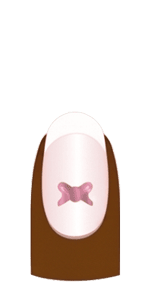
| Round | Natural appearance, short nails, beginners, and daily wear |
| Oval | Soft, elegant styling and an elongating effect |
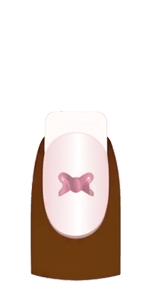
| Square | Clean modern looks, French tips, and structured designs |
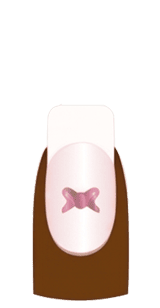
| Squoval | Everyday comfort with a defined but softened edge |
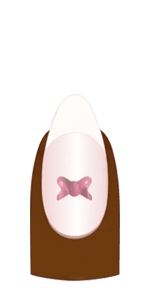
| Almond | Elegant or romantic styles at medium or long lengths |
| Coffin | Bold artwork and medium-to-long statement nails |
| Stiletto | Dramatic styling, photography, parties, and experienced wearers |
There is no rule requiring a particular finger or hand shape to wear a specific nail shape. Fit, comfort, and daily practicality should take priority over strict beauty rules. If you are deciding between short, medium, almond, oval, square, coffin, or stiletto options, use our guide to press-on nail shapes and lengths to match the set to your hands and routine.
5.5. Match the Adhesive to Your Wear Time
Your intended wear time should influence the adhesive you choose. A manicure for a photoshoot or one-day event does not require the same level of attachment as a set intended for several days of normal wear.
| Your Goal | Suggested Adhesive |
|---|---|
| A few hours or a photoshoot | Adhesive tabs |
| One-day event | Adhesive tabs |
| Easy removal and frequent design changes | Adhesive tabs |
| Preserving the set for reuse | Adhesive tabs |
| Several days of wear | Nail glue |
| Stronger everyday hold | Nail glue |
| Travel or a multi-day event | Compatible nail glue |
5.6. Choose a Design That Matches Your Style and Occasion
Once the size, curvature, length, and shape are suitable, focus on the design. Consider the colors you normally wear, whether you want the nails to blend with or stand out from your outfit, and how often you expect to reuse the set.
| Occasion | Suggested Style Direction |
|---|---|
| Everyday wear | Nude shades, soft cat-eye, minimal florals, short French tips |
| Office or professional setting | Short neutral nails, classic red, subtle French or floral details |
| Wedding or engagement | Ivory, blush, pearls, florals, crystals, or soft chrome |
| Vacation or beach trip | Ocean themes, shells, tropical florals, or bright summer colors |
| Date night or Valentine’s Day | Hearts, bows, roses, pink, red, or coquette designs |
| Concert, festival, or party | Y2K, chrome, glitter, charms, or longer shapes |
| Halloween or costume event | Gothic, horror, ghost, pumpkin, or black-and-red designs |
| Personalized gift or unique theme | Custom press-on nail set |
For travel-specific advice on timing, length, spare nails, adhesives, and activities, see the best press-on nails for vacation.
5.7. Consider How Much Nail Art You Can Maintain
Flat artwork, gradients, cat-eye finishes, and simple French tips are generally easier to maintain than large crystals, raised flowers, charms, chains, or three-dimensional decorations.
If you type frequently, care for children, handle clothing, or perform detailed hand movements, choose smoother designs with fewer raised elements. More elaborate sets are often better reserved for events or situations where practicality is less important.
5.8. Handmade, Ready-Made, or Custom?
| Option | Main Advantages | Best For |
|---|---|---|
| Mass-produced ready-made set | Lower price, quick availability, and multiple standard sizes | Beginners, temporary wear, and limited budgets |
| Handmade ready-made set | Detailed artwork, smaller production quantities, and stronger visual identity | Nail-art lovers, events, gifts, and repeat wear |
| Custom set | Personalized sizing, colors, shapes, lengths, and artwork | Weddings, unusual ideas, specific outfits, and unique gifts |
| Sizing kit or custom sizing | More accurate fit for unusual nail beds | Wide, narrow, flat, curved, or uneven nails |
5.9. Check What Comes in the Set
A complete kit may include several nail sizes, nail glue, adhesive tabs, a mini file, a buffer, a cuticle stick, an alcohol preparation pad, application instructions, and storage packaging. Check the product description because included items vary among brands.
Beginners may benefit from a complete application kit, while experienced users may prefer to use their own familiar adhesive and tools.
5.10. Review Product Information and Customer Support
Look beyond the main product image. Review available size charts, shape guides, customer photos, material details, application instructions, and comments about comfort, lifting, durability, and packaging.
Before ordering, confirm the seller’s shipping, return, damaged-item, sizing, replacement, and custom-order policies. Clear support is especially important for handmade and custom sets.
5.11. Quick Press-On Nail Buying Checklist
Before purchasing, confirm the following:
- Have you measured all ten nails?
- Does the curvature match your nail beds?
- Is the length practical for your routine?
- Is the shape comfortable and suitable for the look you want?
- Does the adhesive match your intended wear time?
- Can you maintain the amount of decoration?
- Does the design suit the occasion and your wardrobe?
- What tools and adhesives are included?
- Are removal and reuse instructions provided?
- Are shipping, replacement, return, and support policies clear?
- Is the total cost within your budget?
- Would a custom or sizing-kit option provide a better fit?
5.12. Key Takeaway
Choose press-on nails by fit first and design second. Confirm the width and curvature of your natural nails, select a practical length and comfortable shape, match the adhesive to your intended wear time, and then choose a style that suits your occasion, routine, and budget.
The best set should look attractive, but it should also feel comfortable, remain stable, and be easy to apply, maintain, and remove. When standard sizing cannot meet those needs, a sizing kit or custom press-on nail set may provide a better solution.
6. How to Apply Press-On Nails Correctly
Applying press-on nails correctly begins before the adhesive is opened. The nails should match the width and curvature of your natural nail beds, while the natural nails should be clean, dry, and free from oil, dust, and old adhesive.
The exact process varies depending on whether you use nail glue, adhesive tabs, or a pre-applied adhesive system. Always follow the instructions supplied with the press-on set and adhesive, as the recommended amount, pressure time, and water-avoidance period may differ among products.
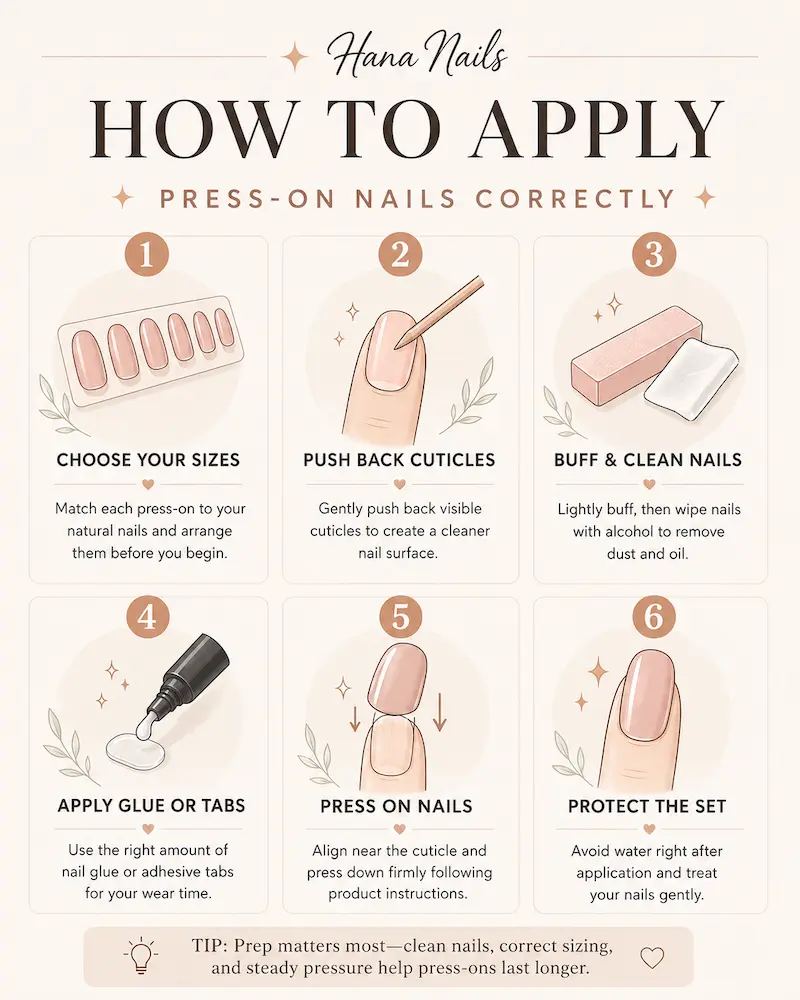
6.1. What You Need Before Applying Press-On Nails
Prepare your supplies before beginning so you do not need to search for tools after the adhesive has been applied. A typical application may require:
- A complete press-on nail set
- Nail glue, adhesive tabs, or both
- A nail file
- A fine buffer
- A wooden cuticle stick
- An alcohol preparation pad or lint-free wipe
- Nail clippers, if needed
- A clean towel or work surface
Avoid applying hand cream, cuticle oil, or other oily products immediately before application because residue may interfere with adhesion.
6.2. Step 1: Select and Arrange the Correct Sizes
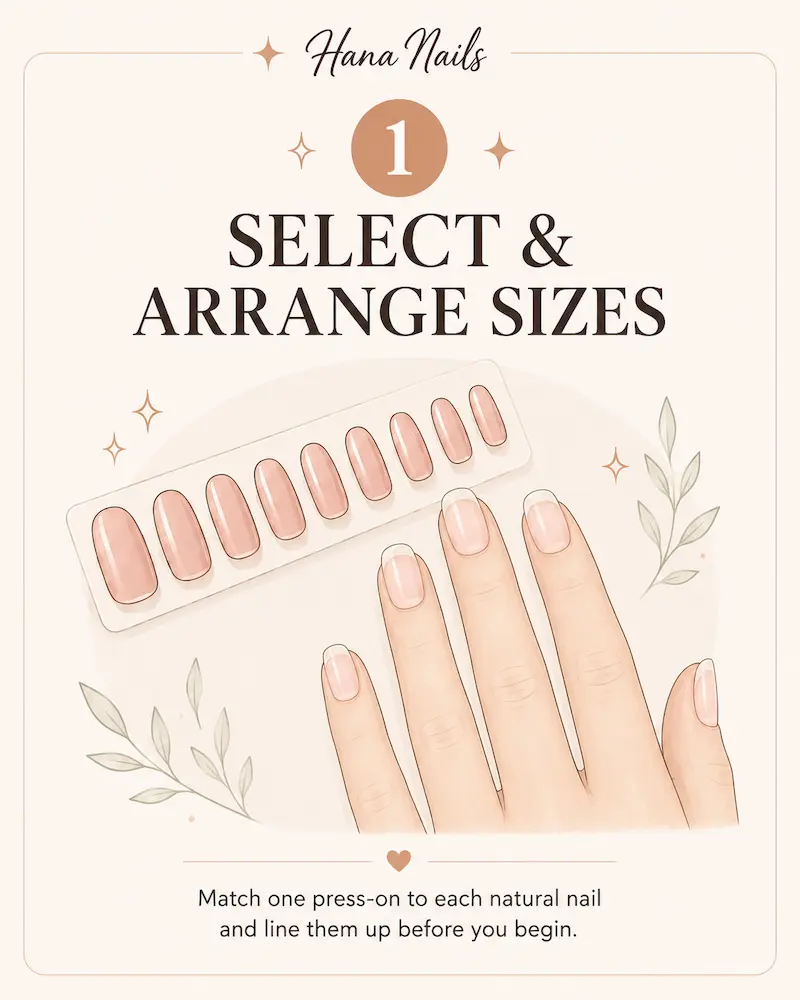
Match one press-on nail to each natural nail before applying any adhesive. The press-on should cover the nail from sidewall to sidewall without overlapping the skin or squeezing the nail plate. Its base should follow the cuticle line without resting directly on the cuticle.
If you are between sizes, choose the slightly larger nail and file the sides gently. Arrange all ten nails in finger order before opening the glue or removing tab backings.
6.3. Step 2: Prepare Your Natural Nails
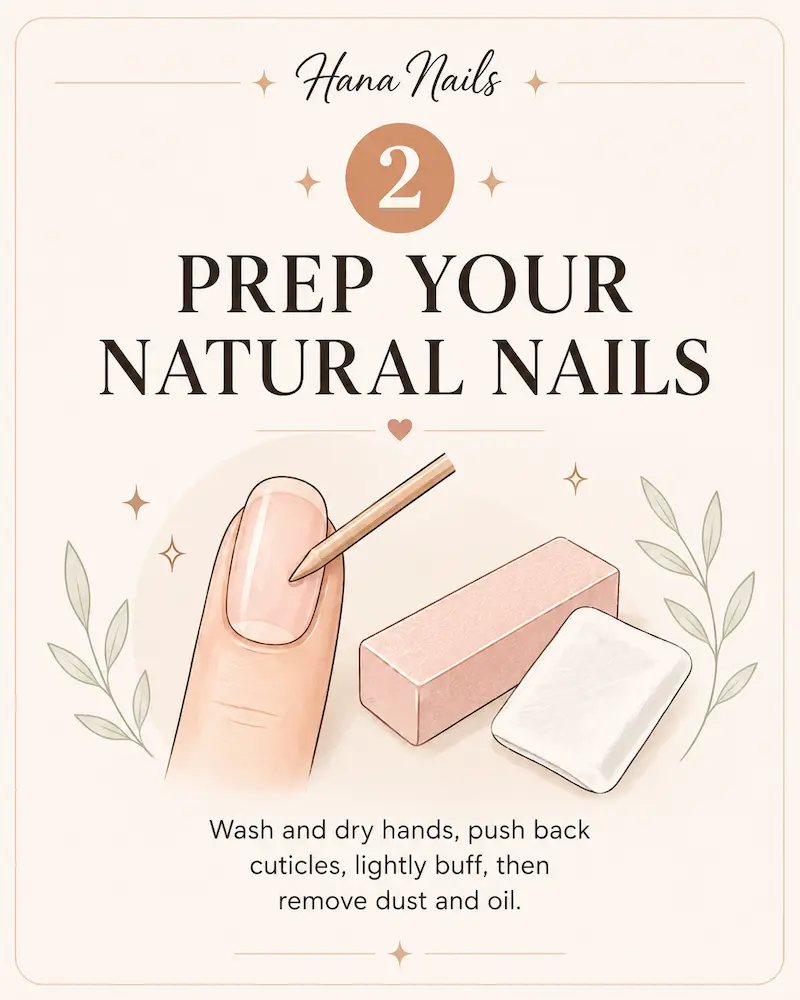
6.3.1. Wash and Dry Your Hands
Wash your hands to remove dirt and surface residue, then dry them completely. If you have recently showered, washed dishes, or soaked your hands, allow the nails to dry fully before continuing.
6.3.2. Shorten and Shape the Natural Nails
Trim or file the natural free edge if it extends beyond the press-on or interferes with the fit. Smooth sharp or uneven edges so they do not create pressure beneath the artificial nail.
6.3.3. Gently Push Back the Cuticles
Use a wooden cuticle stick to gently push visible cuticle tissue away from the nail plate. This creates more clean surface for the adhesive and helps the press-on sit closer to the natural cuticle line.
Do not cut living skin or push aggressively. Stop if the area becomes painful, irritated, or begins to bleed.
6.3.4. Buff Only if Recommended
If the product instructions recommend buffing, use a fine buffer with very light pressure to reduce surface shine. The goal is not to remove visible layers or thin the natural nail.
6.3.5. Remove Dust and Oil
Brush away filing dust, then wipe each nail with an alcohol preparation pad or the preparation product recommended by the brand. Pay attention to the cuticle area and sidewalls.
After cleaning, avoid touching the nail plates with your fingertips because skin oils can transfer back onto the prepared surface.
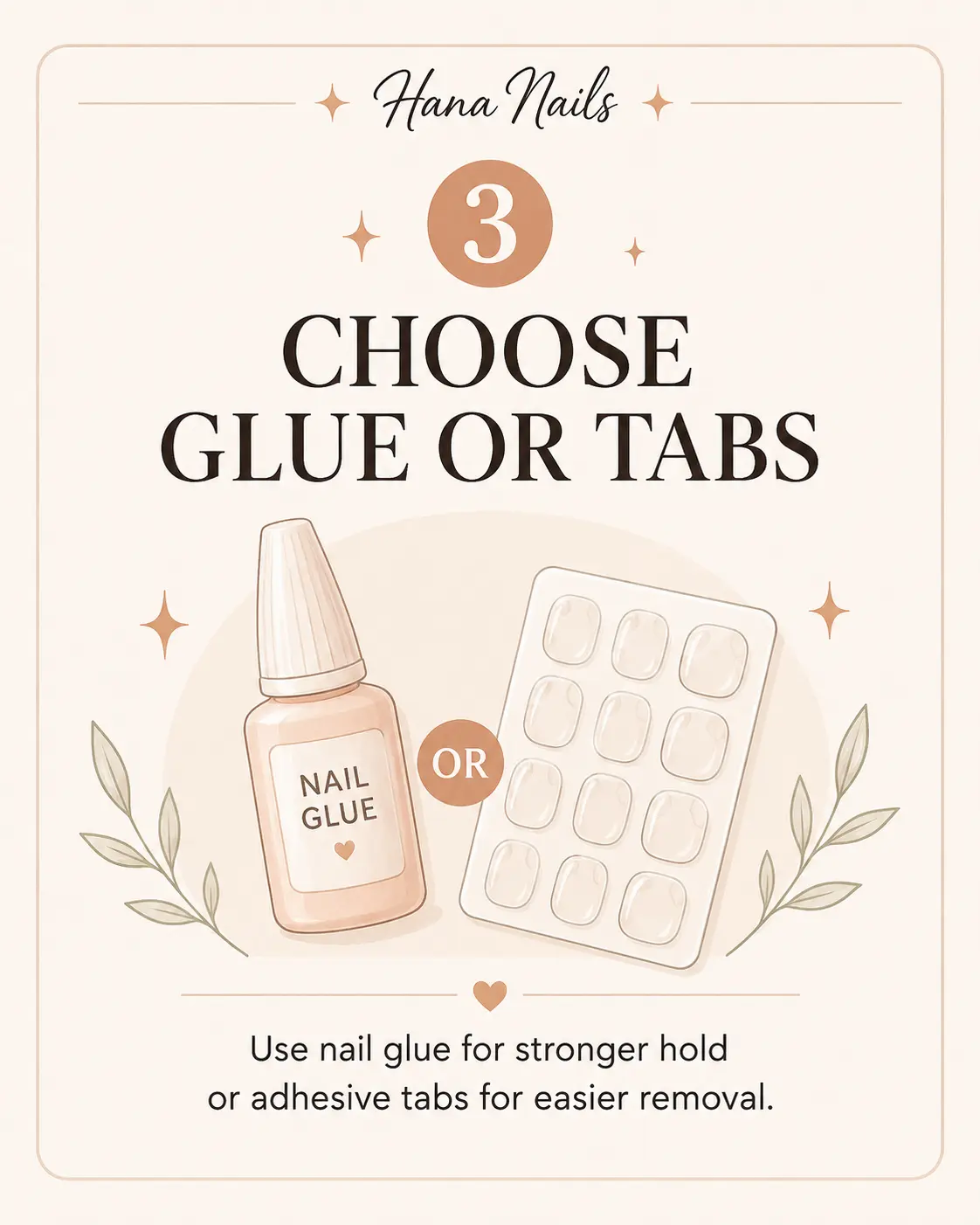
6.4. Step 3: Choose Nail Glue or Adhesive Tabs
| Your Goal | Suggested Method |
|---|---|
| A few hours or a photoshoot | Adhesive tabs |
| One-day event | Adhesive tabs |
| Easy removal and reuse | Adhesive tabs |
| Several days of wear | Nail glue |
| Stronger everyday hold | Nail glue |
| Testing a new length or shape | Adhesive tabs |
Nail glue usually provides a stronger bond, while adhesive tabs are better suited to temporary wear and easier removal. Use only an adhesive intended for cosmetic artificial nails.
6.5. Step 4A: Apply Press-On Nails With Nail Glue
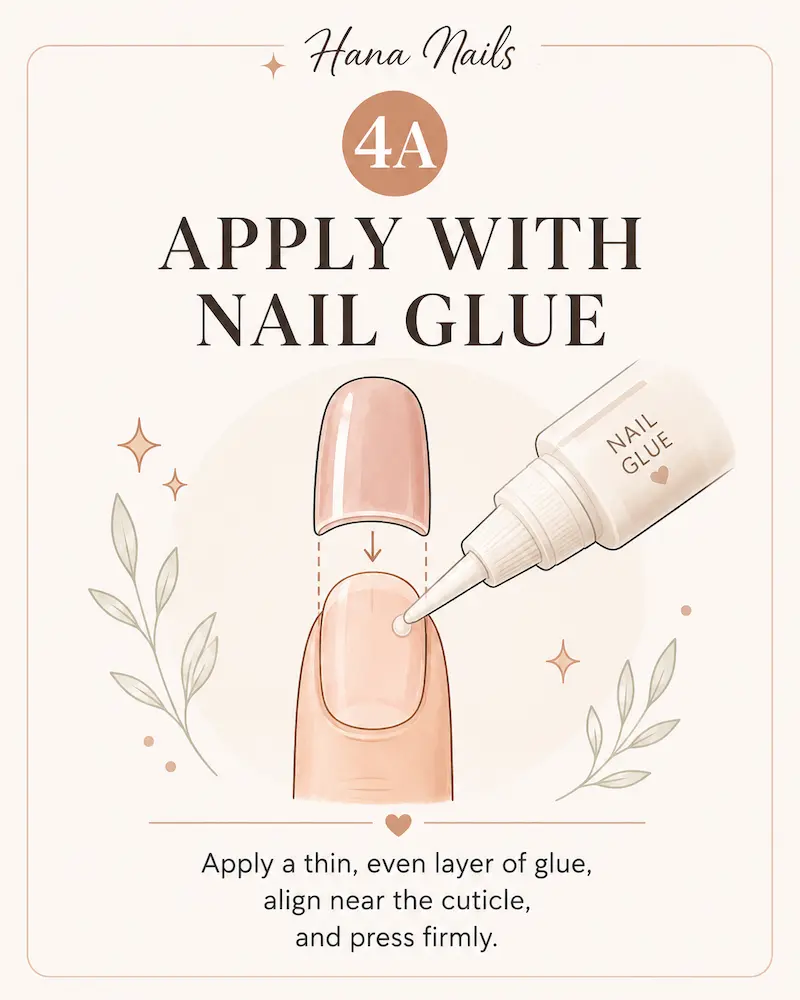
6.5.1. Apply a Controlled Amount of Glue
Follow the glue instructions and apply a thin, even layer to the natural nail, the underside of the press-on, or both, depending on the product. Cover the bonding area without flooding the cuticle or sidewalls.
Work on one nail at a time. Too little glue may leave dry areas, while too much can spill onto the skin, create an uneven layer, and make removal more difficult.
6.5.2. Align the Press-On Nail
Hold the press-on by its outer edges and position the base just above the cuticle. Center it with the direction of the finger before allowing the glued surfaces to make full contact.
6.5.3. Lower and Press Into Place
Lower the press-on gradually from the cuticle area toward the free edge, then apply firm, even pressure for the time recommended by the product. Avoid sliding or rotating the nail while the adhesive sets.
6.6. Step 4B: Apply Press-On Nails With Adhesive Tabs
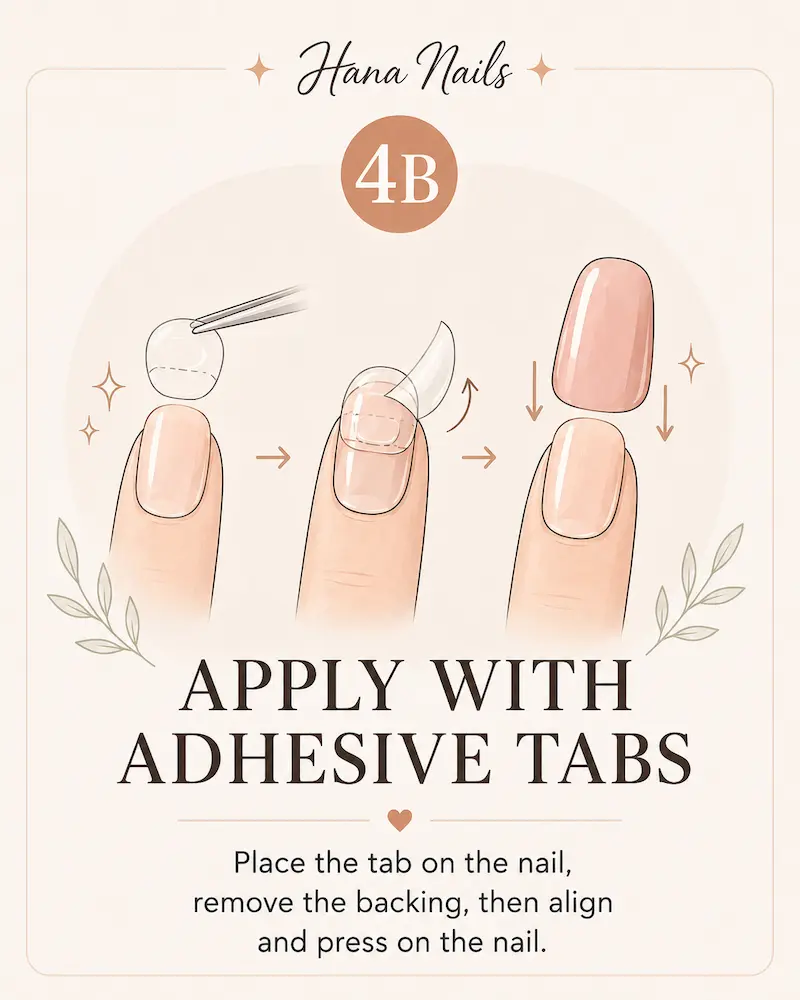
6.6.1. Select the Correct Tab Size
Choose a tab that covers most of the nail plate without extending onto the skin. A tab that is too small may provide insufficient contact, while one that is too large may lift around the edges.
6.6.2. Attach and Smooth the Tab
Place the tab on the clean, dry nail and press from the center toward the edges. Smooth out creases and air bubbles before removing the protective backing.
Avoid touching the exposed adhesive once the backing has been removed.
6.6.3. Position and Press the Nail
Align the press-on above the cuticle, lower it onto the tab, and press firmly across the center, sidewalls, and free edge for the recommended time.
6.7. Step 5: Check the Fit and Finish
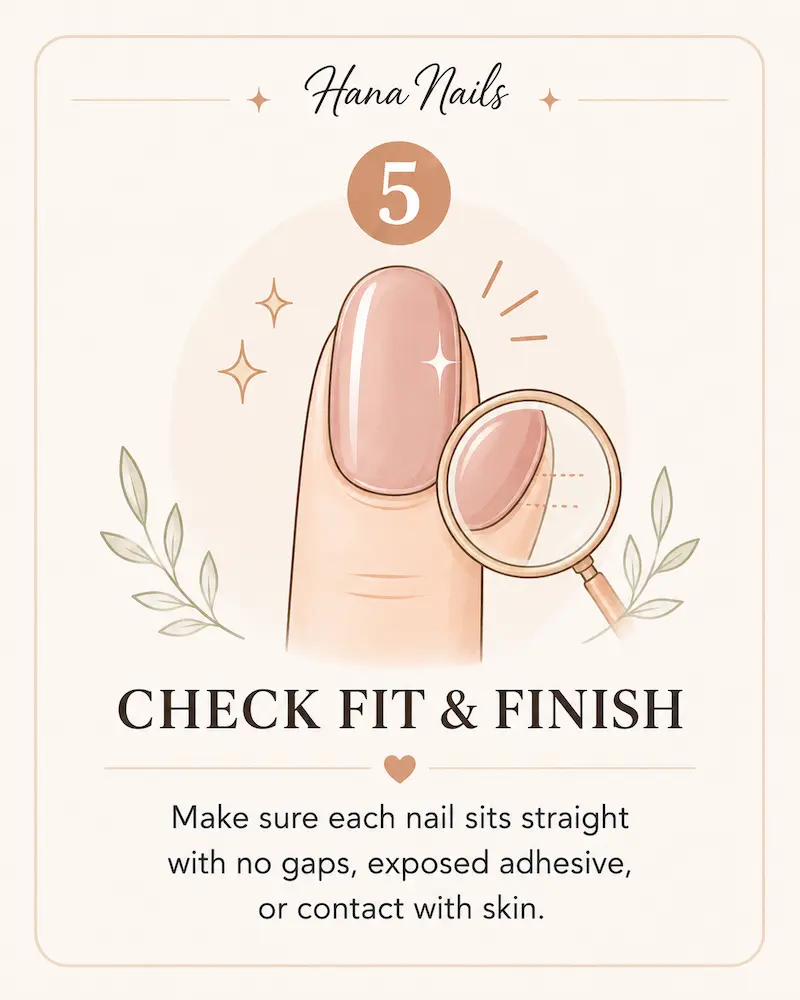
Inspect the nails from the top, sides, and free edge. Each press-on should sit straight and close to the natural nail without visible gaps, exposed adhesive, or contact with the surrounding skin.
If the product allows filing after application, refine the free edge or sides gently. Avoid heavy filing around hand-painted details, chrome, crystals, or charms.
Small details such as cuticle alignment, sidewall coverage, curvature, and edge filing can strongly affect the result. Learn how to make press-on nails look natural without over-filing the set.
6.8. Step 6: Protect the Set After Application
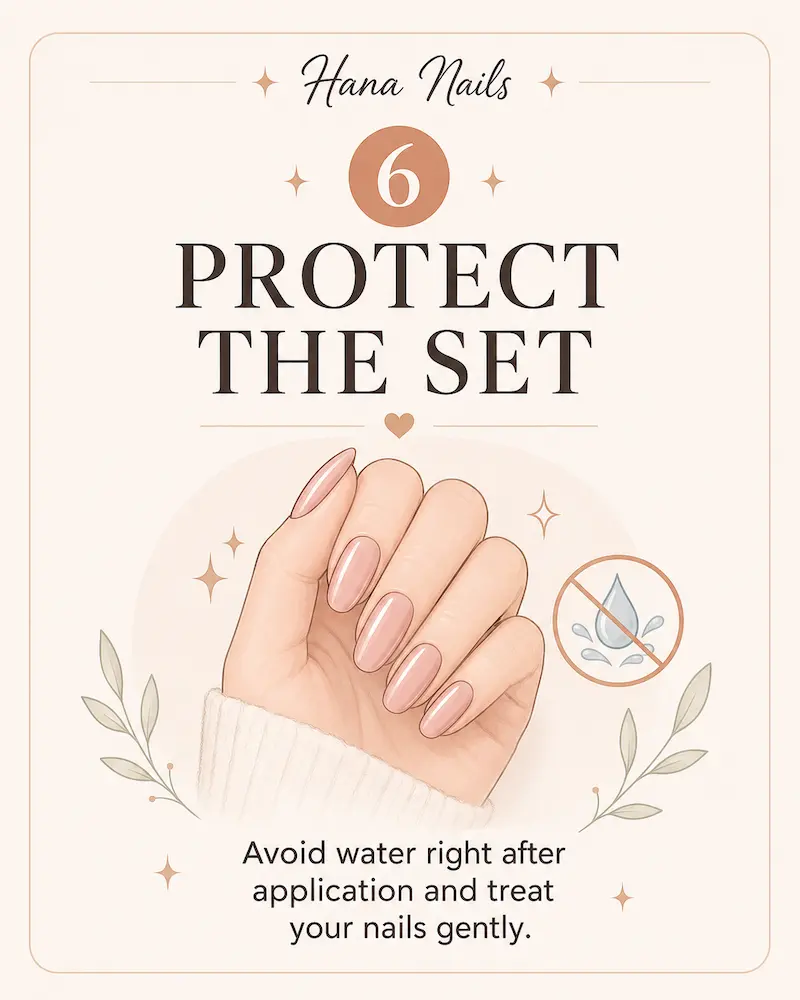
Follow the adhesive manufacturer’s instructions regarding setting time and water exposure. Avoid unnecessary water, heavy pressure, and activities that may bend or shift the nails immediately after application.
Do not use the nails to open cans, scrape labels, lift lids, or press stiff buttons. Wear gloves for dishes and cleaning, and dry the hands thoroughly after washing.
6.9. Common Press-On Nail Application Mistakes
| Mistake | Why It Causes Problems |
|---|---|
| Choosing a size that is too small | Creates tension, exposed sidewalls, and early lifting |
| Applying over oil or moisture | Prevents the adhesive from gripping evenly |
| Skipping cuticle preparation | Causes the press-on to sit over tissue instead of the nail plate |
| Buffing too aggressively | Can thin and weaken the natural nail |
| Using too much glue | May overflow onto the skin and complicate removal |
| Using too little or uneven glue | Leaves dry areas and air pockets |
| Placing the nail on the skin | Reduces stability and may cause discomfort |
| Moving the nail while it sets | Disturbs the adhesive layer and alignment |
| Exposing the manicure to water too soon | May weaken a newly formed bond |
If premature detachment is your main concern, use this checklist on how to prevent press-on nails from popping off before your next application.
6.10. Quick Application Checklist
- Select and arrange all ten sizes.
- Clean and fully dry the natural nails.
- Push back visible cuticle tissue gently.
- Buff only if recommended.
- Remove dust and oil.
- Choose the adhesive based on wear time.
- Apply a controlled amount of adhesive.
- Position the press-on above—not on—the cuticle.
- Press firmly without sliding.
- Follow the product’s setting and water-exposure instructions.
6.11. Key Takeaway
A successful press-on manicure depends on accurate sizing, careful preparation, even adhesive coverage, and steady pressure. Select every nail before starting, keep the bonding surfaces clean and dry, and follow the specific instructions provided with your press-on set and adhesive.
7. How Long Do Press-On Nails Last?
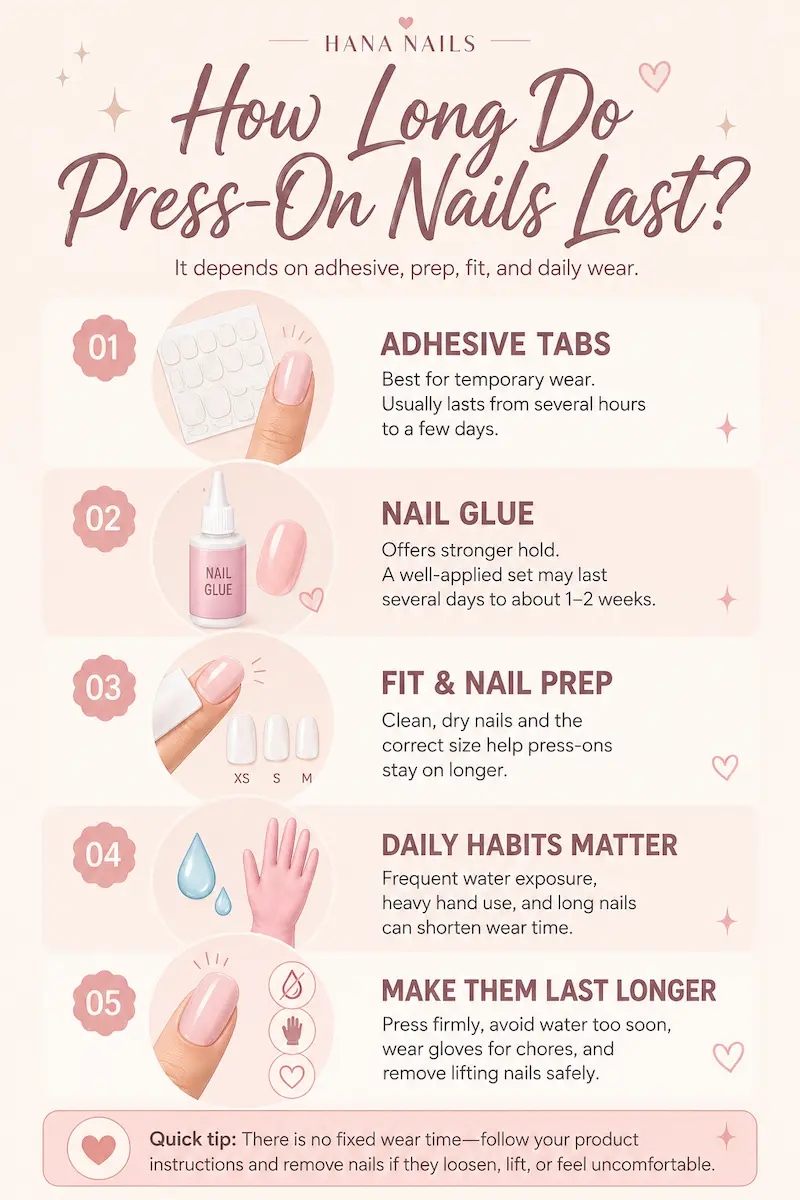
Press-on nails can last from a few hours to approximately one or two weeks, depending on the adhesive, nail preparation, fit, product quality, and daily activities. Adhesive tabs are generally better for temporary wear, while nail glue usually creates a stronger bond for several days or longer.
There is no guaranteed wear time for every set. Two people using the same nails may achieve different results because their nail shapes, application methods, routines, and exposure to water are not identical. Treat manufacturer wear-time claims as estimates rather than promises.
7.1. How Long Do Press-On Nails Last With Nail Glue?
When applied with nail glue, press-on nails commonly last from several days to around one or two weeks. A carefully prepared and correctly fitted set may remain secure toward the upper end of that range, while poor sizing, oily nail plates, uneven glue, or heavy hand use may cause earlier lifting.
Using more glue does not automatically make the manicure last longer. Excess glue may spill onto the skin, create an uneven layer, trap air, and make removal more difficult. Even coverage is more important than using the largest possible amount.
7.2. How Long Do Press-On Nails Last With Adhesive Tabs?
Adhesive tabs are intended mainly for short-term wear. Depending on the tab quality, preparation, fit, and activity level, they may last for a few hours, one day, or several days.
Tabs are useful when easy removal, frequent style changes, or reuse matters more than maximum adhesion. They are usually less resistant to prolonged moisture and heavy pressure than nail glue, so frequent handwashing, swimming, dishwashing, or manual work may shorten wear time.
7.3. Typical Wear Time by Adhesive Type
| Adhesive Method | Typical Use | Approximate Wear Time |
|---|---|---|
| Adhesive tabs | Photoshoots, parties, one-day events, frequent design changes | Several hours to a few days |
| Nail glue | Everyday wear, vacations, and multi-day events | Several days to approximately one or two weeks |
| Pre-applied adhesive | Quick temporary manicures | Usually short-term; follow the product claim |
| Brand-specific bonding systems | Applications using compatible products from one system | Follow the manufacturer’s stated wear and removal guidance |
7.4. What Affects How Long Press-On Nails Last?
7.4.1. Nail Preparation
Oil, lotion, dust, moisture, old polish, and adhesive residue can prevent the glue or tab from contacting the natural nail evenly. Clean, fully dry nail plates generally provide a more reliable bonding surface.
7.4.2. Correct Size and Curvature
A press-on should cover the natural nail from sidewall to sidewall without touching the skin or needing to be forced downward. A nail that is too small, too wide, too flat, or too curved may create tension or gaps that weaken adhesion.
7.4.3. Adhesive Coverage and Pressure
Uneven glue or a poorly fitted tab can leave dry areas and air pockets. Firm, steady pressure helps the adhesive contact both surfaces, while sliding or rotating the nail during setting may disturb the bond.
7.4.4. Water Exposure
Frequent soaking and prolonged water exposure may weaken the adhesive around the edges. Newly applied nails should be protected for the setting period stated by the adhesive manufacturer.
Pools, seawater, sunscreen, and extended soaking create different challenges from a normal shower. Follow these precautions if you plan to swim with press-on nails.
7.4.5. Daily Activities
Opening packages, lifting heavy objects, cleaning, gardening, sports, and using the nail tips as tools place more stress on the bond than gentle everyday use. Longer nails also experience greater leverage when they hit or catch on objects.
7.4.6. Product Quality and Condition
Cracked, warped, or heavily filed press-ons may not sit evenly. Old, thickened, contaminated, or poorly stored glue may also perform less reliably than a fresh adhesive used according to its instructions.
7.5. How to Make Press-On Nails Last Longer
To improve wear time:
- Select and arrange all ten sizes before application.
- Clean and fully dry the natural nails.
- Avoid cuticle oil and hand cream immediately before applying the set.
- Use the adhesive according to the manufacturer’s instructions.
- Apply firm, even pressure without sliding the nail.
- Avoid unnecessary water exposure during the setting period.
- Wear gloves for dishes, cleaning, and prolonged wet tasks.
- Use finger pads and proper tools instead of the nail tips.
- Choose a practical length for your daily routine.
- Remove and reapply a lifted nail instead of adding glue over moisture or debris.
For a complete long-wear routine covering preparation, application, water exposure, daily habits, and emergency fixes, see how to make press-on nails last longer.
7.6. Why Do Press-On Nails Pop Off Early?
Early detachment usually results from a contaminated nail surface, incorrect fit, uneven adhesive, insufficient pressure, water exposure before the bond is ready, or repeated impact during daily activities.
If the same finger repeatedly loses a press-on, review the size, curvature, adhesive coverage, and pressure placed on that finger instead of simply adding more glue.
When the problem occurs repeatedly across several fingers, use this diagnostic guide to understand why your press-on nails keep falling off.
7.7. When Should You Remove Press-On Nails?
Remove a press-on nail when it becomes noticeably loose, painful, cracked, visibly lifted, attached at only one small point, or difficult to keep clean. You should also remove the set if you notice redness, swelling, itching, unusual discoloration, odor, or discomfort.
Do not keep the nails attached simply to reach the longest possible wear time. Comfort, hygiene, and natural nail health should take priority over extending the manicure.
7.8. Quick Wear-Time Guide
| Your Goal | Recommended Starting Method |
|---|---|
| A few hours or a photoshoot | Adhesive tabs |
| One-day event | Adhesive tabs or a temporary pre-applied adhesive |
| A weekend | Strong adhesive tabs or nail glue, depending on product instructions |
| Several days | Nail glue with careful sizing and preparation |
| Up to approximately one or two weeks | Quality press-ons, nail glue, correct fit, thorough preparation, and careful daily wear |
| Frequent design changes | Reusable press-ons with adhesive tabs |
| Maximum possible hold | Follow the brand’s strongest compatible application system rather than adding excess glue |
7.9. Key Takeaway
Press-on nails typically last from a few hours or days with adhesive tabs to several days or approximately one or two weeks with nail glue. Actual wear time depends on fit, nail preparation, adhesive coverage, application pressure, water exposure, and daily activities.
For longer wear, focus on clean and dry nail plates, correct sizing and curvature, even adhesive coverage, firm pressure, and gentle daily care. Remove the nails when they become loose, damaged, uncomfortable, or difficult to keep clean.
8. Are Press-On Nails Safe for Natural Nails?
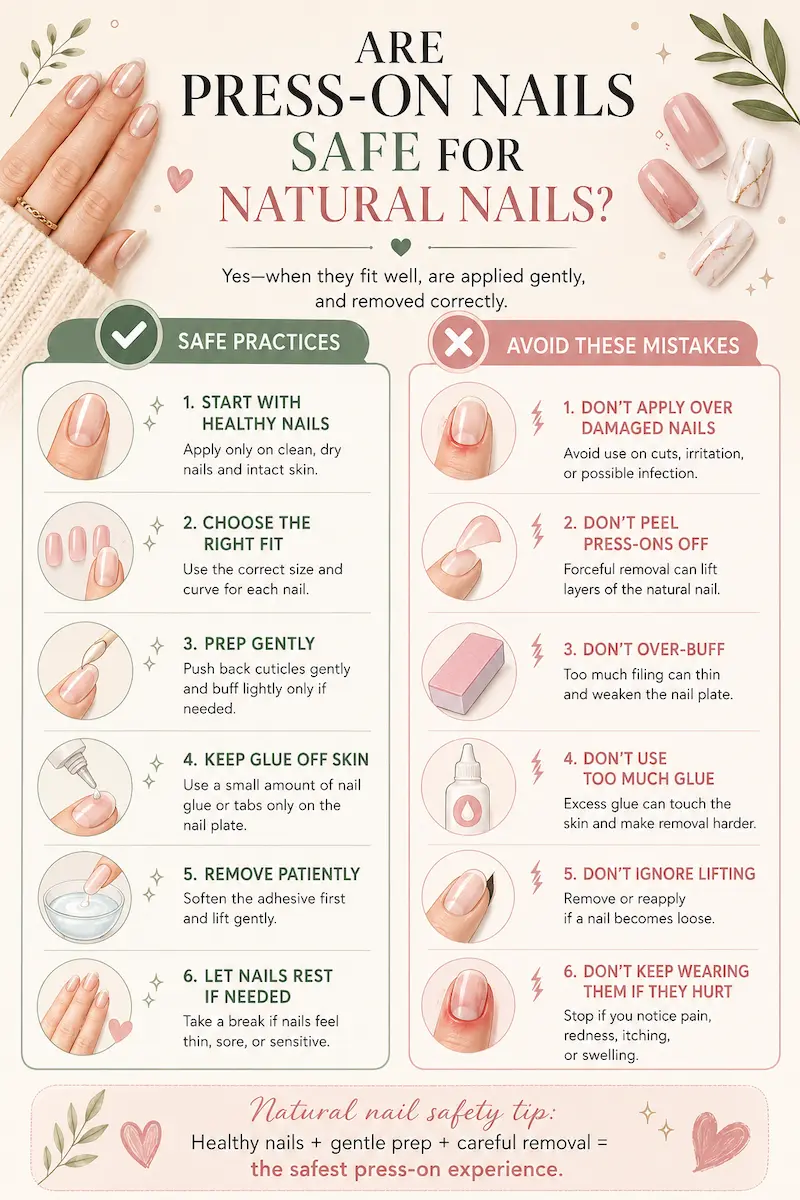
Press-on nails are generally safe for healthy natural nails when they fit correctly, are applied according to the product instructions, and are removed without peeling or force. Compared with nail systems that require more filing, sculpting, or salon maintenance, press-ons can be a lower-commitment option because they are attached as pre-made full-cover nails.
However, they are not completely risk-free. Problems are more likely when the natural nail is over-buffed, the press-on is forced into the wrong size or curvature, excessive adhesive touches the skin, a lifted nail is left in place, or the set is pulled off before the bond has been loosened.
The safest approach combines healthy nails, accurate sizing, gentle preparation, controlled adhesive use, clean wear, and patient removal.
8.1. Can Press-On Nails Damage Natural Nails?
Press-on nails can damage natural nails, but damage is not inevitable. Thinning, peeling, roughness, or sensitivity usually occurs because surface layers are removed during aggressive preparation or forced removal rather than simply because a press-on was worn.
Damage is more likely when users repeatedly scrape off glue, file deeply into the nail plate, peel nails from one side, or continue wearing a loose nail that catches on objects.
Damage is usually linked to preparation, pressure, lifting, or forced removal rather than the press-on itself. See the full breakdown of how press-on nails can damage natural nails and how to reduce the risk.
8.2. Common Causes of Natural Nail Damage
| Cause | Why It Can Be Harmful |
|---|---|
| Peeling or pulling the nails off | Can remove surface layers of the natural nail together with the adhesive |
| Buffing too aggressively | May thin and weaken the nail plate |
| Using the wrong size or curvature | Can create pressure, gaps, lifting, and discomfort |
| Using too much adhesive | May spill onto the skin, create an uneven layer, and complicate removal |
| Leaving lifted nails in place | Allows moisture and debris to collect and increases the risk of catching or injury |
| Scraping away glue residue | Can remove more of the natural nail surface than intended |
8.3. Is Nail Glue Safe?
Nail glue can be used safely by many people when it is intended for cosmetic artificial nails and applied exactly as directed. It should remain on the nail plate rather than the cuticle or surrounding skin.
Do not substitute household or craft glue for cosmetic nail adhesive. Check the ingredient list, warning information, storage directions, and removal instructions before use.
Avoid applying nail glue over broken skin, open cuts, inflamed cuticles, or a nail that is separating from the nail bed. If glue accidentally bonds skin, do not pull the skin apart forcefully; follow the manufacturer’s first-aid instructions.
8.4. Can Nail Glue Cause an Allergic Reaction?
Some people may develop irritation or allergic contact dermatitis from nail products or adhesives. Possible symptoms include redness, itching, burning, swelling, tenderness, blistering, cracking, or a rash around the fingers.
Reactions may also appear on areas such as the eyelids or face after the hands touch the skin. A person can react even after using a similar product previously without problems.
If irritation develops, stop using the product and remove the nails safely if possible. Seek medical advice if symptoms are severe, spreading, persistent, or involve marked swelling, blistering, facial swelling, or breathing difficulty.
8.5. Are Adhesive Tabs Safer Than Nail Glue?
Adhesive tabs usually create a lighter, more temporary bond, so they are often easier to remove and may leave less hardened residue. This can make them a practical option for short-term wear or for people who want to minimize filing and soaking.
However, tabs are not automatically allergy-proof or suitable for everyone. Their ingredients vary by product, and they may still irritate the skin if they overlap the nail plate.
Choose between tabs and glue based on your intended wear time, previous reactions, product instructions, and removal priorities rather than assuming one method is universally safer.
8.6. Can Moisture Under Press-On Nails Cause Problems?
A correctly fitted press-on should sit close to the natural nail without large gaps. When lifting develops, water, soap, oil, and debris may collect beneath the artificial nail and make the area more difficult to keep clean.
Remove and clean a lifted nail rather than repeatedly adding glue over the gap. Do not cover unusual green, yellow, brown, or black discoloration with another press-on.
8.7. When Should You Avoid Press-On Nails?
Avoid applying press-on nails when the natural nail or surrounding skin shows signs of injury, irritation, infection, or unexplained change. Examples include:
- Open cuts, bleeding, or broken skin
- Red, swollen, painful, or inflamed cuticles
- Green, yellow, dark, or unexplained discoloration
- Separation of the natural nail from the nail bed
- A possible fungal or bacterial infection
- Significant thinning, peeling, or tenderness
- A previous allergic reaction to nail glue, tabs, or artificial nail products
- Pain or pressure when testing the press-on size
Artificial nails should not be used to hide a nail problem. Covering an unhealthy nail can make changes harder to monitor and may delay appropriate care.
8.8. How to Use Press-On Nails More Safely
For a safer application and wear experience:
- Apply press-ons only to healthy, dry nails and intact skin.
- Test all ten sizes before using adhesive.
- Use only the minimum buffing recommended by the product.
- Keep glue or tabs off the surrounding skin.
- Follow the manufacturer’s setting, wear, and removal instructions.
- Inspect the edges regularly for lifting.
- Remove the nails if they become painful, damaged, or difficult to keep clean.
- Never peel or force the nails off.
8.9. Warning Signs That Need Attention
Remove the press-ons and seek appropriate professional advice if you notice:
- Persistent or increasing pain
- Significant redness, swelling, heat, or tenderness
- Blistering, cracking, or a spreading rash
- Pus, unpleasant odor, or fluid beneath the nail
- Green, yellow, brown, or black discoloration
- Separation of the natural nail from the nail bed
- Symptoms that continue or worsen after removal
- Facial swelling or breathing difficulty
8.10. Key Takeaway
Press-on nails are generally safe for healthy natural nails when they fit correctly, require only gentle preparation, and are removed by loosening the adhesive rather than peeling them off.
For the safest experience, keep adhesive off the skin, monitor the manicure for lifting, stop using the product if irritation develops, and remove the set promptly if you notice pain, unusual discoloration, or signs of infection.
9. How to Remove Press-On Nails Without Damage
The safest way to remove press-on nails is to loosen the adhesive gradually and lift each nail only when it releases with little or no resistance. Never peel, pull, snap, twist, or force the press-ons from the natural nail, as doing so may remove surface layers from the nail plate.
The correct removal method depends on whether the nails were applied with adhesive tabs, nail glue, a pre-applied adhesive, or a brand-specific bonding system. Always check the instructions supplied with the press-on set and adhesive before choosing a soaking or removal method.
If a nail does not release easily, the adhesive has not softened enough. Continue the recommended removal process instead of increasing force.
Because removal varies by adhesive system, follow the complete step-by-step guide on how to remove press-on nails without damage before beginning.
9.1. When Should You Remove Press-On Nails?
Remove press-on nails when the intended wear period is over or when a nail becomes visibly loose, lifted, cracked, painful, uncomfortable, or difficult to keep clean.
Remove the set sooner if you notice redness, swelling, itching, unusual discoloration, odor, moisture beneath a lifted nail, or separation of the natural nail. Do not continue wearing a press-on that remains attached at only one small point.
9.2. What You Need for Removal
The exact supplies depend on the adhesive, but a basic removal setup may include:
- A bowl of comfortably warm water
- Mild liquid soap
- A wooden cuticle or orangewood stick
- A clean towel or lint-free cloth
- The remover recommended by the brand
- Cotton pads or small wipes
- A fine buffer, if permitted
- Cuticle oil or hand moisturizer for aftercare
Avoid sharp metal tools, blades, scissors, or anything that may scrape beneath the artificial nail.
9.3. How to Remove Press-On Nails Applied With Adhesive Tabs
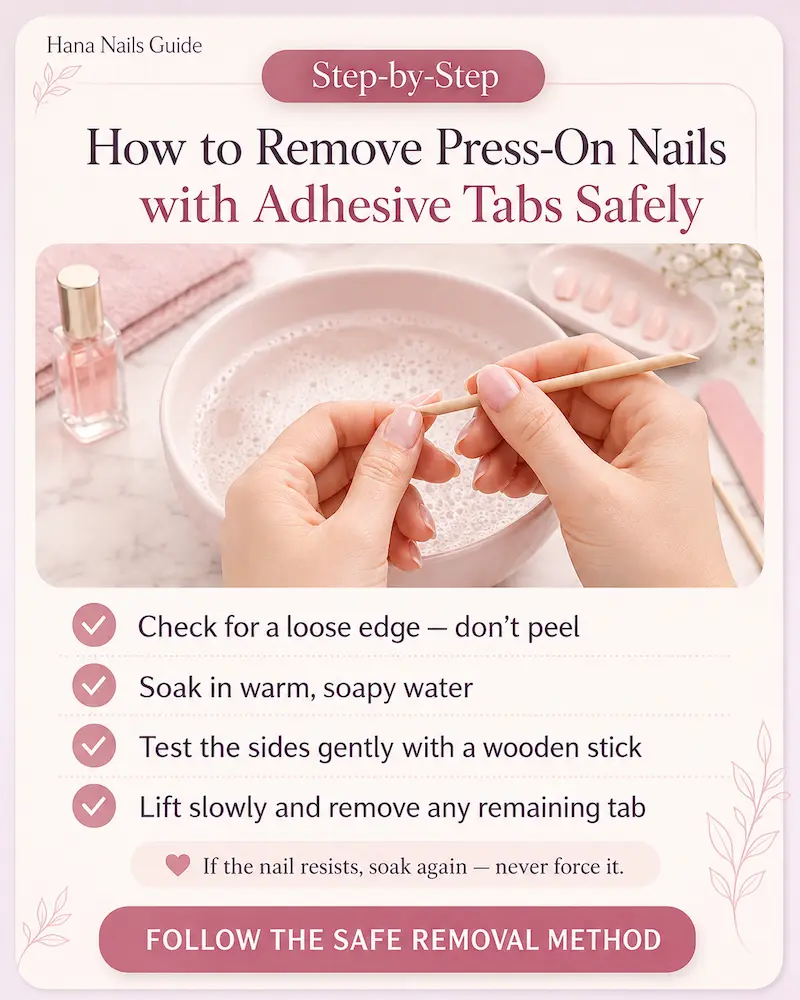
9.3.1. Step 1: Check for a Naturally Loose Edge
Inspect the sidewalls and free edge gently without pulling. If an edge has already begun lifting, note the location, but do not start peeling from that point.
9.3.2. Step 2: Soak in Warm, Soapy Water
Place your fingertips in comfortably warm water mixed with mild soap for the time recommended by the brand. The water should feel warm, not painfully hot.
Soaking helps soften the tabs and reduce their grip. Move the fingers gently, but do not bend or pull the artificial nails.
9.3.3. Step 3: Test the Edges Gently
After soaking, use a wooden cuticle stick to test only an edge that has already loosened. Do not push the tool beneath a firmly attached area.
If the nail lifts easily, work slowly around the perimeter until it releases. If it resists, soak again.
9.3.4. Step 4: Remove the Remaining Tab
Once the press-on has been removed, gently roll or peel away the remaining adhesive tab. Avoid scraping aggressively if part of the tab remains attached.
9.4. How to Remove Press-On Nails Applied With Nail Glue
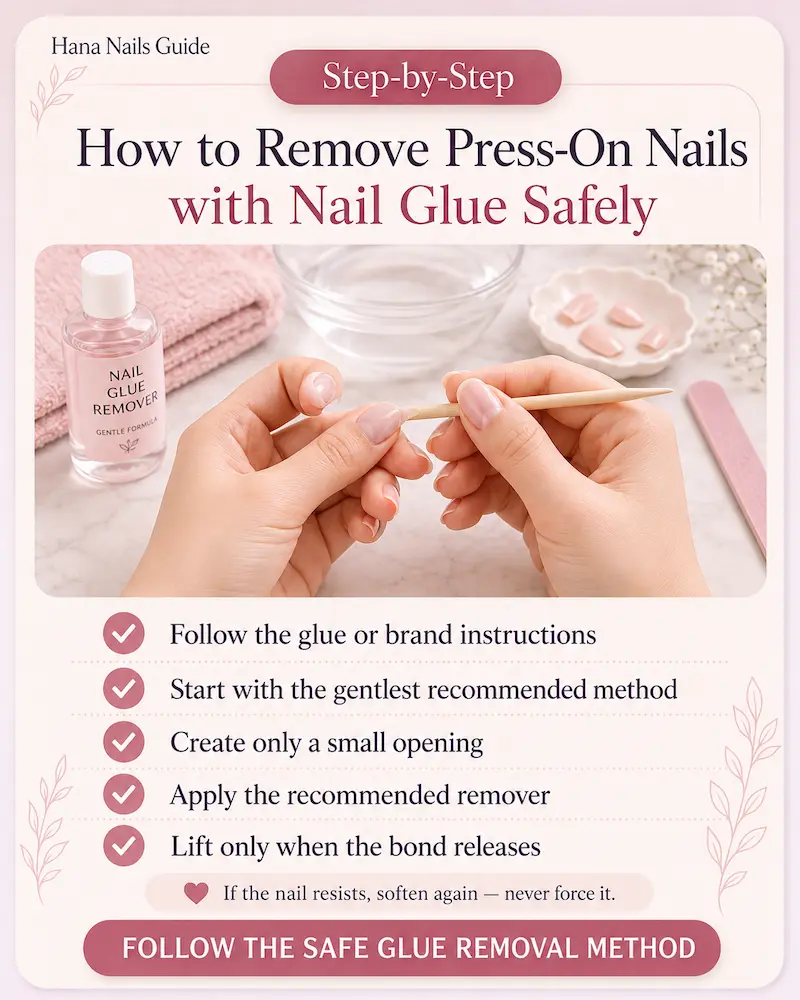
9.4.1. Step 1: Follow the Product Instructions
Check whether the brand recommends warm soapy water, a dedicated press-on nail remover, acetone, or another specific method. Use only products that are compatible with both the adhesive and the press-on material.
9.4.2. Step 2: Start With the Gentlest Recommended Method
When permitted by the instructions, begin with warm, soapy water. Some glued press-ons may loosen after an extended soak, especially after several days of wear.
If the nails remain firmly attached, move to the recommended remover instead of attempting to pry them off.
9.4.3. Step 3: Create Only a Small Opening
If one side has loosened naturally, place the rounded edge of a wooden cuticle stick into the existing gap. Do not push toward the center of the nail or use the stick as a lever.
The opening is only intended to help the compatible remover reach the adhesive.
9.4.4. Step 4: Apply the Recommended Remover
Apply the remover at the loosened edge according to the product directions and allow enough time for it to penetrate the adhesive. Use only the recommended amount and keep the product away from the eyes, mouth, and broken skin.
9.4.5. Step 5: Lift Only When the Bond Releases
Test the edges again after the waiting period. A properly softened nail should lift gradually without pain or strong resistance. Work around the perimeter rather than pulling from one corner.
If any area remains attached, stop and repeat the softening process.
9.5. Should You Use Acetone?
Acetone may be recommended for certain nail glues, but it should not be treated as the default method for every press-on set. It can dry the nails and surrounding skin and may cloud, soften, discolor, or damage some reusable press-ons and decorative finishes.
Use acetone only when the instructions for the specific adhesive or press-on set recommend it. If preserving the nails for reuse is important, confirm that the method will not damage the material or artwork.
9.6. How to Remove Leftover Glue
After removal, some adhesive may remain on the natural nails or the underside of the press-ons. Do not scrape it with a sharp tool or file deeply into the nail plate.
Follow the adhesive manufacturer’s directions for softening residue. Once softened, gently roll it away or use a fine buffer with minimal pressure only if the product instructions allow it.
It is safer to leave a thin trace of stubborn residue temporarily than to remove layers from the natural nail through aggressive buffing.
9.7. How to Care for Natural Nails After Removal
Wash and dry the hands after the removal process, then inspect the nails and surrounding skin for peeling, tenderness, redness, swelling, discoloration, or separation.
Apply hand moisturizer or cuticle oil once removal is complete, provided you are not preparing for immediate reapplication. If the nails feel thin, painful, or sensitive, keep them short and allow them time without artificial nails.
Do not immediately cover a damaged, irritated, painful, or discolored nail with another press-on set.
9.8. What Not to Do During Removal
- Do not peel or pull firmly attached nails.
- Do not twist the press-ons from side to side.
- Do not use teeth, blades, scissors, or sharp metal tools.
- Do not pour household solvents onto the nails.
- Do not continue if you feel pain, burning, or strong resistance.
- Do not scrape or over-buff the natural nail to remove every trace of glue.
- Do not immediately reapply over irritated or damaged nails.
9.9. When to Seek Professional Help
Seek appropriate professional advice if you notice persistent or increasing pain, significant redness or swelling, blistering, a spreading rash, pus, unpleasant odor, unusual discoloration, bleeding, or separation of the natural nail from the nail bed.
You should also ask for help if a press-on remains firmly attached and you cannot remove it safely without force.
9.10. Key Takeaway
To remove press-on nails without damage, identify the adhesive system, soften the bond using the recommended method, and lift only from edges that release easily. Tabs may loosen with warm soapy water, while stronger nail glue may require more time or a compatible remover.
Never peel or force the nails off. Protecting the natural nail plate is more important than completing removal quickly or preserving every press-on for reuse.
10. How to Care for Press-On Nails
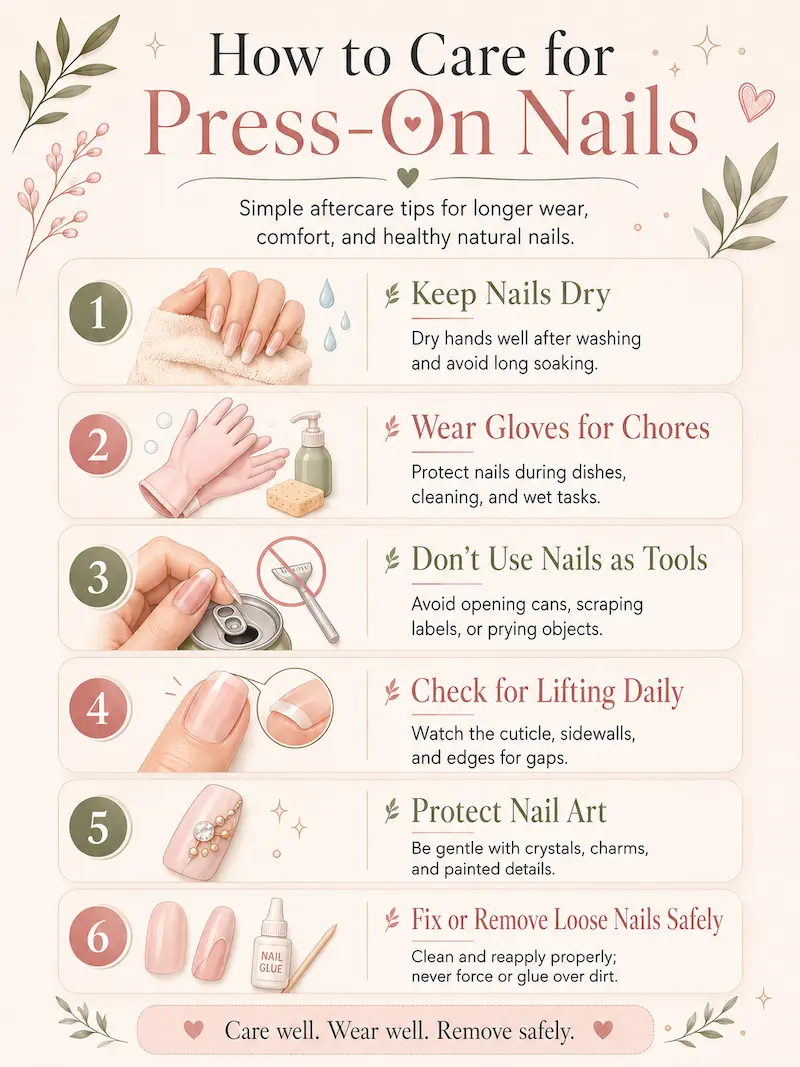
Caring for press-on nails means protecting the adhesive bond, reducing unnecessary impact, and checking the manicure regularly for lifting or damage. Good aftercare can help the nails remain secure, comfortable, and polished throughout their intended wear time.
Press-on nails do not require complicated daily maintenance, but they should not be treated as permanent extensions. Prolonged water exposure, strong chemicals, repeated pressure, and using the nails as tools can gradually weaken the adhesive or damage the artificial nail.
Always follow the aftercare instructions supplied with your press-on set and adhesive because recommended setting times, water resistance, and wear periods vary among products.
10.1. Protect the Nails After Application
The first period after application is important because the adhesive is still forming its bond. Avoid unnecessary water exposure, strong pressure, and activities that may bend or shift the nails during the setting time recommended by the product.
Do not test the manicure by pulling the tips, pressing them against a hard surface, or moving a nail that appears slightly crooked. If a nail was positioned incorrectly, remove and reapply it using the proper method rather than forcing it into a new position.
10.2. Keep the Nails as Dry as Practical
Normal handwashing and showering are usually possible once the adhesive has completed its recommended setting period. However, frequent soaking and prolonged water exposure may weaken the bond around the edges.
Dry the hands thoroughly after washing, especially around the cuticle area, sidewalls, and free edges. Do not leave the fingertips wet for long periods when it can be avoided.
Normal bathing is possible after the adhesive has set, but timing and exposure still matter. Read more about whether you can shower with press-on nails without weakening the bond.
10.3. Wear Gloves for Wet or Chemical Tasks
Wear household gloves when washing dishes, cleaning bathrooms, handling detergents, gardening in wet soil, or completing other tasks that involve prolonged water or chemical exposure.
Gloves do not make the manicure indestructible, but they reduce repeated moisture exposure and help protect the nail surface, artwork, crystals, and decorations from scratches and stains.
10.4. Do Not Use Press-On Nails as Tools
Avoid using the nails to open cans, scrape labels, lift lids, separate packaging, press stiff buttons, or pry objects apart. These actions place leverage on both the artificial nail and the adhesive bond.
Use the pads of your fingers or a suitable tool instead. This is especially important for long almond, coffin, and stiletto nails because extra length creates greater leverage during impact.
10.5. Be Careful With Typing and Daily Hand Movements
When typing, use the pads of the fingers rather than striking the keyboard directly with the nail tips. Repeated contact with hard keys may place stress on long press-ons and contribute to lifting or cracking over time.
Adjust how you hold your phone, open drawers, fasten buttons, or handle small objects if the length feels unfamiliar. New users may need a short adjustment period before daily movements feel natural.
If you regularly use a keyboard, adjusting finger angle, nail length, and desk setup can make it easier to type with long press-on nails.
10.6. Check for Lifting and Damage
Inspect the cuticle area, sidewalls, and free edge regularly for gaps, movement, cracks, or loose decorations. Early lifting may appear as a visible shadow, a clicking sensation, hair catching beneath an edge, or slight movement when the nail is touched.
Do not repeatedly press a lifted nail back into place or add fresh glue beneath an unclean gap. Moisture, oil, soap, and debris may already be trapped underneath.
10.7. What to Do if a Press-On Nail Starts Lifting
If a nail begins lifting, stop using it during normal tasks and check how much of the bond remains. A nail attached at only one edge or small point can catch on clothing or objects and pull suddenly on the natural nail.
Follow the adhesive instructions to remove the nail safely. Clean and fully dry the natural nail and the underside of the press-on before deciding whether it can be reapplied.
10.8. How to Reapply a Press-On Nail That Falls Off
Inspect both the natural nail and the press-on before reapplication. Do not reapply if the natural nail is painful, irritated, injured, discolored, or separating from the nail bed. Do not reuse a press-on that is cracked, warped, or difficult to clean.
Remove old adhesive using the method recommended for the product, then clean and dry both surfaces completely. Reapply with fresh adhesive and follow the normal application instructions.
If the same nail repeatedly falls off, reconsider the size, curvature, adhesive coverage, and daily pressure placed on that finger. Repeated detachment may indicate a fit problem rather than weak glue alone.
For the complete clean-and-reapply process, follow this guide on how to fix a press-on nail that falls off without trapping moisture or old adhesive.
10.9. Protect Nail Art, Crystals, and Charms
Press-on sets with hand-painted art, chrome, crystals, charms, chains, or raised decorations require additional care. Avoid scraping the surface, exposing decorative elements to strong chemicals, or allowing them to catch on fabric and hair.
When washing or drying the hands, pat around raised decorations instead of rubbing aggressively. Do not use household glue to repair missing charms unless the maker specifically recommends a compatible repair method.
10.10. Store Reusable Press-On Nails Properly
If the set is reusable, clean the nails using the method recommended for their material and allow them to dry completely. Store them in a clean, dry container away from direct sunlight, heat, moisture, dust, and pressure that may bend or crush them.
Organize the nails by finger or size so they are easier to identify during the next application. Keep highly decorated nails separated when necessary to prevent crystals, charms, or painted surfaces from scratching one another.
10.11. When Should You Stop Wearing a Press-On Nail?
Remove a press-on nail if it becomes painful, noticeably loose, cracked, difficult to keep clean, or attached at only one edge. You should also stop wearing the set if you notice redness, swelling, itching, unusual discoloration, odor, fluid, or separation of the natural nail.
Do not cover a possible nail problem by gluing another press-on over it. Artificial nails should not be used to hide damaged or infected-looking nails.
10.12. Daily Press-On Nail Care Checklist
- Follow the recommended adhesive setting time.
- Dry the nails thoroughly after washing.
- Wear gloves for dishes and cleaning.
- Use finger pads instead of nail tips.
- Avoid scraping, prying, and opening objects with the nails.
- Check the cuticle area and edges for lifting.
- Remove and clean a loose nail before reapplying it.
- Protect crystals, charms, and painted details.
- Store reusable nails in a clean, dry container.
- Remove the nails if they become painful, damaged, or difficult to keep clean.
10.13. Key Takeaway
To care for press-on nails, keep them as dry as practical, protect them during chores, avoid using them as tools, and check regularly for lifting or damage. If a nail becomes loose, remove it safely, clean both surfaces, and reapply it only when the natural nail and press-on remain healthy and undamaged.
Good aftercare does not mean keeping the set attached for as long as possible. Comfort, hygiene, stability, and natural nail health should take priority over maximum wear time.
11. Popular Press-On Nail Styles and Designs
Press-on nails are available in styles ranging from subtle nude and floral designs to reflective cat-eye finishes, playful cartoons, and dramatic Gothic artwork. Because the nails are decorated before application, you can choose a complete look that matches your outfit, personality, season, or event without recreating the design directly on your natural nails.
The best design is not always the most detailed one. For everyday wear, shorter nails and smoother artwork may be easier to maintain. For weddings, parties, holidays, or photoshoots, longer shapes, crystals, charms, chrome, and three-dimensional details can make the manicure a stronger part of the overall look.
Hana Nails organizes its handmade collections by both visual style and occasion, making it easier to begin with the mood you want and then narrow your choice by color, length, shape, and decoration level.
11.1. Popular Press-On Nail Styles
11.1.1. Cat-Eye Press-On Nails
Cat-eye press-on nails feature a reflective, dimensional finish that appears to shift as the hand moves under different lighting. The effect may look like a narrow beam, soft glow, or magnetic shimmer across the nail surface.
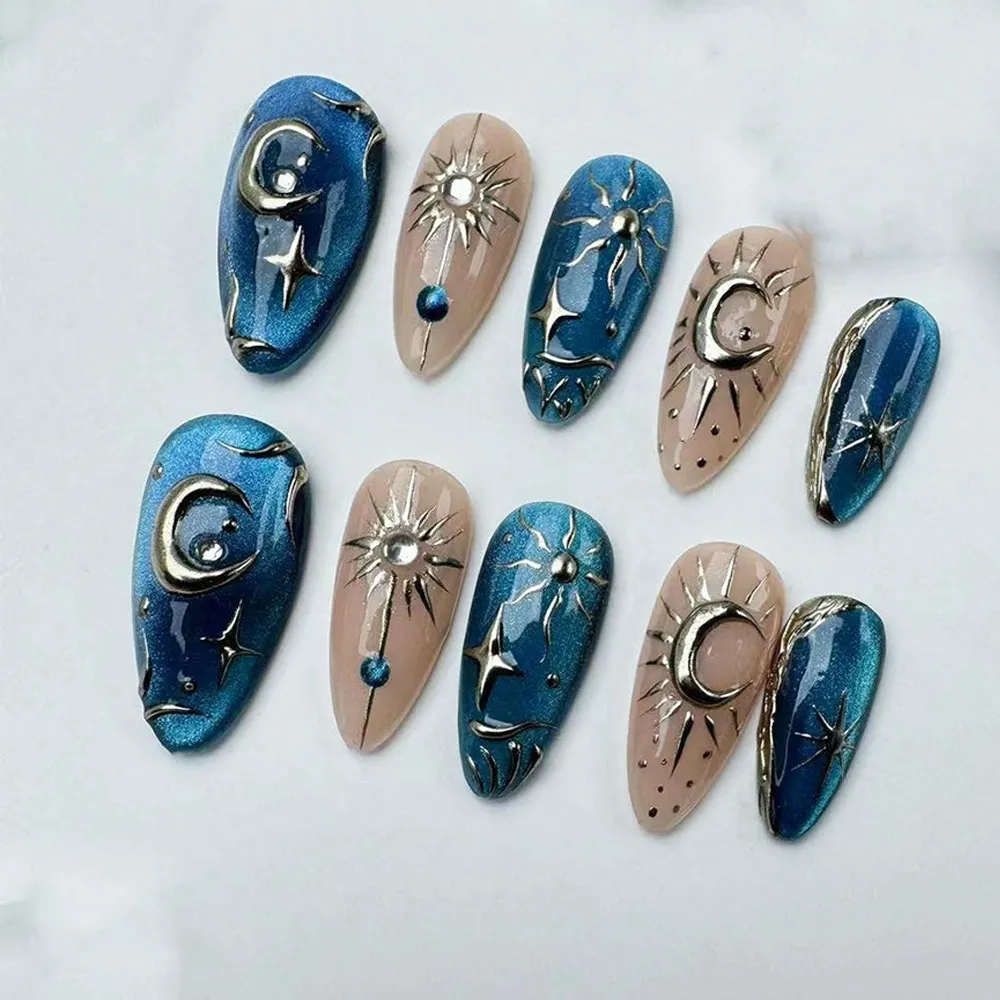
They work especially well for evening outfits, parties, holidays, and anyone who wants an eye-catching manicure without relying entirely on large charms. Dark shades create a dramatic look, while pink, gold, blue, and lighter cat-eye finishes feel softer or more romantic.
Explore Cat-Eye Press-On Nails
11.1.2. Floral Press-On Nails
Floral press-on nails range from simple painted petals to detailed botanical artwork, butterflies, pearls, and raised three-dimensional flowers. Soft pink, ivory, lavender, green, and pastel designs are popular for spring, weddings, garden parties, and romantic styling.
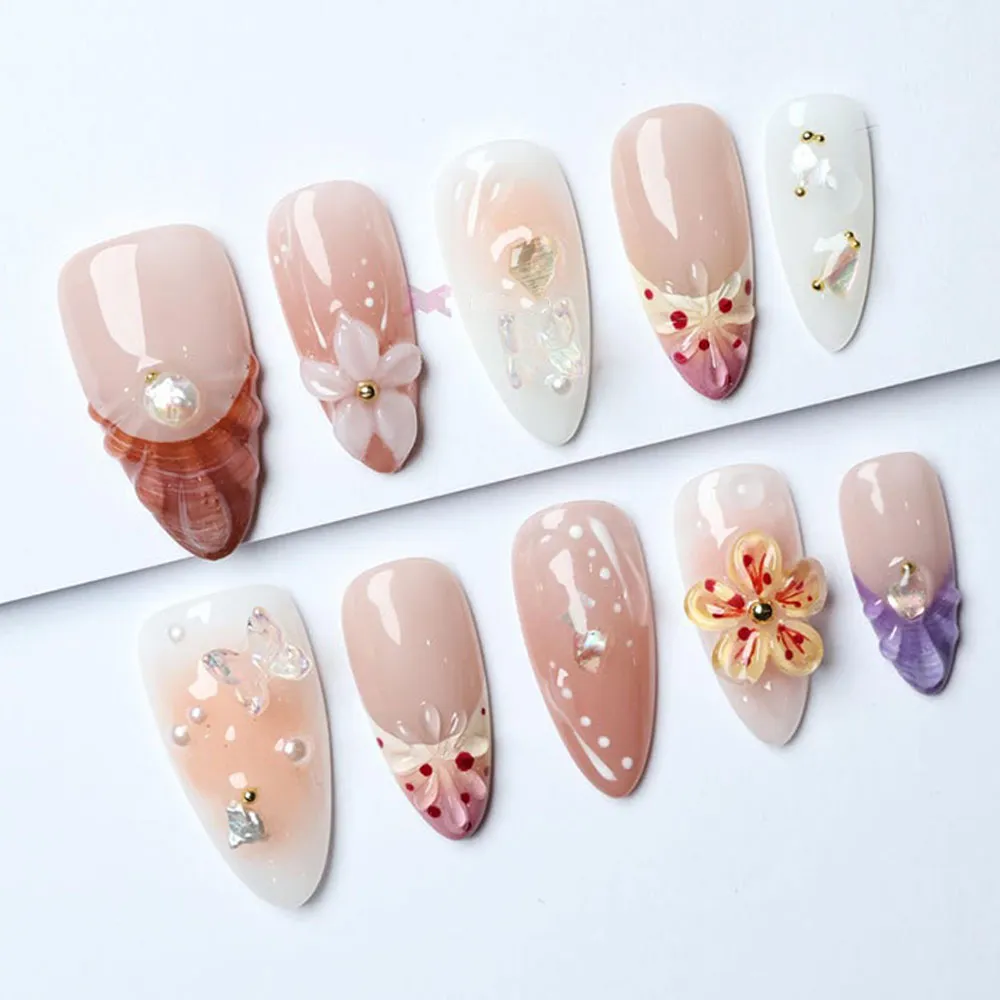
Flat or lightly textured floral designs are generally easier for everyday wear. Larger flowers, pearls, and charms create a stronger statement but require more care around clothing, hair, and household tasks.
11.1.3. Y2K Press-On Nails
Y2K press-on nails draw inspiration from the playful beauty trends of the late 1990s and early 2000s. Common elements include jelly finishes, stars, hearts, swirls, plaid, chrome, glitter, bright colors, and mixed three-dimensional details.
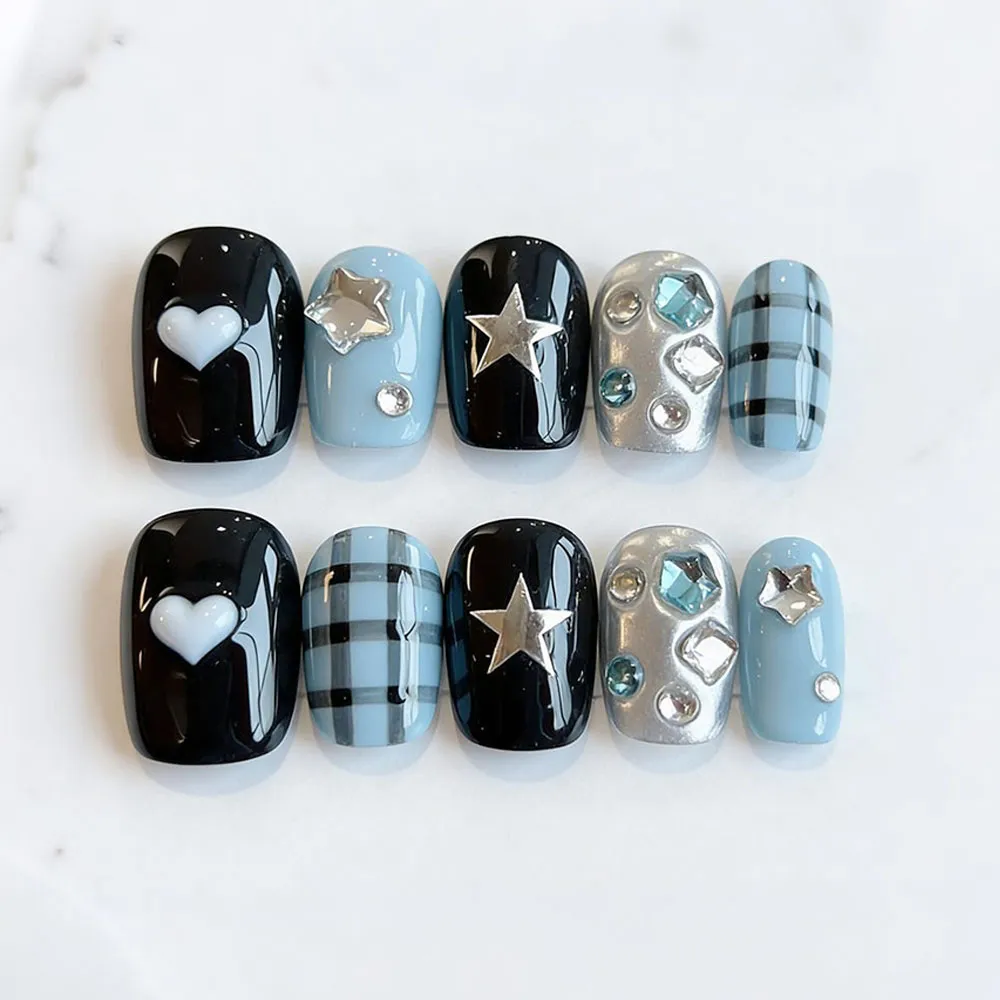
This style suits concerts, festivals, parties, nostalgic fashion, and statement outfits. For an easier-to-wear version, choose a nude or clear base with a few Y2K accents.
11.1.4. Gothic Press-On Nails
Gothic press-on nails often use black, deep red, brown, silver, or gold with crystals, chrome, stars, moons, crosses, lace-inspired details, and dark floral artwork. The result may feel dramatic, mysterious, romantic, or alternative.
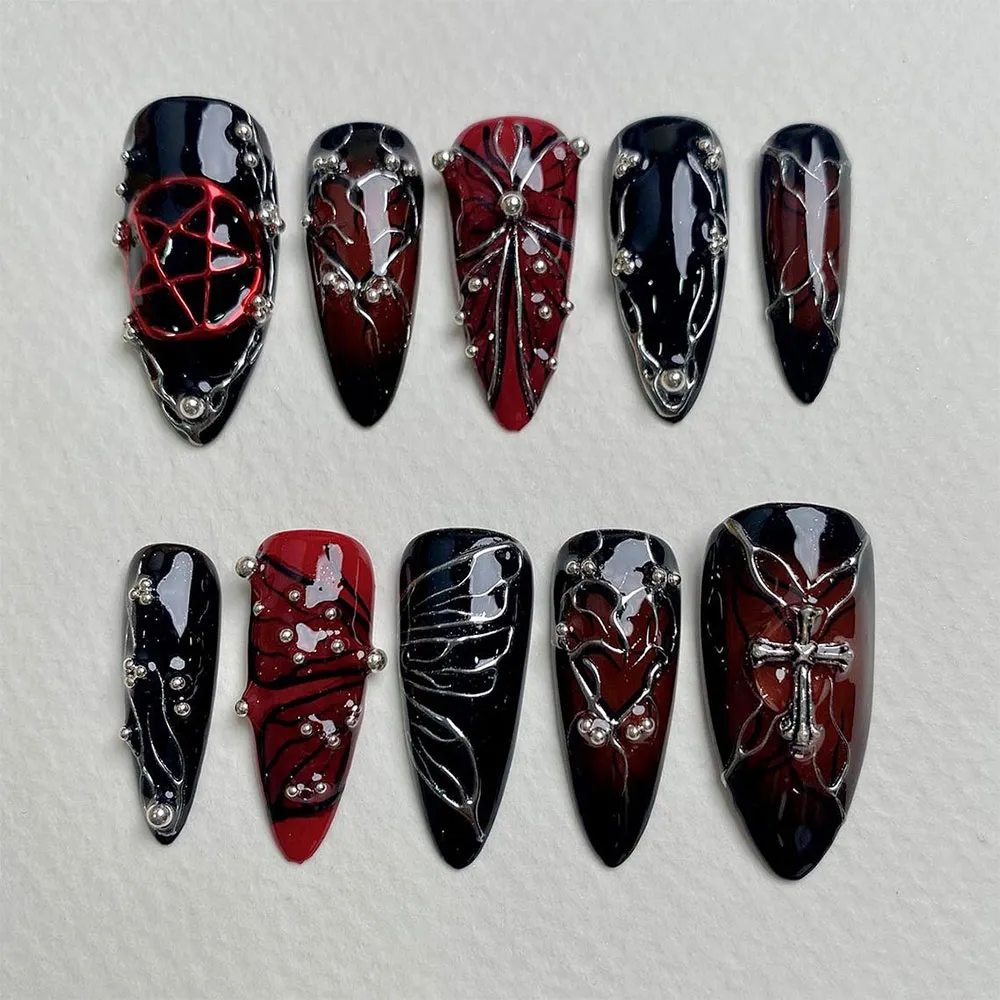
Long almond, coffin, and stiletto shapes strengthen the dramatic effect, while short square, oval, or almond nails make Gothic designs more practical for regular wear.
11.1.5. Ocean Press-On Nails
Ocean press-on nails use sea-inspired colors and motifs such as blue marble, teal gradients, shells, pearls, dolphins, tropical flowers, starfish, coral tones, and translucent water-like finishes.
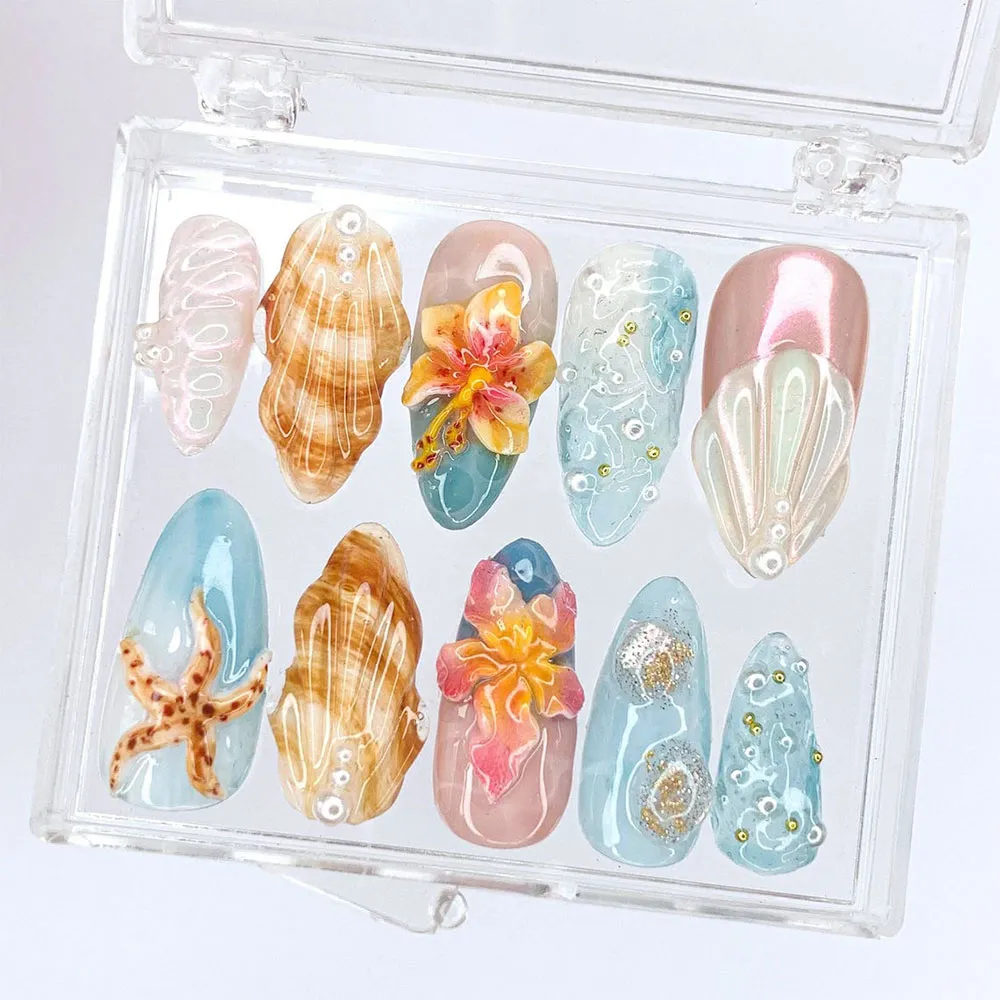
They are a natural choice for summer, beach trips, cruises, resort outfits, and vacation photography. Designs with raised shells, pearls, or charms require extra care to prevent snagging.
11.1.6. Cartoon Press-On Nails
Cartoon press-on nails use illustrated characters, animals, food, seasonal icons, and playful graphic details to create a cute or humorous manicure. They may range from subtle accent nails to colorful, highly decorative sets.
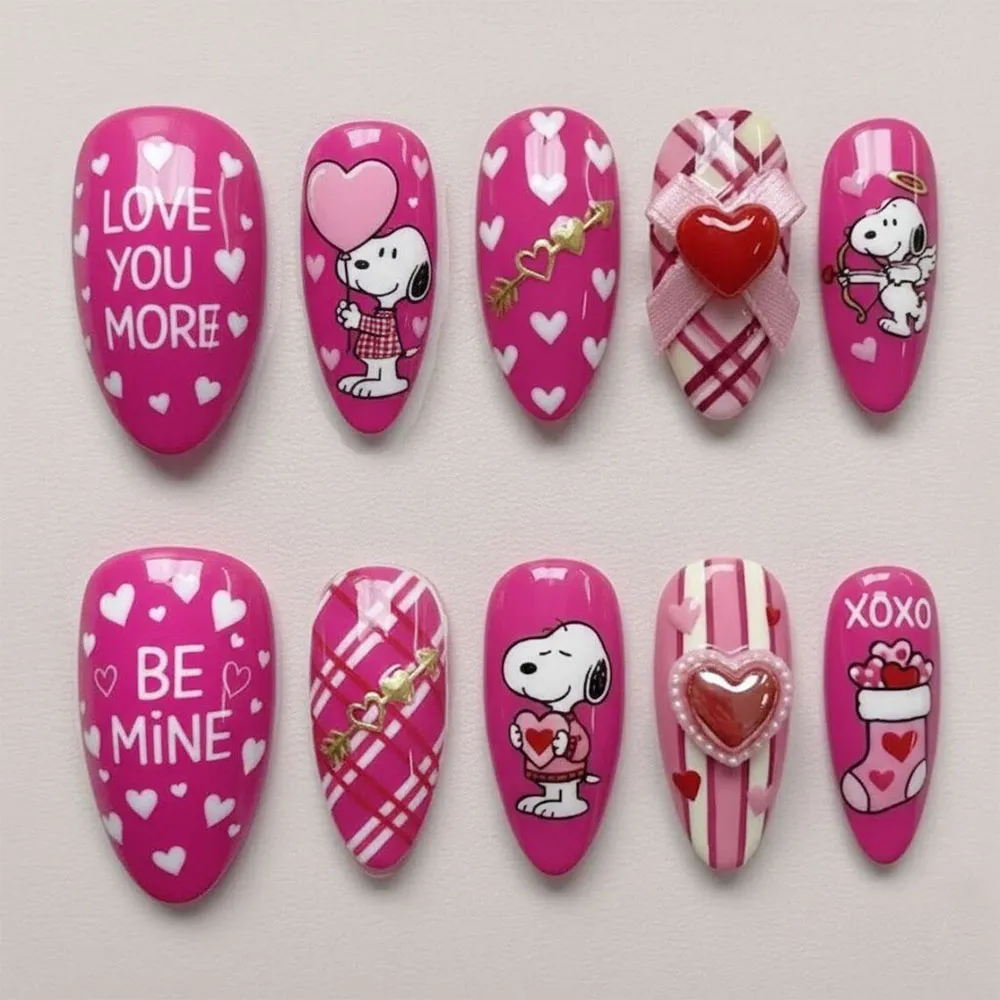
This category works well for casual outfits, themed parties, holidays, gifts, and people who want their manicure to express a hobby or playful personality.
11.2. Press-On Nail Designs for Special Events
11.2.1. Wedding Press-On Nails
Wedding press-on nails often feature ivory, blush, nude, gold, pearls, flowers, crystals, French tips, glitter, or soft metallic finishes. They can be worn by brides, bridesmaids, wedding guests, or for engagement photos and bridal events.
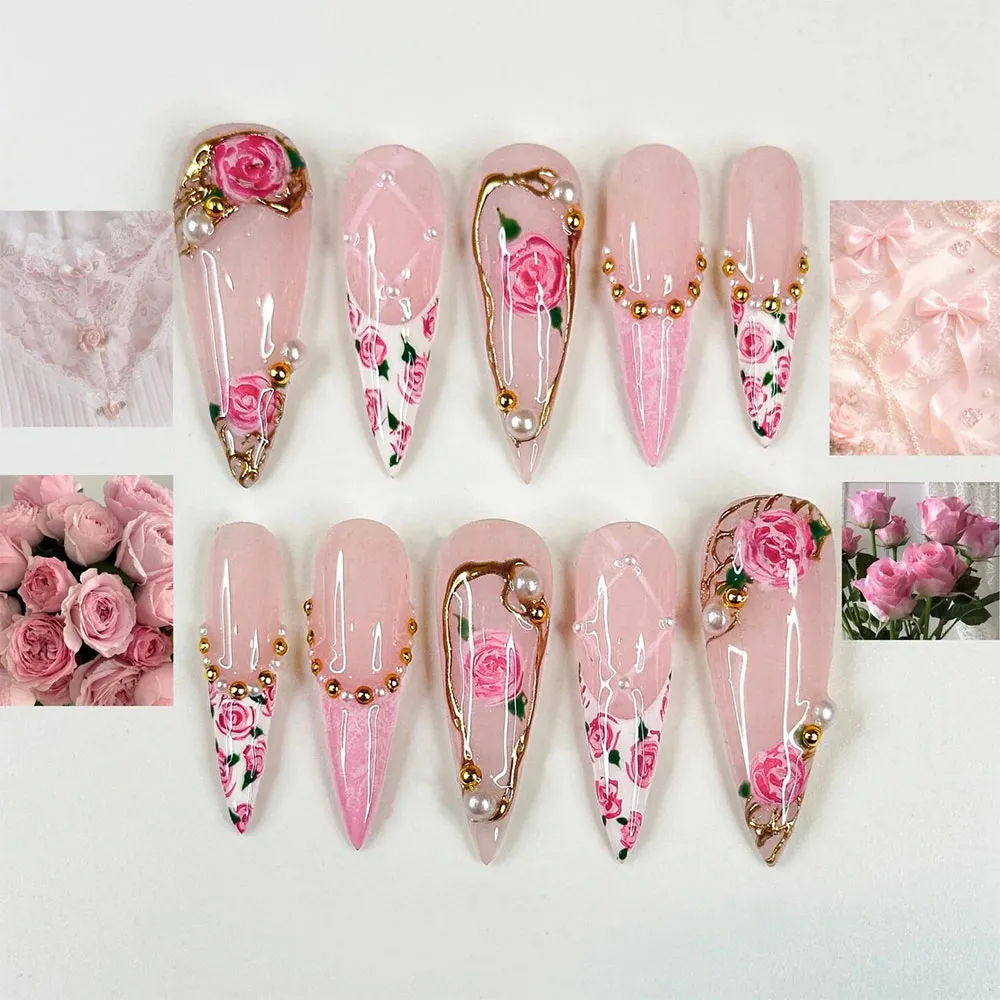
Choose a design that coordinates with the dress, jewelry, bouquet, and formality of the event. Testing the size and application before the wedding day can help prevent last-minute fit problems.
Explore Wedding Press-On Nails
11.2.2. Valentine’s Press-On Nails
Valentine’s press-on nails commonly use hearts, bows, roses, love letters, strawberries, cherries, kisses, and romantic shades of pink, red, white, or burgundy.
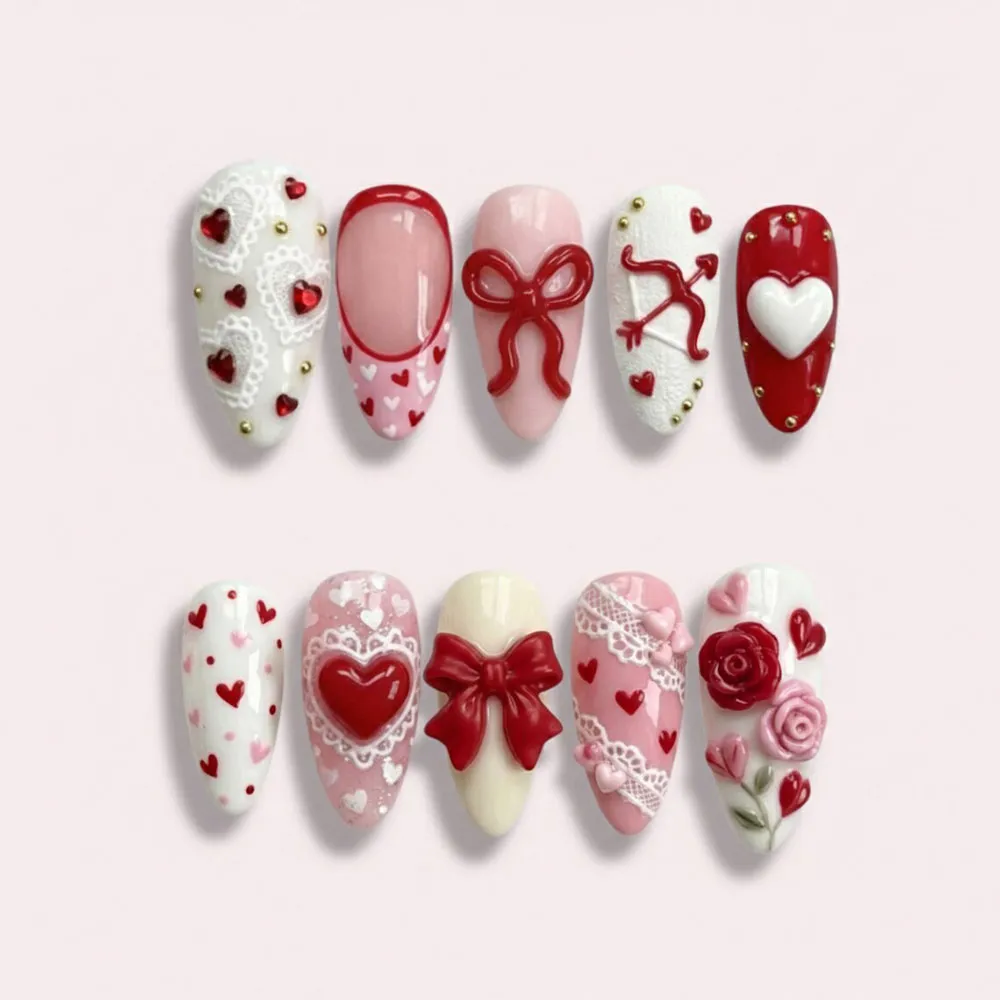
Small heart accents and French-tip variations create a subtle look, while long shapes, crystals, bows, and charms make the manicure a more noticeable accessory.
Shop Valentine’s Press-On Nails
11.2.3. Easter Press-On Nails
Easter press-on nails combine spring colors with seasonal motifs such as bunnies, chicks, eggs, flowers, rainbows, gardens, and pastel French tips. Floral, cottagecore, and cartoon elements often overlap in these designs.
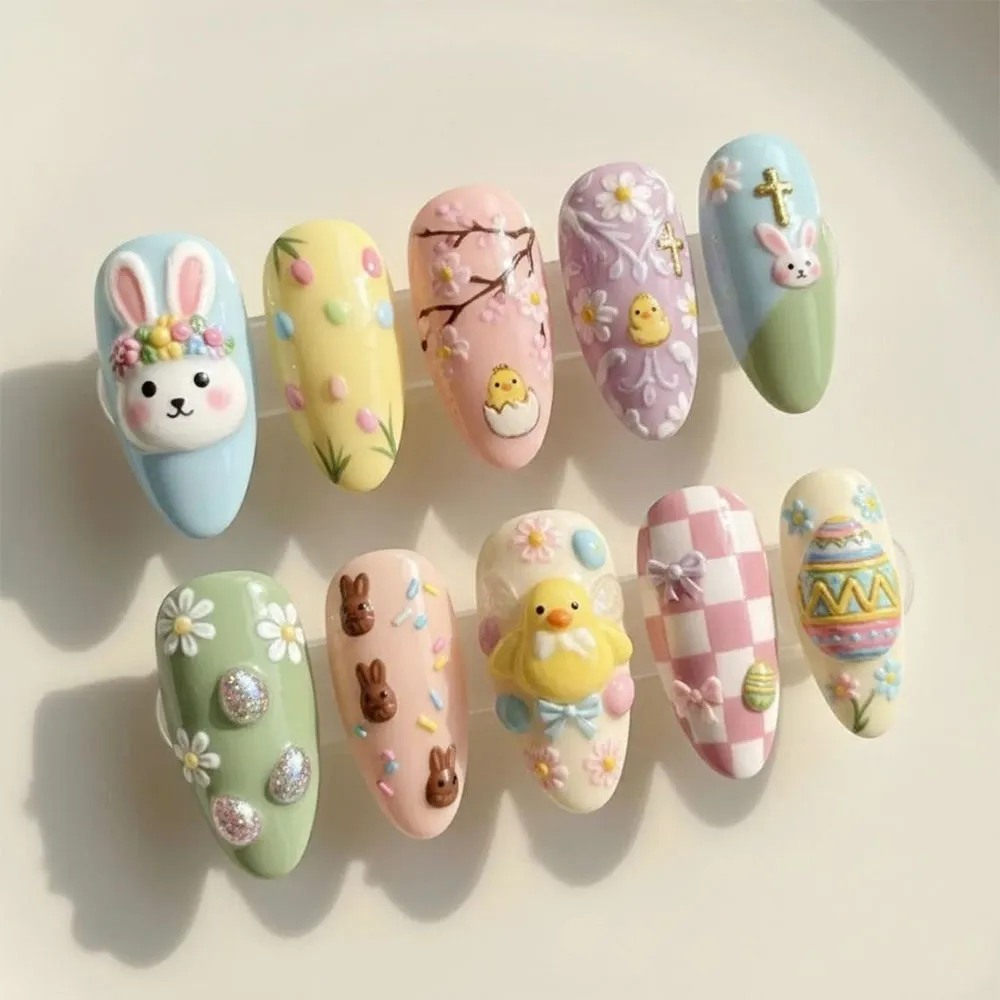
For greater versatility after the holiday, choose pastel or floral designs with only one or two clearly Easter-themed accent nails.
11.2.4. 4th of July Press-On Nails
4th of July press-on nails typically use red, white, and blue with stars, stripes, flags, fireworks, bows, or patriotic graphics. They are designed for Independence Day celebrations, parades, barbecues, concerts, and themed photography.
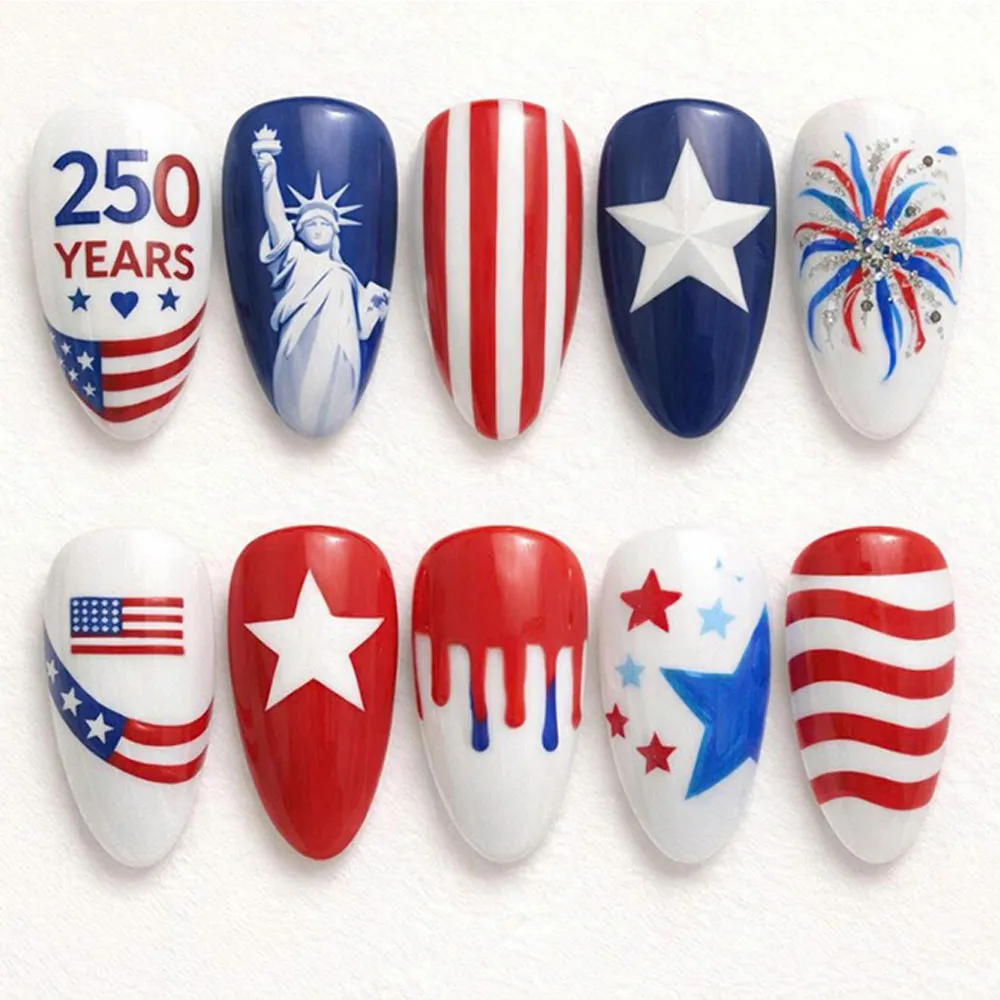
A nude or French base with small patriotic accents is easier to coordinate with multiple outfits, while a full red-white-and-blue set creates a stronger statement.
Explore 4th of July Press-On Nails
11.2.5. Halloween Press-On Nails
Halloween press-on nails can be scary, dark, cute, or playful. Common themes include skulls, bats, spider webs, black cats, pumpkins, ghosts, blood effects, horror imagery, and orange-and-black color combinations.
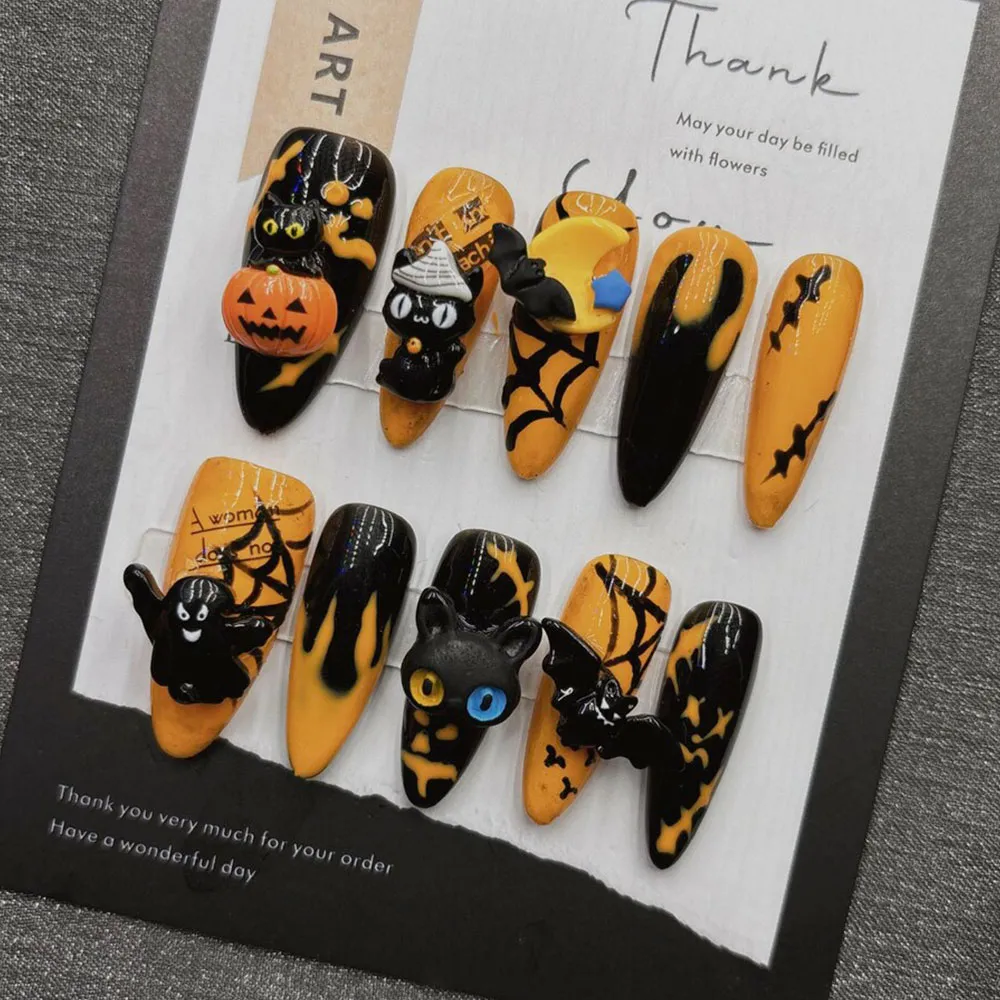
Long Gothic or horror-inspired sets work well for costumes and themed parties, while shorter ghost, pumpkin, floral, or pastel designs are often easier to wear throughout the season.
11.3. How to Choose a Press-On Nail Style
| Your Preference or Occasion | Suggested Collection |
|---|---|
| Reflective, dimensional finish | Cat Eye |
| Romantic flowers and botanical details | Floral Nails |
| Colorful, nostalgic, experimental styling | Y2K Nails |
| Dark, metallic, dramatic aesthetics | Gothic Nails |
| Beach, summer, shell, or aquatic themes | Ocean Nails |
| Cute characters and playful artwork | Cartoon Nails |
| Bridal, engagement, or formal romance | Wedding Nails |
| Hearts, bows, love, and date-night styling | Valentine’s Nails |
| Pastels, bunnies, flowers, and spring events | Easter Nails |
| Red, white, blue, and patriotic celebrations | 4th of July Nails |
| Horror, pumpkins, ghosts, or costume styling | Halloween Nails |
11.4. Match the Design to Your Lifestyle
For everyday wear, prioritize shorter lengths, smoother surfaces, and designs that coordinate with several outfits. Nude bases, subtle florals, soft cat-eye effects, short French tips, and small decorative details are generally easier to maintain.
For parties, holidays, photography, or special events, longer shapes, stronger contrast, chrome, glitter, crystals, charms, and three-dimensional artwork may be more appropriate. Keep in mind that raised decorations require additional care and may catch on hair or fabric.
Whatever style you choose, fit and comfort should come before appearance. Confirm the size, curvature, length, and shape before applying the set, especially when the design would be difficult to alter by filing.
If you want styles that remain playful without becoming difficult to wear, browse these cute press-on nails for everyday wear.
11.5. Key Takeaway
Popular press-on nail styles include reflective cat-eye, romantic floral, nostalgic Y2K, dark Gothic, ocean-inspired, and cartoon designs. Occasion-based collections make it easier to find coordinated sets for weddings, Valentine’s Day, Easter, the 4th of July, and Halloween.
Start with the mood or occasion you want, then narrow the selection by color, length, shape, finish, and level of decoration. The best design should express your style while remaining comfortable and practical for the way you plan to wear it.
12. How Much Do Press-On Nails Cost?
Press-on nail prices vary widely depending on how the nails are made, the complexity of the artwork, the materials used, the level of customization, and what is included with the set. Basic mass-produced nails usually cost less, while handmade, highly decorated, or custom sets generally cost more because they require additional materials and direct artist labor.
At Hana Nails, many ready-made handmade sets are currently listed at $22.99, reduced from a regular price of $36.99. Custom press-on nail boxes are currently offered at a flat price of $29. Because prices and promotions may change, always confirm the current total on the product or custom-order page before purchasing.
For updated price ranges, craftsmanship factors, customization, and cost-per-wear examples, read our complete guide to how much press-on nails cost.
12.1. Typical Press-On Nail Price Ranges
| Type of Press-On Nails | General Price Position | What Usually Affects the Price |
|---|---|---|
| Basic mass-produced sets | Lower-priced | Standard sizing, simple colors or printed designs, large-scale production |
| Mid-range ready-made sets | Moderate | Better nail tips, more finish options, application accessories, stronger packaging |
| Handmade press-on nails | Moderate to premium | Hand-painted details, layered finishes, crystals, charms, and smaller production quantities |
| Custom press-on nails | Usually premium | Personalized colors, shapes, sizing, artwork, previews, and artist communication |
| Luxury or highly detailed sets | Premium | Sculpted elements, complex 3D art, specialty materials, and extensive handwork |
These categories are general rather than fixed. A simple handmade set may cost less than a licensed or limited-edition mass-produced set, while an intricate custom design may cost considerably more than a standard handmade collection.
12.2. How Much Do Hana Nails Press-On Nails Cost?
At the time of this update, many ready-made handmade sets on HanaNail.com are shown at a current price of $22.99, with a regular price of $36.99. The same pricing appears across multiple designs in the current best-seller and new-arrival sections.
Hana Nails also lists its custom nail box at a flat rate of $29 for all styles. The custom process includes submitting an idea or reference, receiving a design concept, approving it, and paying only after approval.
12.3. Ready-Made vs. Custom Hana Nails Pricing
| Option | Current Listed Price | Best For |
|---|---|---|
| Ready-made handmade set | $22.99 current price; $36.99 regular price | Shoppers who find a suitable existing design |
| Custom press-on nail box | $29 flat rate | Shoppers who want personalized artwork, colors, shapes, or a reference-based design |
The custom option currently costs only slightly more than the listed sale price of many ready-made sets. This may offer strong value when you need a specific color palette, character, event theme, shape, or design concept. However, custom orders require approval and production time, while ready-made sets are simpler to select.
12.4. What Affects the Price of Press-On Nails?
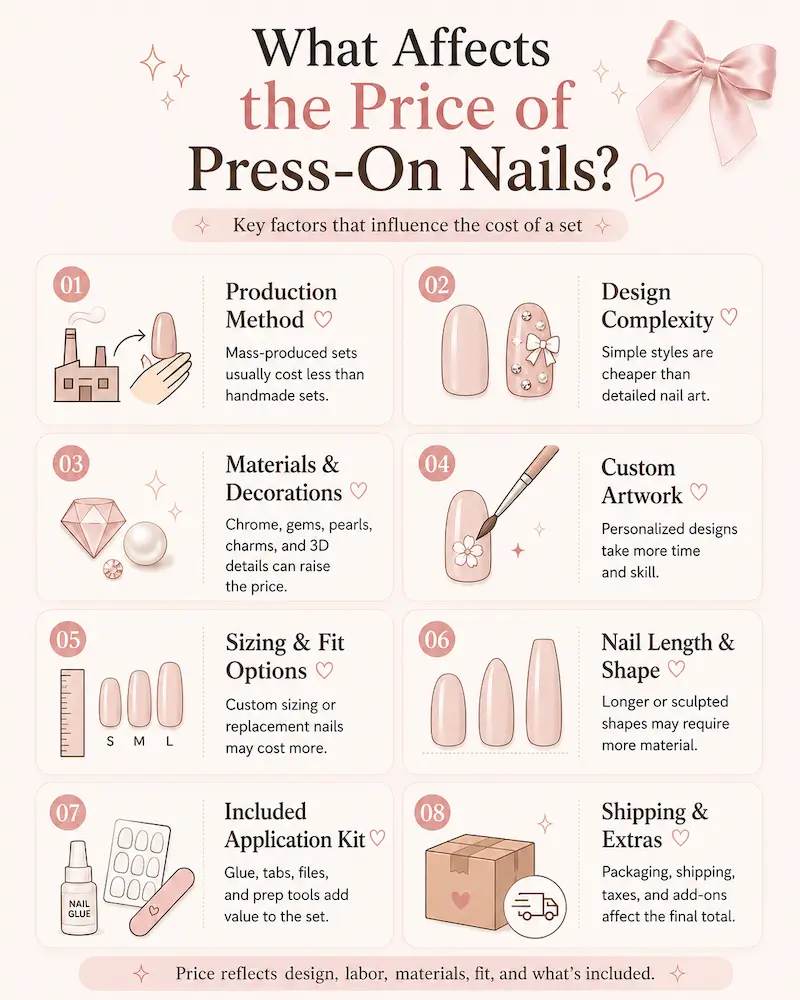
12.4.1. Production Method
Mass-produced nails are made in larger quantities, which usually reduces the cost per set. Handmade nails require individual preparation, painting, curing, decorating, inspection, and packaging, so labor becomes a larger part of the price.
12.4.2. Design Complexity
Solid colors, simple French tips, and minimal line art generally require less time than detailed florals, character artwork, chrome layers, cat-eye effects, sculpted elements, or ten individually different accent nails.
12.4.3. Materials and Decorations
Crystals, pearls, charms, chains, metallic pieces, shell fragments, specialty gels, magnetic pigments, chrome powders, and sculpting materials can increase the production cost. Raised decorations may also require more protective packaging.
12.4.4. Customization
Custom orders may require additional communication, concept development, revisions, sizing decisions, and one-of-a-kind production. The price may therefore reflect both the physical nail set and the design process behind it.
12.4.5. Sizing and Fit Options
Standard-size combinations are easier to prepare repeatedly. Individually selected sizes, unusual nail-bed shapes, replacement nails, or custom measurements may require additional work.
12.4.6. Length and Shape
Long, extra-long, coffin, or stiletto nails may require more material, reinforcement, and packaging space than short round, oval, or square nails. Some brands still use one standardized price across all lengths and shapes.
12.4.7. Included Application Kit
A set that includes nail glue, adhesive tabs, a file, buffer, cuticle stick, alcohol pad, storage box, or replacement nails may cost more but also provide better overall value. Compare what is included rather than judging only by the nail price.
12.4.8. Shipping, Taxes, and Extras
The product price may not equal the final order total. Shipping charges, taxes, currency conversion, customs duties, expedited production, or optional upgrades may be added during checkout depending on the destination and store policy.
12.5. Are Handmade Press-On Nails Worth the Higher Price?
Handmade press-on nails often cost more because each set requires direct labor and may include hand-painted artwork, layered gel finishes, decorative placement, curing, quality checks, and careful packaging.
They may offer better value when you want detailed art, smaller production quantities, customization, or a set you plan to wear more than once. However, handmade does not automatically mean the set will fit better or last longer. Fit, adhesive, application, care, and removal still matter.
Price alone does not prove craftsmanship. Compare design execution, materials, finishing, sizing support, and presentation when evaluating the best handmade press-on nails.
12.6. Are Custom Press-On Nails Worth It?
Custom press-on nails may be worth the additional cost when you need a specific wedding theme, character, color palette, reference image, shape, finish, or personalized gift. Their main value is receiving a design created around your request rather than selecting only from existing inventory.
Before ordering, confirm what is included in the price, how design approval works, whether revisions are available, what sizing options are offered, how long production takes, and which return conditions apply.
12.7. Do Reusable Press-On Nails Offer Better Value?
A reusable set can reduce the cost per wear when it remains in good condition and is removed, cleaned, and stored correctly. For example, a $22.99 set worn three times has a nail-set cost of about $7.66 per wear before adhesive, remover, shipping, and taxes.
Reusability is not guaranteed. Strong glue, forceful removal, cracked nails, warped tips, damaged artwork, or difficult-to-remove residue may limit the number of times a set can be worn.
12.8. Cost Per Wear Example
| Set Price | Number of Uses | Approximate Nail Cost per Wear |
|---|---|---|
| $22.99 | 1 wear | $22.99 |
| $22.99 | 2 wears | About $11.50 |
| $22.99 | 3 wears | About $7.66 |
| $22.99 | 5 wears | About $4.60 |
| $29 custom set | 3 wears | About $9.67 |
| $29 custom set | 5 wears | $5.80 |
These examples divide only the nail-set price. They do not include glue, tabs, removers, replacement nails, shipping, taxes, or the value of time spent applying and maintaining the manicure.
12.9. What Should You Compare Before Buying?
Before deciding that one set offers better value, compare:
- Handmade or mass-produced construction
- Number of nails and available sizes
- Nail-tip quality and thickness
- Design complexity and decoration level
- Included glue, tabs, tools, and storage
- Custom sizing or replacement availability
- Reuse potential
- Shipping, taxes, and customs costs
- Support, return, and damaged-item policies
- Current sale price versus regular price
12.10. Key Takeaway
Press-on nail prices reflect more than the artificial nails alone. Production method, design complexity, materials, customization, sizing, included tools, packaging, and shipping can all affect the final cost.
At Hana Nails, many ready-made handmade sets are currently listed at $22.99, while custom nail boxes are currently $29. Compare fit, design quality, included accessories, support, and reuse potential—not only the initial product price.
13. Frequently Asked Questions About Press-On Nails
How Long Do Press-On Nails Stay On?
Press-on nails may last from a few hours to approximately one or two weeks. Adhesive tabs are generally used for temporary wear, while nail glue usually provides a stronger bond for several days or longer. Actual wear time depends on fit, preparation, adhesive, water exposure, and daily activities.
Are Press-On Nails Safe for Natural Nails?
Press-on nails are generally safe for healthy natural nails when they fit correctly, are applied according to the product instructions, and are removed without peeling or force. Avoid applying them over damaged, painful, irritated, discolored, or infected-looking nails.
Can Press-On Nails Damage Your Natural Nails?
Press-on nails may damage natural nails if they are peeled off, forced into an unsuitable size, applied after aggressive buffing, or worn while significantly lifted. Gentle preparation, correct sizing, and patient removal can help reduce thinning, peeling, and sensitivity.
Is Nail Glue or Adhesive Tabs Better?
Nail glue is usually better for stronger adhesion and several days of wear. Adhesive tabs are generally better for one-day events, easy removal, frequent design changes, and preserving the press-on nails for reuse. Choose according to your intended wear time and removal priorities.
Why Do My Press-On Nails Keep Popping Off?
Press-on nails may pop off because the natural nails still contain oil, moisture, dust, lotion, or old adhesive. Incorrect sizing or curvature, uneven adhesive, insufficient pressure, early water exposure, and using the nails as tools can also weaken the bond.
How Do I Know What Size Press-On Nails to Buy?
Measure the widest part of all ten natural nails in millimeters and compare the measurements with the brand’s size chart. If you fall between sizes, choose the slightly larger press-on and file the sides gently rather than using a nail that is too narrow.
How Can I Make Press-On Nails Last Longer?
Choose the correct size and curvature, prepare clean and dry nail plates, use the adhesive as directed, and press each nail firmly without sliding it. Avoid unnecessary water exposure during the setting period, wear gloves for wet chores, and do not use the nail tips to open or scrape objects.
How Do You Remove Press-On Nails Without Damage?
Loosen the adhesive using the removal method recommended for the specific glue or tabs, then lift only from naturally loosened edges. Never peel, snap, twist, or force the nails off. If a nail resists, continue soaking or apply more compatible remover.
Can Press-On Nails Be Reused?
Some press-on nails can be reused when they remain undamaged and are removed, cleaned, dried, and stored carefully. Adhesive tabs usually make reuse easier, while nail glue may leave residue that must be removed without damaging the underside of the press-on.
How Do I Choose the Best Press-On Nails for Me?
Start with the width and curvature of your natural nails, then choose a practical length and comfortable shape. Match the adhesive to your intended wear time and select a design that suits your lifestyle, occasion, budget, and ability to care for the set.
Final Thoughts: Are Press-On Nails Right for You?
Press-on nails may be right for you if you want a convenient, flexible, and customizable manicure that can be applied without a lengthy salon appointment. They are especially useful for busy schedules, special events, travel, frequent style changes, and anyone who enjoys detailed nail art without committing to the same design for several weeks.
They are most likely to provide a good experience when the size and curvature match your natural nails, the length suits your routine, and the adhesive matches your intended wear time. Careful preparation, gentle daily wear, and patient removal are just as important as the design itself.
Press-on nails may be less suitable if your hands are frequently exposed to water, heavy manual work, repeated impact, or activities that make artificial nails difficult to maintain. Anyone with painful, irritated, damaged, discolored, or possibly infected nails should avoid covering the problem with a press-on set until the underlying issue has been addressed.
Press-On Nails May Be a Good Choice If You:
- Want to apply a polished manicure at home
- Have limited time for salon appointments
- Enjoy changing nail designs frequently
- Need a manicure for a wedding, party, vacation, holiday, or photoshoot
- Prefer removable nails over a longer-term enhancement
- Want access to handmade, detailed, or personalized artwork
- Are willing to measure, prepare, apply, and remove the nails correctly
- Value the possibility of reusing a well-maintained set
Another Nail Option May Be Better If You:
- Need several weeks of continuous wear with professional maintenance
- Regularly perform heavy manual work
- Frequently immerse your hands in water
- Prefer professional application and removal
- Want a very rigid structure or extreme length
- Cannot find a comfortable fit among standard sizes
- Do not want to prepare, apply, or occasionally repair the nails yourself
- Have a nail or skin condition that should be evaluated before applying artificial products
Choosing Your First Press-On Nail Set
If you are trying press-on nails for the first time, begin with a short or medium set in a comfortable shape such as round, oval, squoval, or almond. A complete kit with several sizes, clear instructions, and both glue and adhesive tabs can make the first application easier.
Adhesive tabs are useful when you want to test the fit, length, or shape for a short period. Once you understand what feels comfortable and practical, you can explore stronger adhesive, longer shapes, more detailed artwork, and custom designs.
Find a Style That Feels Like You
Fit and practicality matter, but personal style is a major part of the appeal. Nude, floral, or subtle cat-eye nails can provide a versatile everyday manicure, while Y2K, Gothic, ocean, cartoon, bridal, and seasonal designs allow the nails to become a more expressive part of your look.
If an existing design does not fully match your idea, a custom press-on nail set may be a better solution for a particular color palette, character, outfit, event, shape, or reference image.
The Final Verdict
Press-on nails are a practical choice for people who value convenience, creative freedom, removable designs, and greater control over their manicure routine. They can look polished, feel comfortable, and provide good value when the size, shape, adhesive, and care routine are matched to the wearer.
They are not completely maintenance-free or risk-free, but they do not need to be complicated. Measure carefully, start with a practical set, follow the product instructions, protect the manicure during daily activities, and never force the nails off. With those habits in place, press-on nails can become an enjoyable and adaptable alternative to a traditional salon manicure.
Ready to Find Your Next Press-On Nail Set?
Explore Hana Nails’ handmade press-on nail collections to find a design that matches your size, style, and occasion. Browse ready-made cat-eye, floral, Y2K, Gothic, ocean, cartoon, wedding, and seasonal designs—or request a custom set created around your own idea.